
By Muhammad Hanzala · Updated November 14, 2026 · Built from public agency and university extension sources. See our editorial standards.
A septic tank rarely gives a warning before it needs help. It sits quietly under the lawn, collecting solids, and the first sign of trouble is often a soggy yard or a slow drain. The surprising part is that a full tank doesn’t break the system straight away. According to Oregon State University Extension, it just stops protecting the drainfield from solids, and that is where the expensive damage happens.
Good care for septic tanks comes down to a few boring habits done on schedule. This guide puts them on a calendar, adds a pump-interval table you can check against your own household, and shows what to ask the pro on service day. The EPA says the average septic system lasts 15 to 40 years, and longer when it is looked after.
Project Overview
- Total time: about 30 minutes to set up your records and walk the yard once, then roughly 10 to 15 minutes a month. Professional inspection and pumping visits happen every few years.
- Estimated cost: routine checks cost almost nothing. Inspection and pumping are billed by local contractors and vary with region, tank size and access, often a few hundred dollars, so ask for quotes. Treat that as an estimate, not a price list.
- Skill level: beginner for the homeowner tasks. Opening the tank, pumping and repairs belong to a licensed professional.
Quick Answer
Have a licensed pro inspect the system about every three years and pump the tank when needed, usually every three to five years. Use water evenly, flush only toilet paper and human waste, keep grease and chemicals out of drains, and never park, build or plant trees on the drainfield. Keep a written record of every visit.
Know What You Have First
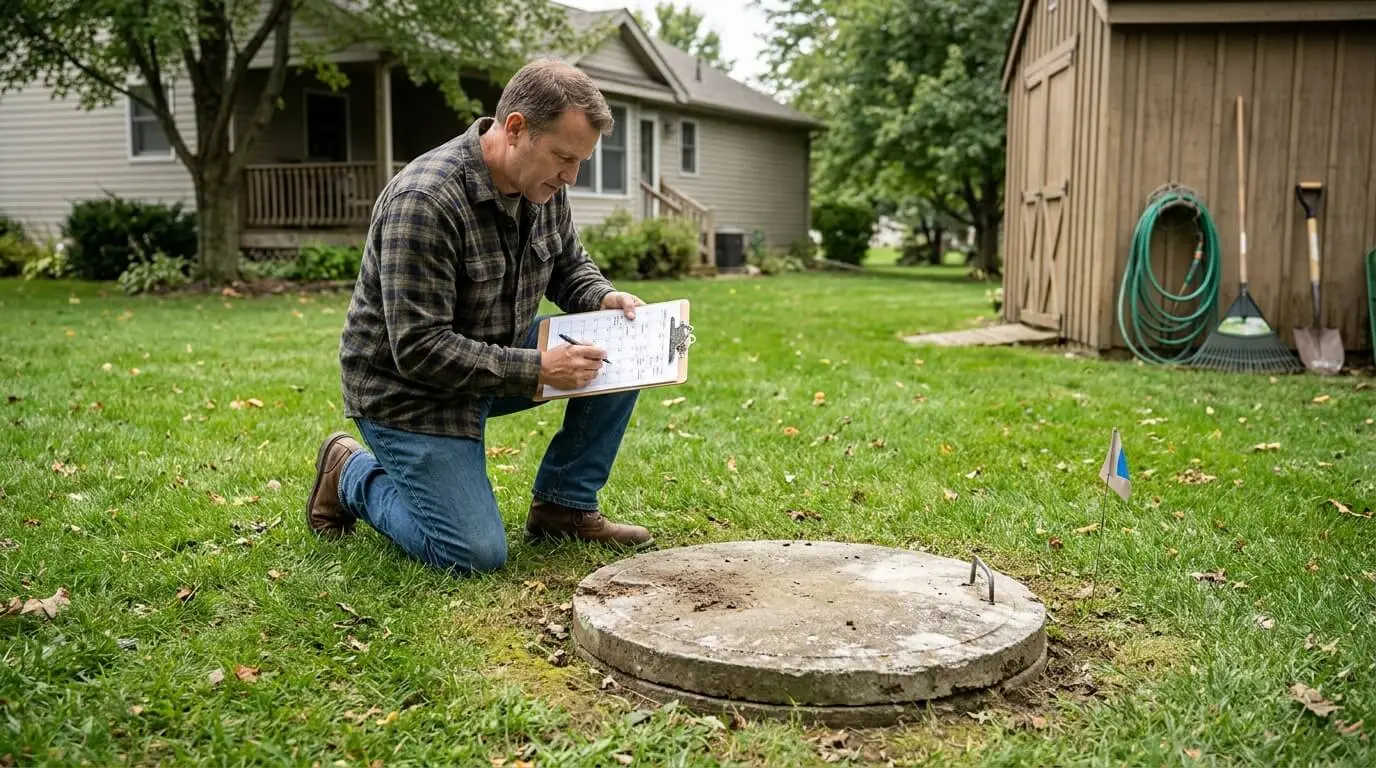
You can’t look after a system you can’t find. Check your house papers, a permit file from the local health department, or the seller’s documents for a diagram. You need three facts: where the tank and drainfield sit, how big the tank is in gallons, and whether it is a basic gravity system or an alternative one with pumps and float switches. The EPA says alternative systems with mechanical parts should be inspected about once a year and usually need a service contract.
What you’ll need
- Your system records or a sketch of the tank, lids and drainfield.
- Phone or notebook for the care log near the end of this guide.
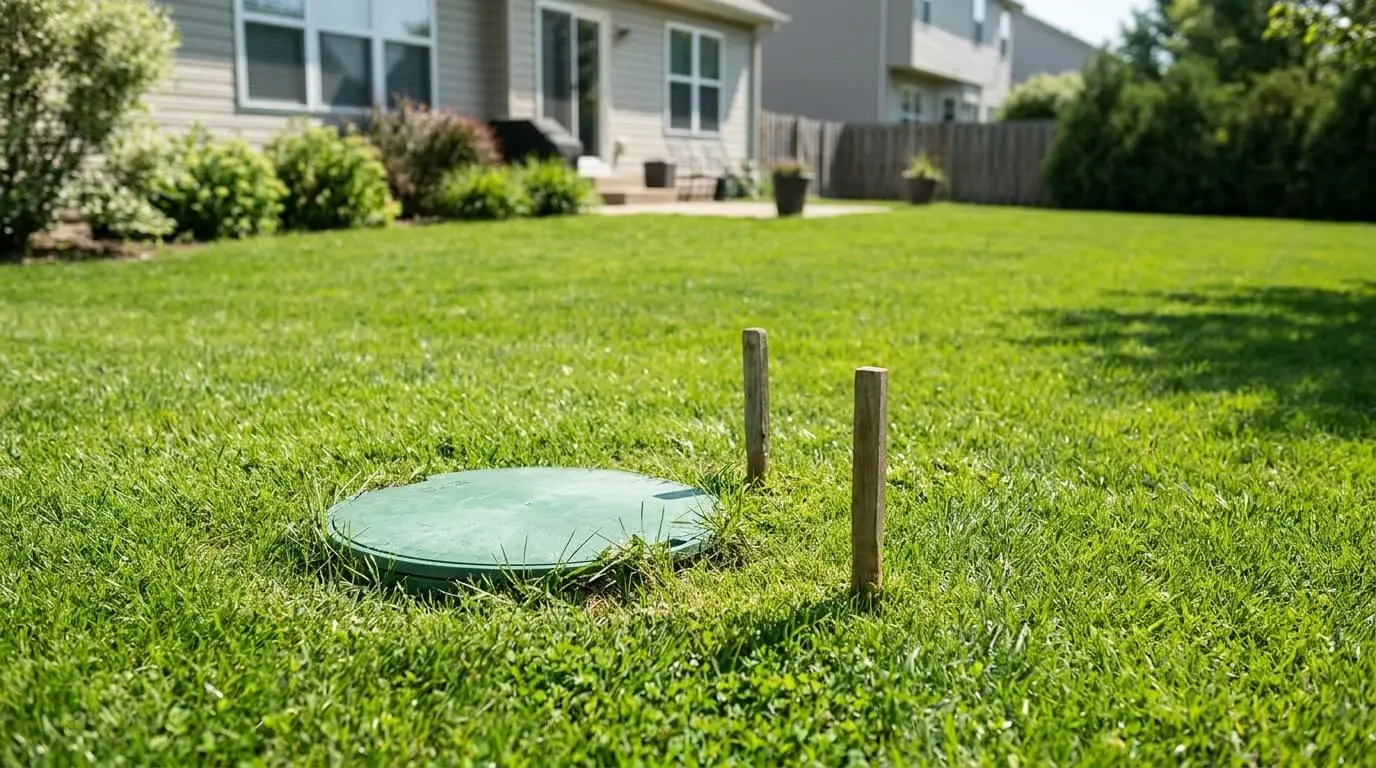
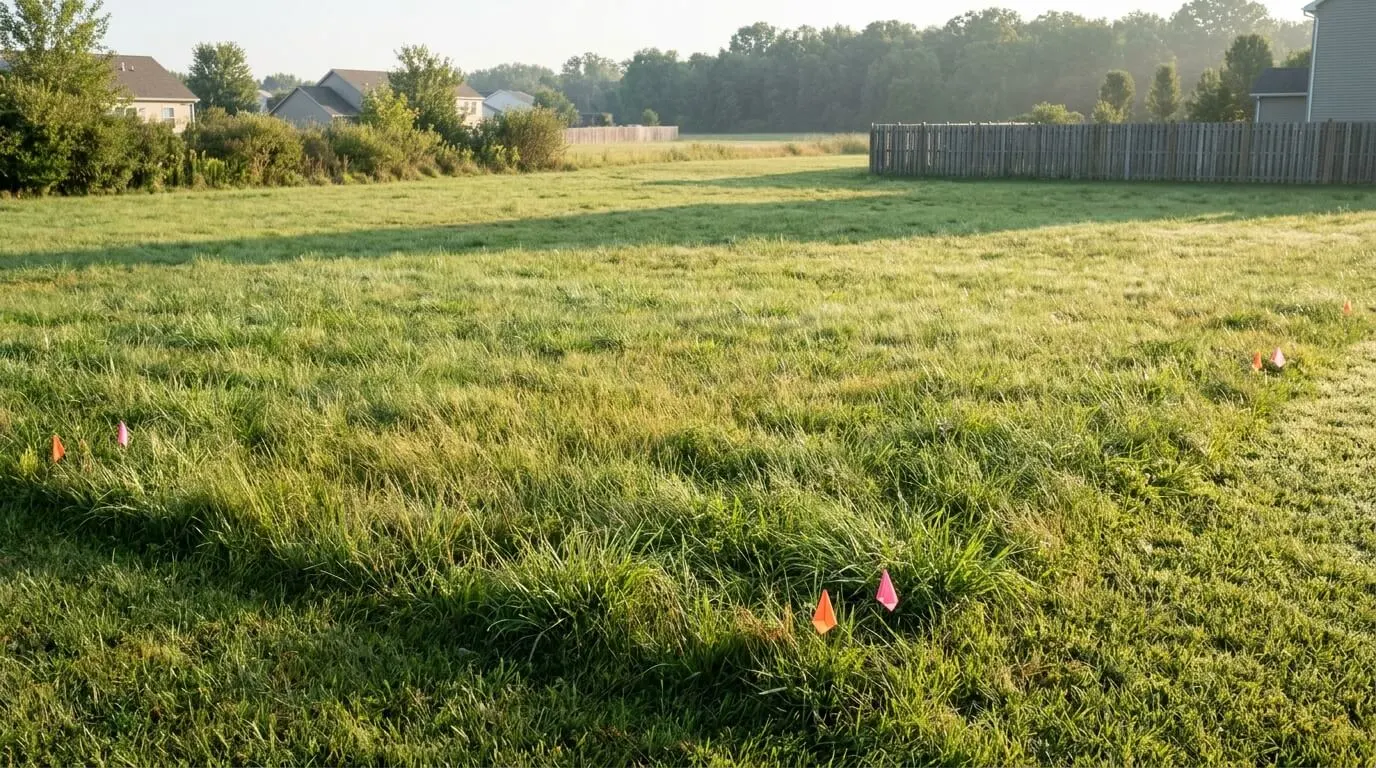
- Garden stakes or flags to mark the tank lid and the drainfield edges so nobody parks or digs there.
- Flashlight for checking toilets, under sinks and the yard at dusk.
- Faucet aerators and a sink strainer (optional, cheap ways to cut water and food solids).
- A licensed septic contractor’s number saved in your phone before you need it.
What Is the Best Way to Maintain a Septic Tank?
The EPA boils septic tank maintenance down to four jobs: inspect and pump on time, use water efficiently, dispose of waste properly, and protect the drainfield. Each one gets its own section below, but the calendar comes first because most owners know the rules and just forget the timing.
Care for Septic Tanks: The Year-Round Calendar
| How often | What to do | Why it matters |
|---|---|---|
| Every day | Flush only toilet paper and human waste. Wipe greasy pans before washing. | Everything that goes down a drain ends up in the tank. |
| Every week | Spread laundry across the week instead of doing it all in one day. | A big water surge gives the tank less time to treat waste and can flood the drainfield. |
| Every month | Listen for running toilets, look for drips under sinks, and glance over the drainfield. | The EPA says one leaking toilet can add up to 200 gallons a day. |
| Every year | Walk the yard for wet spots, check that lids are secure and markers are still in place. Alternative systems get their annual service. | Yearly checks catch changes early. |
| Every 3 years | Book a professional inspection. | This is the EPA’s general guideline for the average household system. |
| When due (about 3 to 5 years) | Pump the tank and update your log. | Pumping removes the solids that settle and pile up in the tank. |
Septic Tank Maintenance Day: Know Your Numbers
The most useful part of care for septic tanks is knowing when your own tank is due, not just the national average. Oregon State University Extension publishes an estimate based on tank size and number of people. These are years between pumping for a year-round home without a garbage disposal:
| Tank size | 2 people | 3 people | 4 people | 5 people | 6 people |
|---|---|---|---|---|---|
| 750 gallons | 4.2 | 2.6 | 1.8 | 1.3 | 1.0 |
| 1,000 gallons | 5.9 | 3.7 | 2.6 | 2.0 | 1.5 |
| 1,250 gallons | 7.5 | 4.8 | 3.4 | 2.6 | 2.0 |
| 1,500 gallons | 9.1 | 5.9 | 4.2 | 3.3 | 2.6 |
Notice that a 1,000-gallon tank with four people comes out at about 2.6 years, a little sooner than the 3 to 5 year rule of thumb. If you use a garbage disposal, plan on pumping more often. Your inspector and local health department have the final say.
Three numbers to ask the pro for
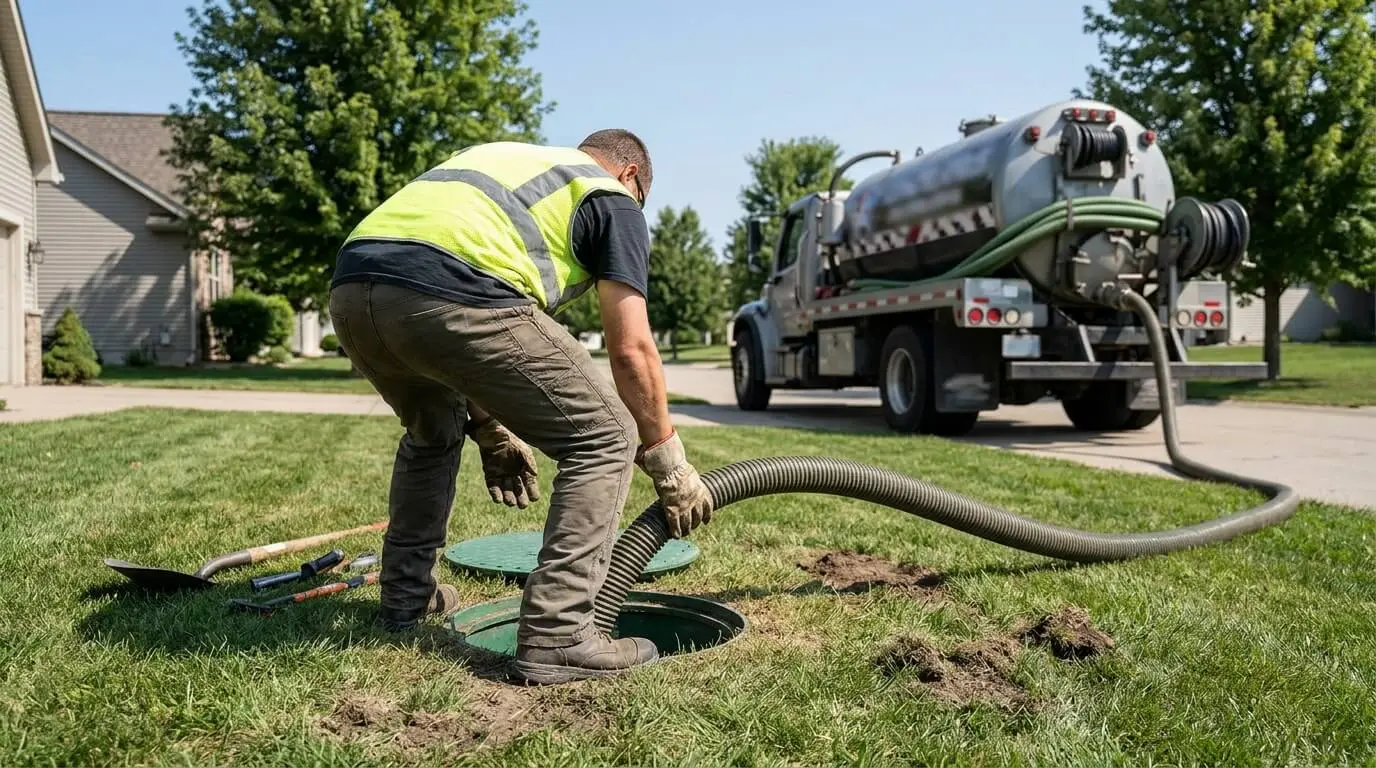
The EPA says a tank should be pumped if the bottom of the scum layer is within six inches of the bottom of the outlet, if the top of the sludge is within 12 inches of the outlet, or if sludge and scum make up more than 25 percent of the liquid depth. Ask the technician to read those measurements out and write them down. Next visit you can compare them and see how fast your tank fills.
Small requests that protect the tank
- Ask for pumping through the main manhole. Oregon State warns that pumping through the baffle inspection ports can damage the baffles.
- Ask them to check the baffles before the tank is closed up.
- Consider risers. Extending the lids up to ground level makes future service easier.
- Stay out of the tank. Never climb inside. Septic tanks produce toxic gases that can be deadly within minutes.
How to Care for a Septic Tank Day to Day
The EPA says an average person can use up to 70 gallons of water indoors every day, and every drop ends up in the tank. So water habits matter more than almost anything else. Fix running toilets, run full loads of laundry, and consider water-efficient toilets, aerators and showerheads.
Flush only human waste and toilet paper. The EPA’s never-flush list includes non-flushable wipes such as baby wipes, feminine hygiene products, dental floss, diapers, cigarette butts, coffee grounds, cat litter, paper towels and medications. Cooking grease and household chemicals such as paint, antifreeze and pesticides stay out of every drain. For a clogged drain, the EPA suggests boiling water or a drain snake rather than chemical openers.
What about additives that promise to boost bacteria? Oregon State says biological and chemical additives are not needed to help settling or breakdown, so you can skip them.
Protect What’s Above the Tank
Care for septic tanks doesn’t stop at the lid. The drainfield treats the liquid that leaves the tank, and soil bacteria need air and open ground to do it. Following the EPA’s guidance:
- Don’t park or drive on it. Vehicle weight compacts soil and can damage buried pipes.
- Keep it covered with grass. Native grasses and ground covers are best. Concrete and asphalt cut off oxygen and evaporation.
- Skip trees, shrubs and vegetable gardens. Roots can damage pipes, and vegetables could be exposed to effluent.
- Divert roof drains and sump pumps. Extra water slows or stops wastewater treatment.
If your home also runs on a private well, remember the EPA warns that harmful chemicals sent down drains can reach groundwater and affect drinking water supplies. Our guide to well pump repair and common water problems explains what to check when water supply problems show up.
Warning Signs: Watch, Call This Week, or Emergency
These three levels are a practical grouping, not an official scale. When in doubt, treat the problem as the higher level.
| Level | What you notice | What to do |
|---|---|---|
| Watch | One slow drain, a running toilet, a brief smell after heavy water use | Fix the leak, spread out water use, note it in your log |
| Call this week | Several slow drains, gurgling, bright green spongy grass or wet ground over the drainfield, last pumping overdue | Book a licensed septic professional for inspection |
| Emergency | Sewage backing up in the house or pooling outside, strong gas smell | Cut back water use, keep people and pets away, call a professional right away. Never open or enter the tank |
Your Septic Care Log
The EPA recommends keeping records of all work done on your system. A simple log also helps if you sell the house. Copy this table into a note on your phone or print it:
| Date | Work done and company | Sludge and scum notes | Repairs advised | Next due |
|---|---|---|---|---|
Pumping and inspection fees are easier to handle when you plan for them. The home maintenance budget calculator can help you set aside money for the next visit.
Sources and Further Reading
- U.S. EPA: How to Care for Your Septic System
- Oregon State University Extension: Septic Tank Maintenance (EC 1343)
- U.S. EPA: Homebuyer’s Guide to Septic Systems
This guide is general information, not engineering or plumbing advice. Septic rules differ by state and county, so follow your local health department and a licensed professional. See our disclaimer.
The Short Version
Care for septic tanks is mostly about timing and restraint: inspect every few years, pump when your numbers say so, spread out water, and keep everything but toilet paper and human waste out of the system. Mark the lid, protect the drainfield, and write every visit in your log. That small routine is what keeps the quiet part of your home quiet.
Frequently Asked Questions
What is the best way to maintain a septic tank?
Follow the EPA’s four steps: inspect and pump on schedule, use water efficiently, dispose of waste properly, and protect the drainfield. Keep a log of every service visit so you always know when the next one is due.
How often should a septic tank be pumped?
The EPA says household tanks are typically pumped every three to five years. Tank size and the number of people at home change that, and some households need it sooner, as the Oregon State table shows.
How to care for a septic tank if I have a garbage disposal?
Limit its use, because food waste adds solids to the tank, and plan for more frequent pumping. The EPA suggests limiting or eliminating disposal use to protect the drainfield.
Does care for septic tanks include adding bacteria or enzymes?
No. Oregon State University Extension says biological and chemical additives are not needed to help settling or decomposition. Regular pumping and careful use matter far more.
Can I plant trees or a vegetable garden over my drainfield?
It isn’t recommended. The EPA says roots can damage drainfield pipes and vegetables could be exposed to sewage effluent. Native grasses are the best cover.
What should I never flush into a septic system?
Never flush wipes, feminine hygiene products, dental floss, diapers, cigarette butts, coffee grounds, cat litter, paper towels, medications, grease or household chemicals. Only toilet paper and human waste belong in the toilet.

About the author: Muhammad Hanzala
Founder and managing editor of Make Maintain
Muhammad is passionate about making living spaces functional, stylish and well organized. Instead of claiming trade credentials, he approaches home improvement as a dedicated researcher and practical home enthusiast. Every guide is built by carefully studying official product documentation, interior organization standards and established home care practices, so you get clear, easy-to-follow solutions you can use with confidence.