
By Muhammad Hanzala · Updated November 2, 2026 · Built from manufacturer guidance and public safety sources. See our editorial standards.
A wobbly handle is easy to ignore, but it doesn’t stay small. Every pull and twist works the screws a little looser, until the lever droops, the latch stops catching, or the whole thing comes off in your hand. The good news is that a loose door handle is usually fixed with one small screw and about ten minutes.
This guide on how to fix a loose door handle starts with the step most articles skip: finding out where the movement is actually coming from. Once you know that, you only do the one fix that matches, instead of pulling the whole lockset apart for nothing.
Project Overview
- Total time: 10 to 20 minutes. Allow up to 45 minutes, plus glue drying time, if a screw hole is stripped.
- Estimated cost: $0 to $15 if you already own a screwdriver. A new basic lever set runs roughly $15 to $60 depending on the finish and brand.
- Skill level: Beginner. You need to be comfortable with a screwdriver and a hex key.
- Works for: lever handles, round knobs and most standard interior and entry door hardware.
Quick Answer
Find out what moves. If the lever slides or wobbles on its shaft, tighten the tiny set screw under the lever with a hex key. If the round base shifts against the door, remove the cover plate and tighten the mounting screws. If a screw just spins, fill the hole with glued toothpicks, let it set, and drive the screw back in. Finish by testing that the latch pulls in fully and springs back.
Start Here: Where Is Your Door Handle Actually Loose?
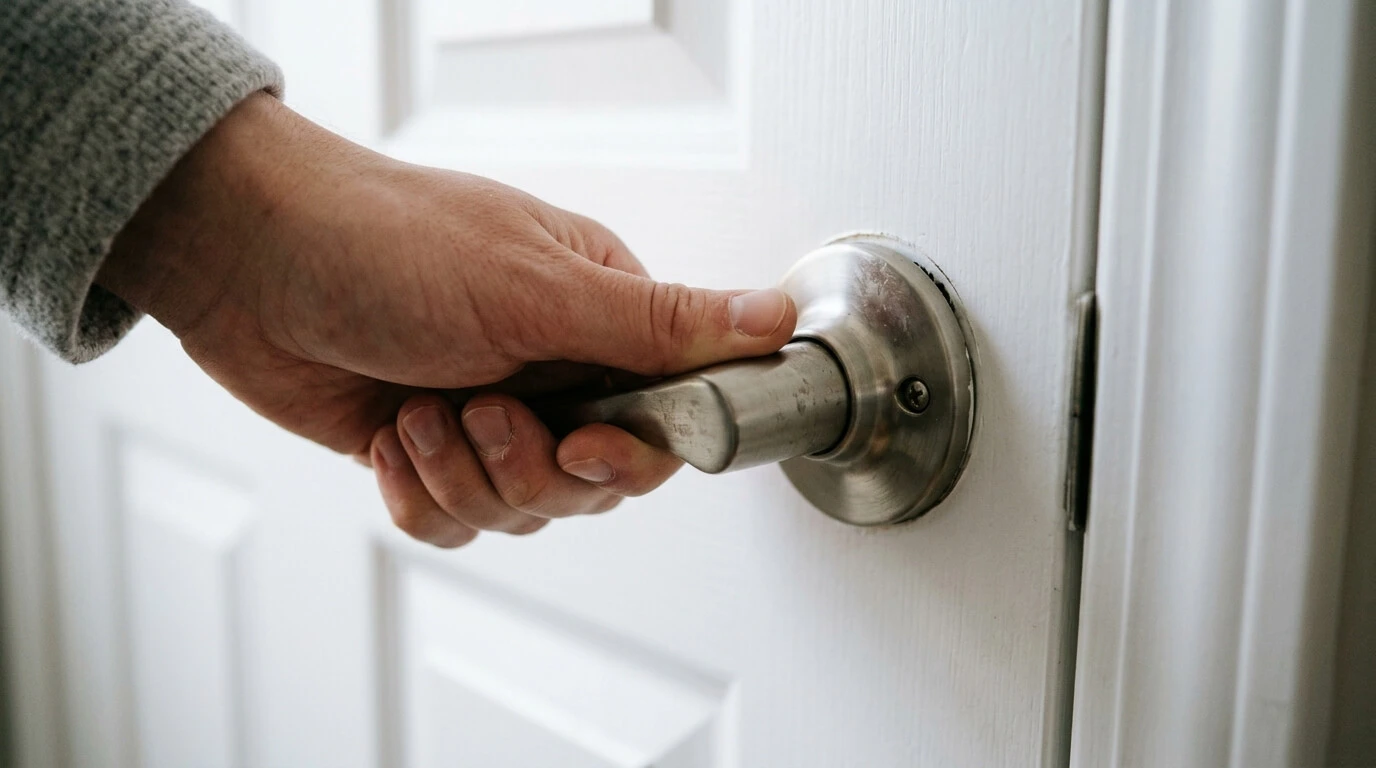
Open the door. Hold the handle in one hand and the edge of the door in the other, then push and pull the handle up, down, in and out. Watch which part moves. This takes about a minute and saves you from tightening the wrong thing.
| What you notice | Most likely cause | Go to |
|---|---|---|
| Lever or knob wobbles, slides or spins on its shaft | Loose set screw, or lever not fully seated | Step 2 |
| Round base (the rose) shifts against the door | Loose mounting screws | Step 3 |
| Whole lockset rocks when you push from either side | Loose through-screws or a worn hole in the wood | Steps 3 and 5 |
| A screw turns forever and never gets tight | Stripped wood around the screw | Step 5 |
| Lever sags and doesn’t spring back to level | Worn internal spring, usually a replacement job | When to Replace |
| Handle feels solid but the door won’t catch | Latch or strike plate alignment, not the handle | See the note after Step 6 |
Tools You Need for Fixing a Loose Door Handle
You don’t need a toolbox full of gear. Hand tools are better than power tools here, because the screws are small and strip easily.
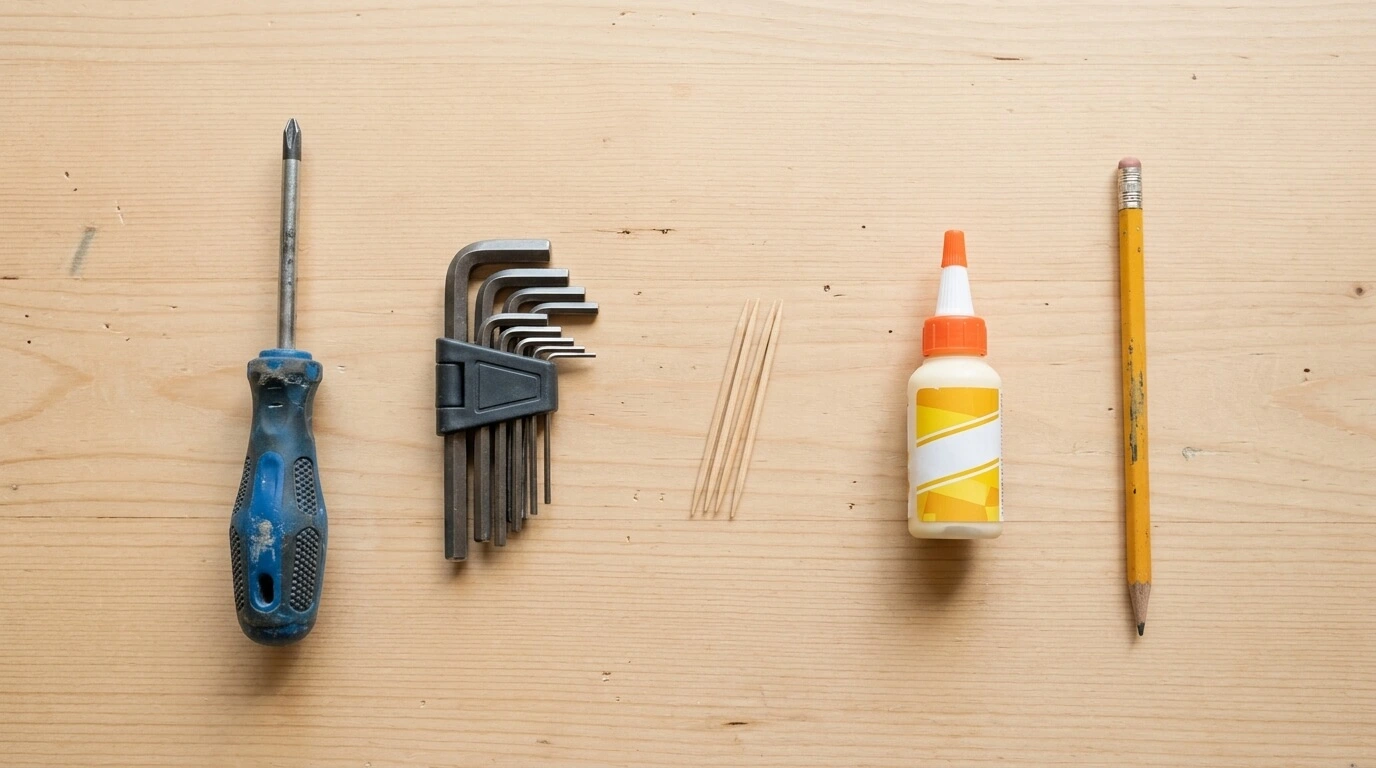
- Phillips screwdriver: a #2 size fits most mounting screws on door hardware.
- Hex key (Allen key) set: set screws on levers are tiny, so a set that has both metric and imperial sizes saves a trip to the store.
- Flat screwdriver or plastic trim tool: for popping off a snap-on cover plate. Wrap the tip in tape so it doesn’t scratch the finish.
- Phone flashlight: the set screw hides on the underside of the lever neck.
- Toothpicks (or a hardwood golf tee) and wood glue: only needed if a screw hole is stripped.
- Removable (blue) threadlocker: optional, for set screws that keep backing out.
- Pencil: for the tighten-and-check mark in Step 6.
How to Fix a Loose Door Handle: Step by Step
Step 1: Take a photo and identify what you have
Photograph both sides of the handle before you touch anything. Then look for the fasteners. Some handles show their screws on the base. Others hide them under a cover plate, and lever handles usually have a tiny hole on the underside of the neck for the set screw. Prop the door open, and if it’s a bedroom or entry door, make sure you can still get in from the other side while you work.
Step 2: How to Fix a Loose Lever Door Handle (the set screw)
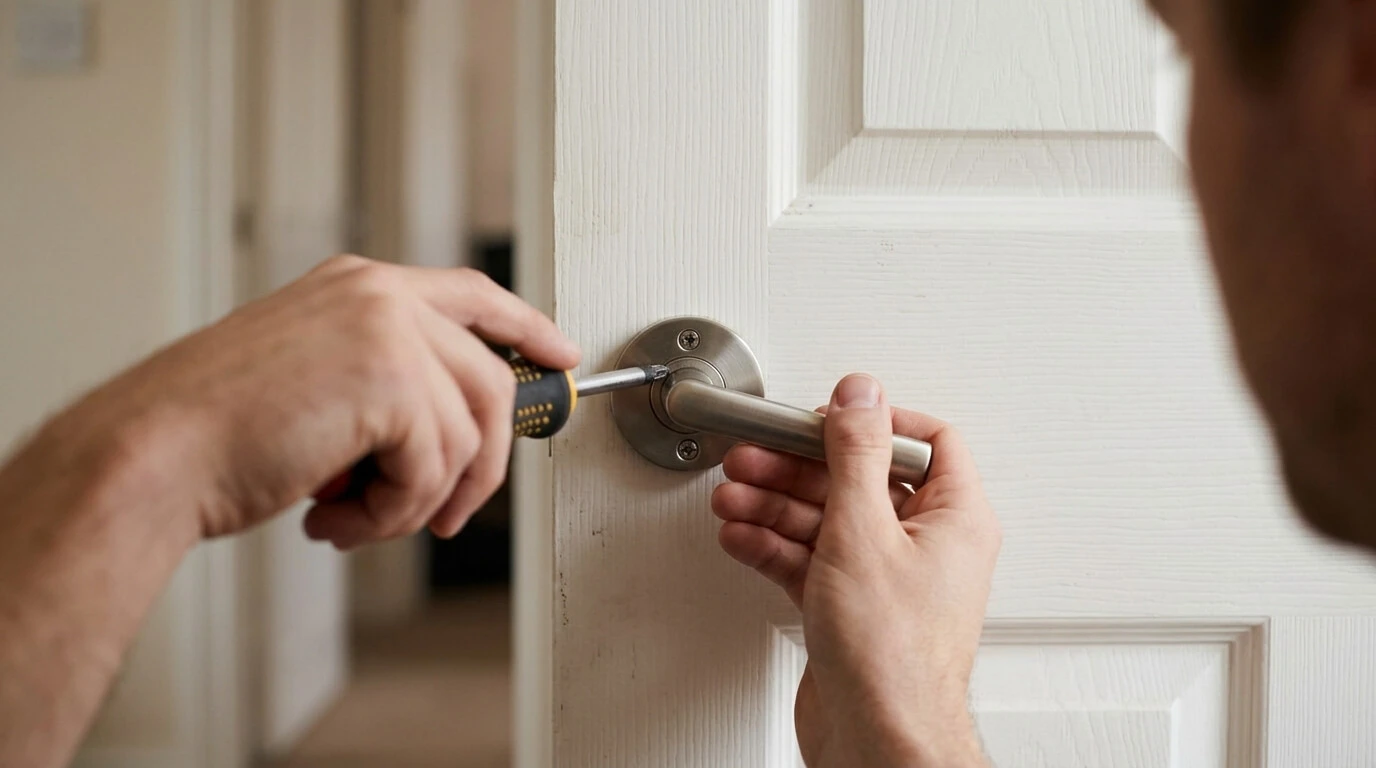
A lever slides onto a square metal shaft called the spindle, and a small set screw locks it in place. When that screw backs out, the lever wobbles. Push the lever fully onto the lock body, put a hex key in the small hole underneath, and turn clockwise until it’s snug. Allegion, the company behind Schlage, explains in its support article on set screws that the lever has to be pushed all the way on first, and that a properly tightened screw ends up flush with the lever surface. If it sits proud, the lever isn’t seated.
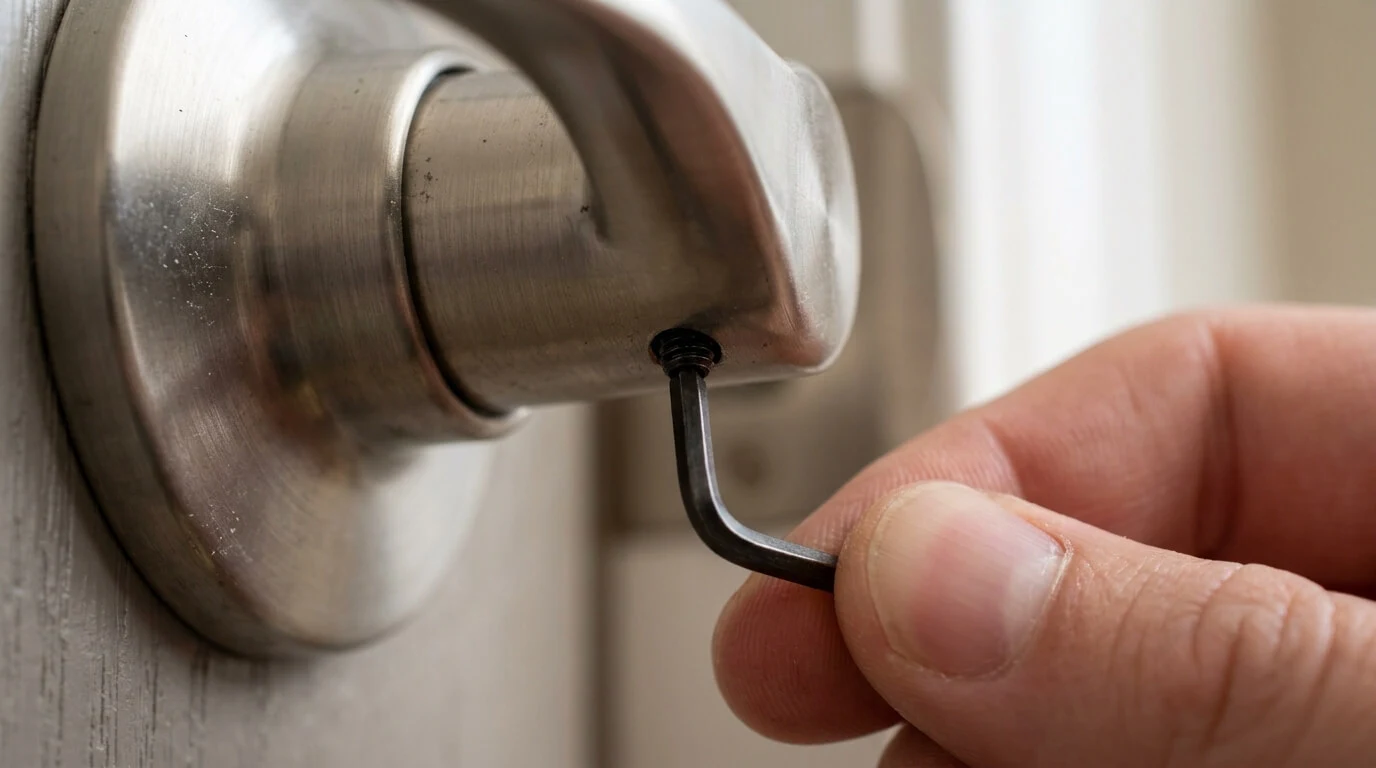
If the screw spins without biting, loosen it, turn the lever a touch until the screw lines up with the flat spot on the spindle, push it fully on and try again. If the screw is stripped or missing, take it to a hardware store to match the thread. A tiny drop of blue threadlocker on the screw threads helps it stay put. Snug is enough here. These screws are small, and cranking them just strips the hex socket.
Step 3: Tighten the mounting screws behind the rose
If the lever is solid but the base moves, the mounting screws are loose. Take the lever off first (loosen the set screw and slide it off), then remove the cover plate. Some snap off at a small notch, and others unscrew by hand. Tighten the screws a little at a time, switching between them, the same way you’d tighten wheel nuts on a car. On many locksets, long screws pass through the door and join the two halves, so tighten from the inside face.
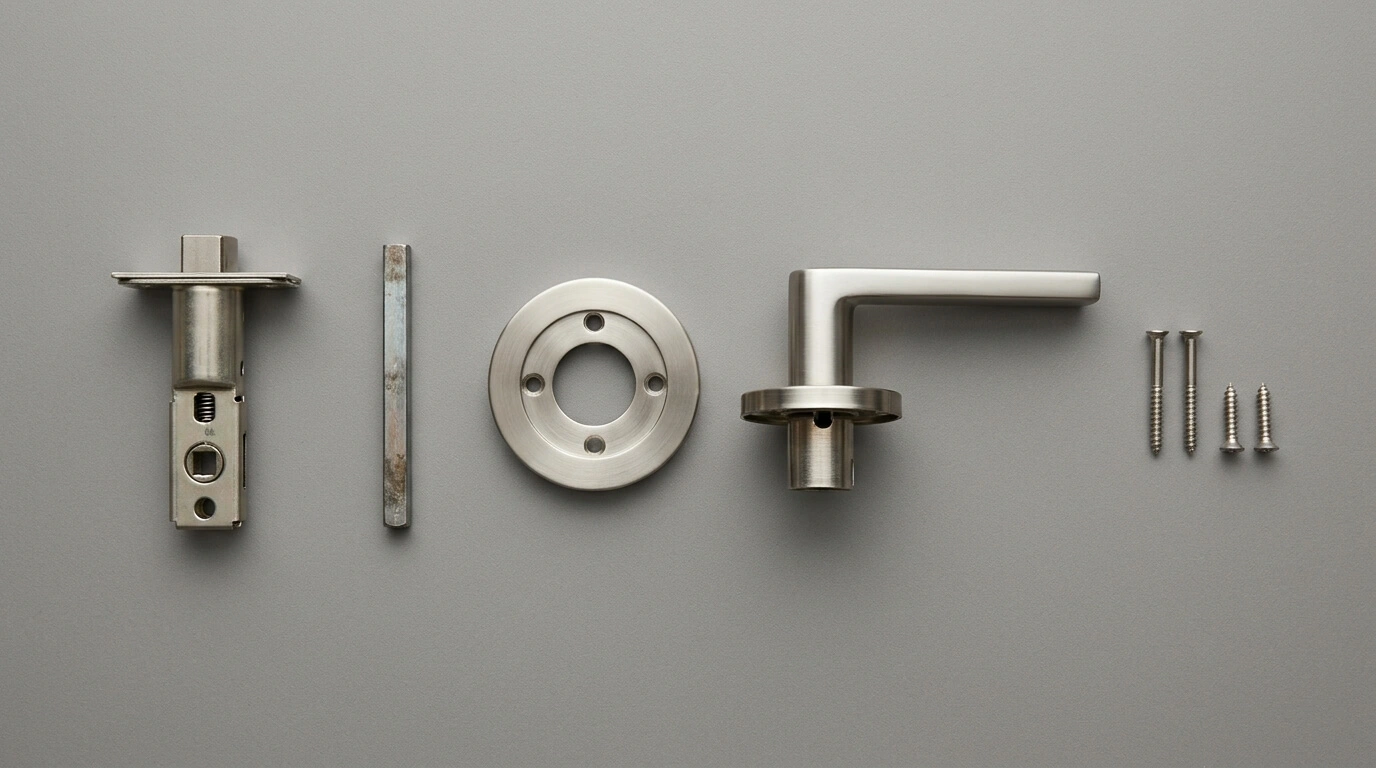
Turn the handle after each round. If it starts to feel stiff or the latch drags, you’ve gone too tight, so back off a quarter turn. Then slide the cover plate and lever back on and snug the set screw again.
Step 4: Older doorknob styles
Some older doorknobs thread onto the spindle instead of sliding on, with a small set screw locking the position. Loosen that screw, thread the knob until it sits snug against the rose without binding, then tighten the set screw again. If the knob still moves after this, go back to Step 3 and check the base.
Step 5: Repair stripped screw holes
If a screw spins and never tightens, the wood has worn out around it. Remove the screw, dip two or three toothpicks in wood glue, push them into the hole, and snap them off flush. Let the glue set for the time on its label, trim any bump with a sharp knife, and drive the screw back in. This is the same trick that rescues loose hinge screws, and you can see it in action in our guide to adjusting cabinet hinges. A slightly longer screw of the same thread can also work, but check first that the tip won’t block the latch bolt.
Step 6: Test it and mark it
Wiggle the handle again, then work it ten times. The latch should pull in fully and snap back out crisply, and the lever should return to level by itself. The U.S. Access Board’s guide to operable parts describes a simple usability check for lever hardware: it should work when pushed with a closed fist. If yours needs a tight grip or a twist of the wrist to work, something is binding.
Last, draw a thin pencil line across each set screw and onto the lever or rose beside it. Next time you check, if a line has broken apart, that screw is turning loose and you’ll know exactly which one.
If the handle is solid but the door still won’t catch, the handle isn’t the issue. The latch and strike plate are probably out of line, and our guide on how to fix a door that won’t latch covers it.
When to Replace Instead of Repair
Replace the set if the lever droops and won’t spring back (the internal spring is worn), if the screw threads in the metal are stripped, if the handle is cracked, or if the finish has worn through. Repairing worn door handles is rarely worth it when a new set costs about the same as a few replacement parts. If you’re planning several small fixes this year, the home maintenance budget calculator helps you set money aside for them.
Mistakes to Avoid
Most problems when fixing a loose door handle come from rushing the job rather than from the loose handle itself.
- Cranking the screws. Over-tightening strips small set screws and can make the latch bind. Snug, then test.
- Using a power drill. Even on a low setting, a drill can strip a hex socket or chew up the screw hole in seconds.
- Skipping the wobble test. Tightening every screw you can see wastes time and sometimes makes things worse.
- Using permanent threadlocker. The strong red type can make future repairs painful. Choose the removable blue type and keep it away from moving latch parts.
- Forcing the lever on. If it won’t seat, the spindle and screw aren’t lined up. Turn it slightly and try again.
- Locking yourself out. Keep the door propped open until the handle works properly again.
When to Call a Professional
A loose door handle is a beginner job, but a few situations are better handed over.
- Smart or electronic locks. Wiring, batteries and motors sit behind the body of the lock. Follow the maker’s manual or contact their support.
- Mortise locks and antique hardware. The lock body is a box inside the door edge, and parts can be hard to replace.
- A damaged door or frame. Split wood, an enlarged hole or a cracked door edge needs a carpenter, not a bigger screw.
- Entry doors with security concerns. If the deadbolt and latch don’t line up or the frame feels weak, get it checked.
- Fire-rated doors. A label on the door edge means the hardware may be part of the rating. Ask a pro or building manager before swapping parts.
- Rental homes. Tell your landlord first. Many leases cover this kind of repair.
- Homes built before 1978. Old paint may contain lead, and drilling, sanding or scraping painted wood can release dust. Tightening screws doesn’t disturb paint, but anything beyond that is a different story. The EPA’s page for do-it-yourselfers recommends hiring a lead-safe certified contractor for renovation work in these homes.
Keep Door Handles From Coming Loose Again
Doors are used dozens of times a day, so some loosening is normal. Twice a year, wiggle every handle in the house and check your pencil marks. Keep one spare set screw and note the brand and finish of your hardware on your phone so a replacement is quick to find. While you walk through, listen for creaks near doorways too. If the floor is complaining, our guide to fixing squeaky hardwood floors is a good next job.
Sources and Further Reading
- Allegion (Schlage) knowledge base: set screw seating on knobs and levers
- U.S. Access Board: Guide to the ADA Standards, operable parts
- U.S. EPA: Renovation, Repair and Painting program for do-it-yourselfers
This guide is general information, not trade advice. Your lock’s own instruction sheet always comes first, and brands such as Schlage, Kwikset and Yale publish manuals for most models. See our disclaimer.
The Short Version
Knowing how to fix a loose door handle mostly comes down to one habit: find the movement before you pick up a tool. A moving lever means the set screw, a moving base means the mounting screws, and a spinning screw means a quick wood repair. Do those in that order, test the latch, and you’re done. Add a quick check twice a year and your door handles won’t get the chance to get worse.
Frequently Asked Questions
How to fix a loose door handle without special tools?
Most repairs need only a Phillips screwdriver and a small hex key. If the screws are visible on the base, the screwdriver alone is enough. The hex key is only for the tiny set screw under a lever. For a stripped hole, toothpicks and wood glue do the job.
Why do door handles keep coming loose?
Daily use slowly works screws loose, and slamming doors speeds it up. Screws can also wear out the wood they sit in. Use a drop of removable threadlocker on set screws and fix stripped holes with glued toothpicks so the thread has something solid to grip.
How to fix a loose lever door handle that sags?
A wobble and a sag are different problems. A wobble means loose screws. A lever that droops and won’t return to level usually has a worn internal spring, and replacing the whole handle set is normally easier than hunting for parts.
Can I fix a doorknob when the screw hole is stripped?
Yes. Take the screw out, glue two or three toothpicks into the hole, trim them flush once the glue sets, and drive the screw back in. The screw now bites into fresh wood instead of an empty, worn-out hole.
Should I repair or replace loose door handles?
Repair if tightening the screws solves it. Replace if the lever droops, the metal threads are stripped, the handle is cracked, or the finish has worn through. A basic replacement set is inexpensive, so don’t spend an hour on parts that are worn out.
Are lever handles easier to use than a doorknob?
Generally, yes. The U.S. Access Board notes that a closed fist is a good usability test for lever hardware, and levers can be pushed down without tight gripping or wrist twisting. A round doorknob needs both.

About the author: Muhammad Hanzala
Founder and managing editor of Make Maintain
Muhammad is passionate about making living spaces functional, stylish and well organized. Instead of claiming trade credentials, he approaches home improvement as a dedicated researcher and practical home enthusiast. Every guide is built by studying official product documentation, home care standards and established maintenance practices, so you get clear, easy-to-follow solutions you can use with confidence.