
Smart Ideas to Organize Cabinets, Appliances, and Everyday Items
A well organized kitchen is not necessarily the one with the most cabinets. Good organization is about making everyday items easy to find, keeping useful space available, and arranging things according to how you actually use them. When storage is poorly planned, even a large kitchen can feel crowded. Plates may end up stacked too high, appliances can take over the countertop, and frequently used items may be hidden behind things you rarely use.
The good news is that you do not always need a complete kitchen remodel to improve storage. A few changes in how you use cabinets, shelves, drawers, racks, and nearby spaces can make a noticeable difference.
What Is Kitchen Storage?
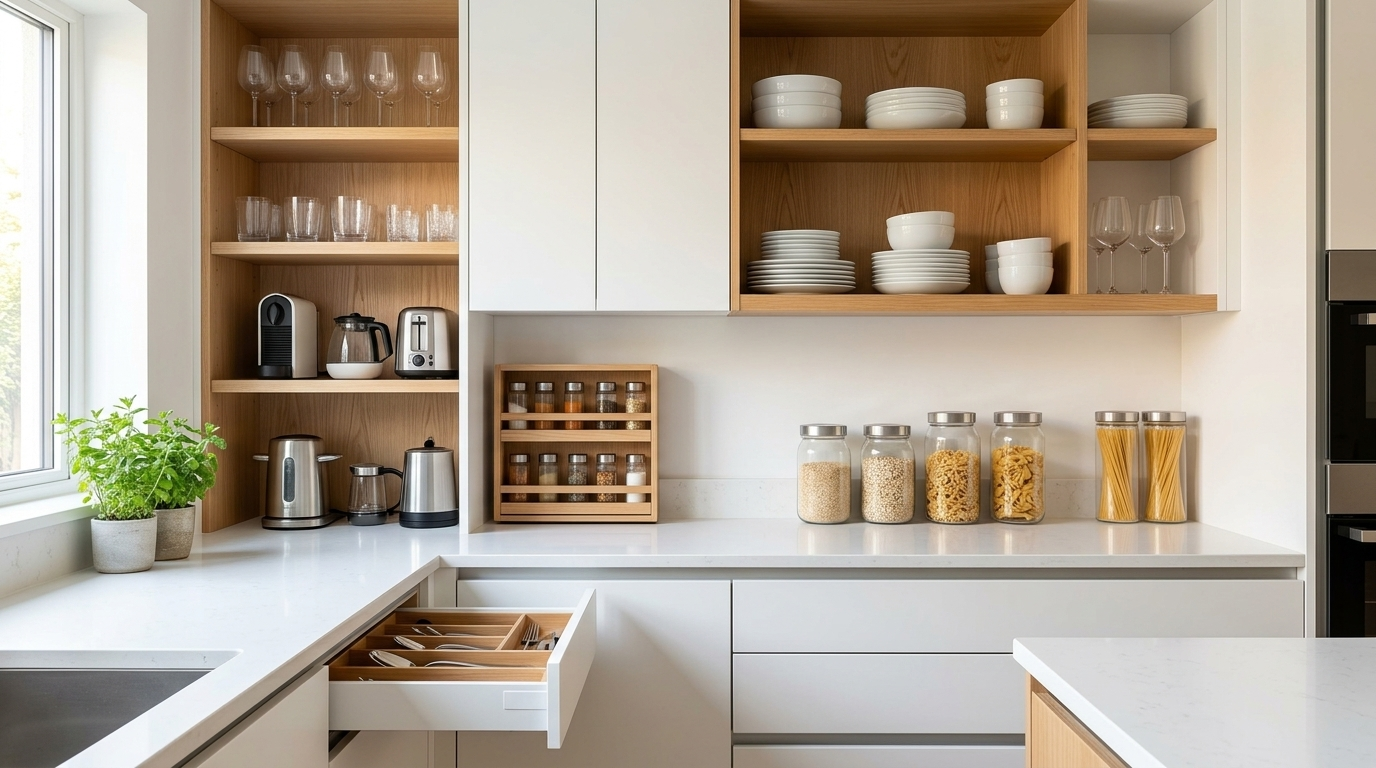
Kitchen storage includes the cabinets, drawers, shelves, racks, containers, islands, and other spaces used to keep cooking and dining items organized. The most useful approach is to divide storage according to frequency of use. Keep everyday items within easy reach. Store occasional items in less accessible areas, and reserve the most convenient spaces for things you use regularly.
This simple principle can make a kitchen easier to work in without adding more furniture.
How to Organize Kitchen Cabinets
Cabinets usually provide the largest amount of enclosed storage, but they can become difficult to use when everything is placed wherever there is an empty spot. Start by removing items that you no longer use. Then group similar items together.
For example, plates and bowls can have their own section, while cookware, food containers, baking supplies, and serving dishes can each have separate areas.
Try to keep the heaviest items on lower shelves or in drawers. Lighter items can be placed higher up where they are easier to handle.
Adjustable shelves can also help because you can change the available height when your storage needs change.
Dish Storage That Saves Space
Dish storage works best when plates, bowls, and serving pieces are grouped according to how often they are used. Everyday plates should not be buried underneath large serving dishes that are only used occasionally. A plate rack, vertical divider, or adjustable shelf can also make better use of cabinet space. Vertical storage is particularly useful when a cabinet has more width than height.
If you have several types of dishes, consider keeping everyday pieces together and seasonal or special occasion pieces in a separate area.
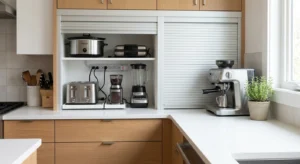
Kitchen Appliance Storage Ideas
Small appliances can quickly consume valuable countertop space.
Some of the most useful kitchen appliance storage ideas involve deciding which appliances deserve permanent countertop space and which ones should be stored away.
For example, an appliance that is used every morning may be easier to keep accessible, while an appliance used only a few times a month can go inside a cabinet or pantry.
Before storing an appliance, check that the cabinet is strong enough to support its weight and that there is enough room to remove it safely. Avoid forcing large appliances into narrow cabinets. Difficult access usually means the appliance will eventually return to the countertop.
Using an Appliance Shelf
An appliance shelf can be useful when you want to keep a frequently used appliance accessible without allowing it to occupy the entire work surface. A dedicated kitchen appliance shelf can also create a specific location for appliances such as a toaster, blender, or coffee maker. The important thing is to consider the appliance’s size, weight, power cord, and how often you use it before deciding where the shelf should go.
A shelf that looks convenient but requires moving several other items every time you need the appliance is not really solving the storage problem.
Kitchen Racks for Small Spaces
Kitchen racks can add storage without requiring additional cabinets. Wall mounted racks can hold lightweight cooking tools, spices, or frequently used accessories. Freestanding racks can provide extra space in areas where installing permanent cabinets is not practical.
However, avoid filling every available wall with racks. Too many exposed items can make a kitchen feel visually crowded.
Choose racks based on the items they need to hold rather than buying a rack first and trying to find a use for it later.
Making Better Use of a Kitchen Island
A kitchen island can provide more than a work surface. A kitchen island with seating and storage can combine food preparation, casual seating, and additional cabinets or drawers in one piece of furniture. Drawers are particularly useful for smaller kitchen tools because they allow you to see the contents without reaching to the back of a deep cabinet.
If the island includes seating, make sure the surrounding walking area remains comfortable. Storage should improve the room rather than create an obstacle.
Dining Room Storage Cabinets
Storage does not have to stop at the kitchen boundary. Dining room storage cabinets can be useful for serving dishes, table linens, glasses, or other items that do not need to occupy kitchen cabinets. This can free up valuable cabinet space for cooking equipment and everyday supplies.
A dining cabinet can also work as a practical display area, but avoid filling it with items that make it difficult to access the things you actually use.
Using a Dining Shelf
A dining shelf can provide a simple place for decorative pieces, serving items, or frequently used dining accessories. Open shelving works best when the number of displayed items is controlled. Leaving some empty space can make the area easier to maintain and prevent it from looking overcrowded.
For heavier items, use a properly supported shelf and follow the manufacturer’s weight recommendations.
Wine Storage Ideas for the Kitchen
If you keep wine at home, dedicated wine storage ideas kitchen setups can help keep bottles organized. A small wine rack may work for a few bottles, while a larger collection may require a dedicated cabinet or storage area.
The location matters. Bottles should be kept away from excessive heat and direct sunlight. If you are storing valuable wine for a long period, follow appropriate storage guidance for temperature and humidity rather than treating a decorative rack as a complete wine storage solution.
Outdoor Kitchen Storage
An outdoor cooking area needs a different storage approach from an indoor kitchen. Outdoor storage should account for moisture, temperature changes, dust, and exposure to the weather. Choose storage materials and containers designed for outdoor conditions. Items that can rust, warp, or deteriorate easily should not be left exposed.
Keep frequently used outdoor cooking tools close to the preparation area, while less frequently used equipment can be stored in a protected cabinet or separate storage space.
How to Choose Storage Based on Your Kitchen Layout
Before buying new storage products, look at how your kitchen is currently being used.
Ask yourself:
- Which items do I use every day?
- Which items are difficult to reach?
- Which cabinets contain unused or duplicate items?
- Which appliances are taking up countertop space?
- Where do people naturally move while cooking?
- Are there unused vertical spaces that could be used safely?
The answers can reveal storage opportunities that are already present.
For example, a deep cabinet may not need another shelf. It may simply need dividers or pull out organizers that make the existing space easier to access.
How to Make Small Kitchens Feel More Organized
Small kitchens benefit from storage that uses vertical and hidden space efficiently.
Consider:
- Using the inside of suitable cabinet doors for lightweight items
- Adding drawer dividers for small tools
- Using stackable organizers where appropriate
- Keeping rarely used items in higher cabinets
- Moving suitable dining items to nearby storage
- Reducing duplicate cookware and utensils
- Using wall space carefully
- Keeping the countertop limited to frequently used items
The goal is not to make every inch of space hold something. Empty working space is also valuable.
Storage Mistakes That Make a Kitchen Harder to Use
One common mistake is storing items according to their category but ignoring how frequently they are used.
For example, keeping all cookware together sounds logical, but if the most frequently used pan is buried at the back of a low cabinet, the arrangement is not convenient.
Another mistake is buying storage containers before measuring the available space.
Containers, racks, and organizers should fit the cabinet or drawer properly. Otherwise, they can actually reduce usable space. Overloading shelves is another problem. Heavy items can place unnecessary stress on shelves and hardware, so storage capacity should always be considered before adding more weight.
A Simple Organization Reset
If your kitchen feels cluttered, you do not have to reorganize everything in one day.
Start with one cabinet or drawer.
Remove everything, clean the empty space, and separate the contents into three groups:
- Items used regularly
- Items used occasionally
- Items that are no longer useful
Return the regularly used items to the easiest locations. Move occasional items to less convenient storage areas, and remove things you no longer need. Repeat the process one section at a time.
This approach is usually easier to maintain than taking the entire kitchen apart and trying to reorganize everything at once.
Should You Add More Storage or Remove Items?
More storage is not always the answer. If cabinets are full because they contain unused appliances, duplicate utensils, old containers, or items that no longer serve a purpose, adding another rack or cabinet may only hide the underlying problem. Start by reducing unnecessary items. Then identify the areas where additional storage would genuinely improve access. This makes the storage you already have more useful and can help you avoid spending money on unnecessary organizers.
How to Keep Kitchen Organized
An organized kitchen can gradually become cluttered again if items do not have clear homes. After using something, return it to the same location. Try to keep frequently used items in their established areas and avoid creating temporary piles on countertops. Every few months, review cabinets and drawers for items that have stopped being useful.
Storage works best when the system is simple enough that everyone using the kitchen can follow it.
Frequently Asked Questions
What Is the Best Way to Organize the Space?
The best approach is to organize storage according to frequency of use. Keep everyday items easy to reach and place occasional items in less accessible areas.
How Can I Create More Storage Without Remodeling?
You can improve existing storage with drawer dividers, adjustable shelves, vertical organizers, wall mounted racks, and better use of cabinets. Removing unused items can also create significant space.
Where should kitchen appliances be stored?
Frequently used appliances can remain accessible, while appliances used occasionally can be stored in cabinets, pantry areas, or suitable shelves. Always consider size, weight, ventilation, and safe access.
Are open kitchen racks a good idea?
They can be useful for frequently used or attractive items, but too many open racks can make a kitchen look crowded. Use them selectively and keep heavier items on properly supported surfaces.
How do I organize dishes in a small kitchen?
Group everyday plates and bowls together and use vertical dividers or adjustable shelving when suitable. Keep rarely used serving dishes in less accessible storage.
Can a kitchen island provide useful storage?
Yes. An island can combine drawers, cabinets, and a work surface. Some designs also include seating, allowing one piece of furniture to serve several purposes.
What Should You Consider for Outdoor Storage?
Outdoor storage should be selected for the local weather conditions. Moisture, temperature changes, dust, and corrosion can affect unsuitable materials and stored items.
How Often Should You Reorganize?
There is no fixed schedule. A quick review every few months can help identify unused items and prevent cabinets and drawers from becoming difficult to use.
Final Thoughts
Good organization is less about filling every available space and more about making the space you already have work better.
Start with the items you use most often. Give them convenient locations, group similar things together, use vertical space where appropriate, and avoid buying organizers before understanding the problem you are trying to solve.
Whether you have a compact kitchen or a larger cooking area, thoughtful storage can make everyday tasks easier without requiring a complete renovation.
Read More: What Is a 3/4 Bath? A Practical Guide for Homeowners