
By Muhammad Hanzala · Updated November 9, 2026 · Built from public agency and industry sources. See our editorial standards.
Most closets don’t fail because they’re too small. They fail because nobody ever decided how much they’re supposed to hold. Clothes pile up, the rod bends, the good stuff gets buried, and a tidy-up on Sunday is gone by Wednesday.
This guide flips the usual order. You measure first, set a limit your closet can really carry, and only then sort, zone and buy anything. It also covers two things closet guides rarely mention: reach height and closet lighting safety.
Project Overview
- Total time: 1 to 2 hours for a small reach-in closet, 3 to 4 hours for a bigger or very full one. Splitting it across two sessions works fine.
- Estimated cost: $0 to $30 if you reuse what you own and add matching hangers and labels. Adding shelves, bins or a system usually runs about $40 to $200, depending on size and brand.
- Skill level: Beginner. No drilling is needed unless you choose to install a rod or shelf.
Quick Answer
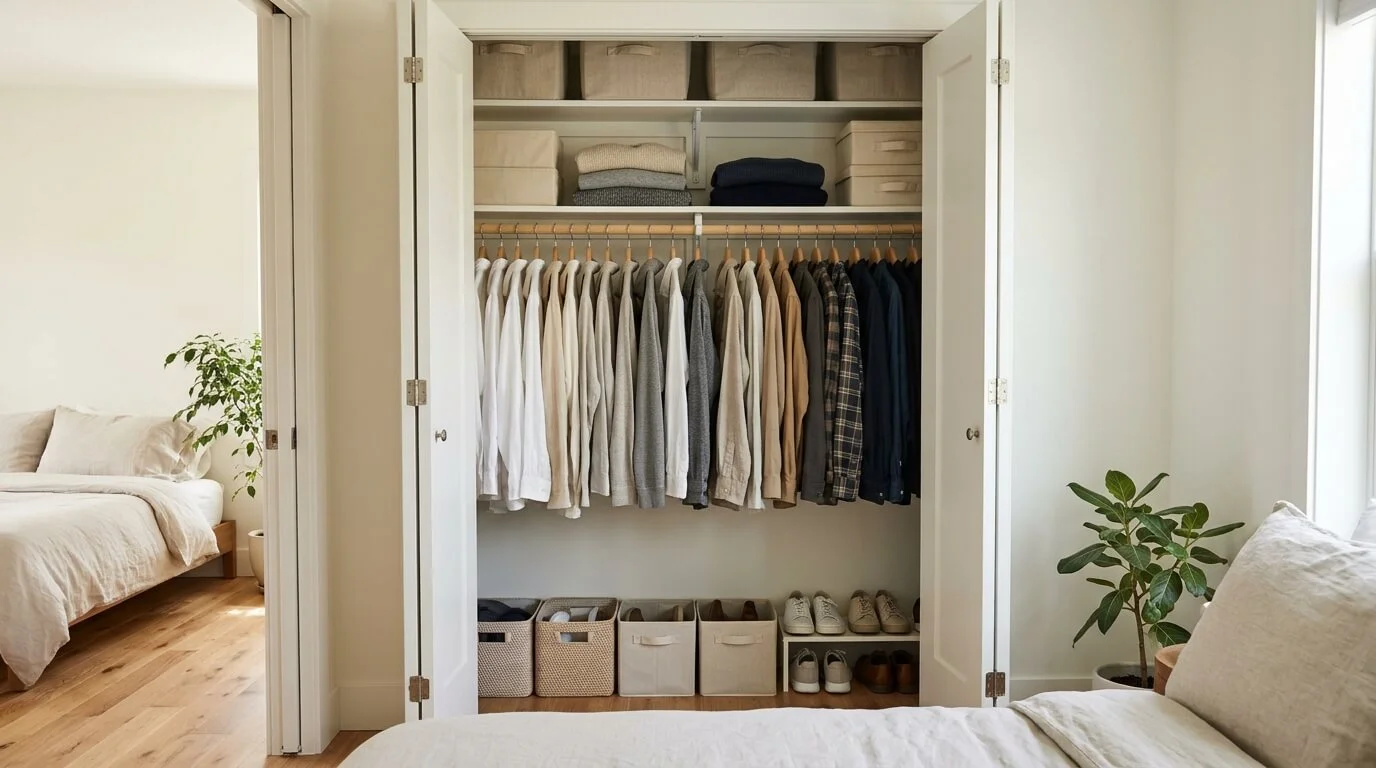
Measure your hanging rod and shelves, then set a limit of roughly one garment per 2 inches of rod. Empty the closet, sort everything into keep, donate, repair and store-elsewhere piles, and keep the things you wear weekly between about 15 and 48 inches off the floor. Hang structured pieces, fold knits, group by type, label the shelves, and make sure nothing is touching the light fixture.
Measure First: Your Closet Capacity Cap
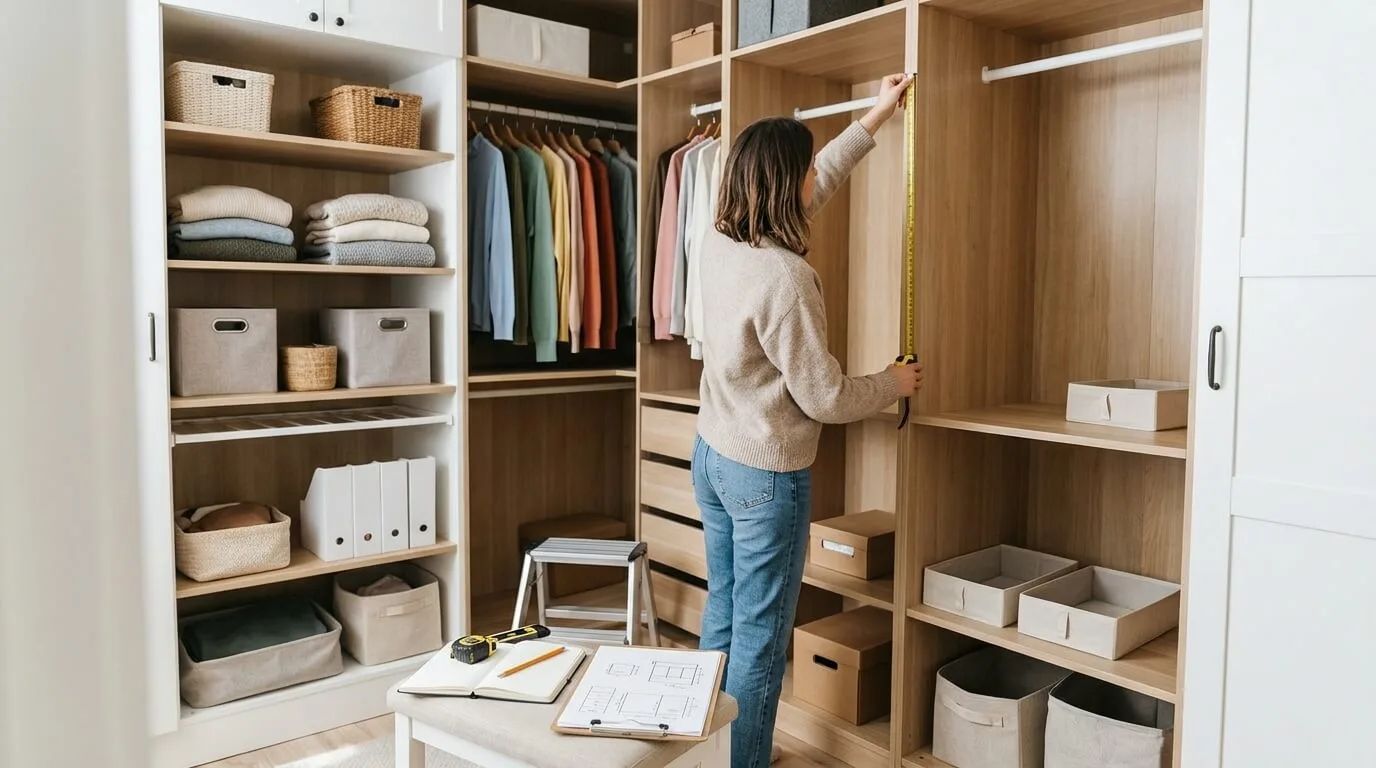
Before you pull a single shirt out, measure three things: the length of your hanging rod, the width and number of shelves, and the depth of the space. Write the numbers on your phone.
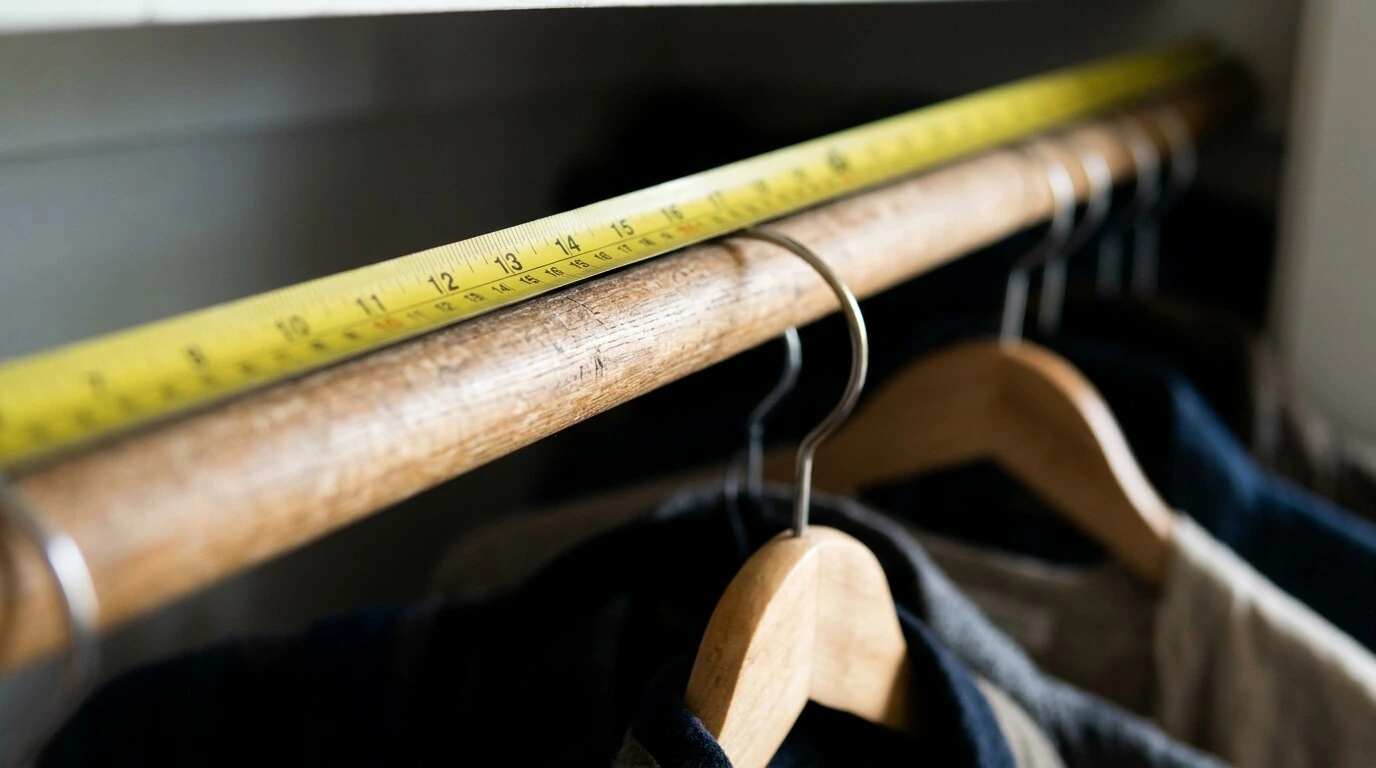
Here is a simple planning estimate. Allow about 2 inches of rod per everyday garment, and more for bulky coats. Then aim to fill only around 80 percent. A 48-inch rod, for example, holds about 24 pieces, so plan on roughly 19 to 20. This isn’t an official standard, just a practical limit. The gap is what lets you see what you own and keeps fabrics from being crushed. When the closet hits the cap, something has to leave before something new comes in.
Tools You Need
- Tape measure for the rod, shelves and depth.
- Four containers or bags (laundry baskets work) for keep, donate, repair and store elsewhere.
- Matching hangers. One style makes the rod look calmer and wastes less space.
- Labels or masking tape and a marker for shelves and bins.
- Step stool for top shelves.
- Vacuum or damp cloth for the empty shelves and floor.
- Phone for a before and after photo and your measurements.
- Optional: shelf dividers, bins, shoe racks, and a cheap hygrometer if your closet feels damp.
How to Organize Your Closet: Step by Step
Step 1: Empty it and clean it
Take everything out. Yes, everything. Wipe the shelves, vacuum the floor and check corners for dampness or pests. It’s the only time you’ll see the closet empty, so use it to decide what the space is actually good for.
Step 2: Sort into four piles
Keep, donate, repair and store elsewhere. Don’t overthink the first pass. If an item doesn’t fit, hasn’t been worn in a full year, or you keep reaching past it, it goes in donate. The EPA reports that discarded clothing is the main source of textile waste, and that only 13 percent of clothing and footwear was recycled in 2018, so donating beats binning. Here is the EPA’s textiles data. Check your local charity’s rules, but damp or mildewed clothes generally can’t be resold, so bag donations clean and dry.
Step 3: Put daily items in the easy-reach band
The U.S. Access Board’s guide to operable parts sets the unobstructed reach range for adults at 15 inches minimum to 48 inches maximum above the floor. That range is written for things people grab or press, such as handles and switches, not for closets. Still, it makes a handy rule: keep what you wear every week inside that band, and push seasonal items, spare bedding and keepsakes above or below it. The Board also lists advisory ranges for children, such as 16 to 44 inches for ages 9 to 12, so lower a child’s zone to match.
Step 4: Decide what hangs and what folds
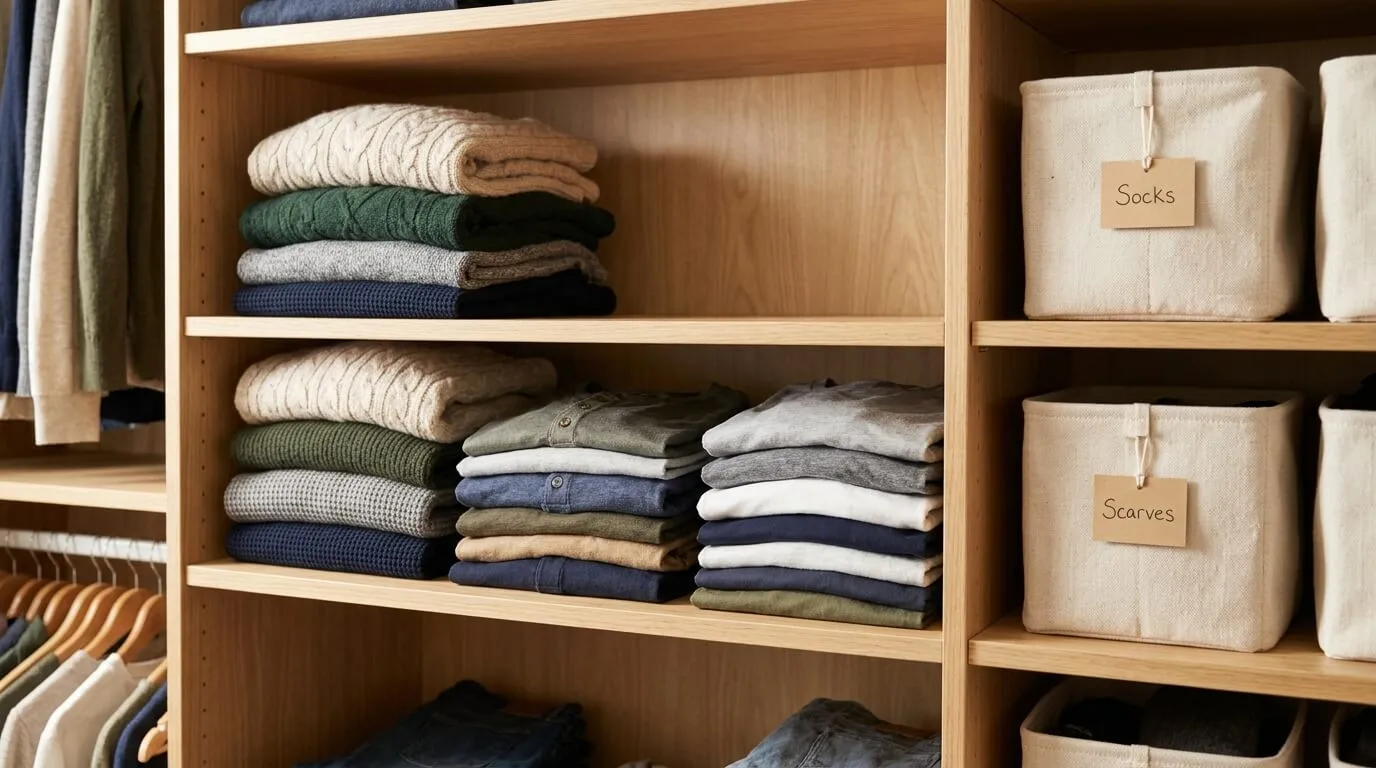
Hang shirts, dresses, coats and trousers you don’t want creased. Fold knits and heavy sweaters, because hangers can stretch the shoulders. Colorado State University Extension’s fact sheet on clothes moths explains that the damage comes from the caterpillars, which feed on wool, fur and feathers but not on cotton, silk or synthetic fibers. They go for sweat-stained or soiled patches far more than clean wool, so wash woolens before storing them and keep them in tight-fitting containers or garment bags. The same fact sheet suggests checking stored woolens at least once a year.
Step 5: How to organize my closet around the way I actually dress
Group by type first (tops, trousers, dresses, outerwear), then by color or length inside each group. If you wear a work uniform or set outfits, give those their own section at the front. Hang the longest items at one end so the space under shorter garments can hold a low shelf or bin.
Step 6: Label it and set a one-in, one-out rule
Label shelves and bins, even if it feels silly. A label tells every person in the house where things go. Then keep the cap from the measuring step: when you bring something home, something else leaves. Take a photo of the finished closet so you can compare it a month from now.
How to Organize Your Closet With Little Space
A small closet needs a lower cap and better use of height, not more stuff squeezed in. Start with matching slim hangers to claw back rod length. Add a second, lower rod for shirts and trousers if the ceiling height allows, use the back of the door for belts and bags, and slide flat bins under the hanging clothes. Move off-season items out of the closet altogether, perhaps under the bed or on a high shelf. Our guide to storage tips for small bedrooms has more ideas for space outside the closet.
Corner Closet Organizer: Use the Dead Corner
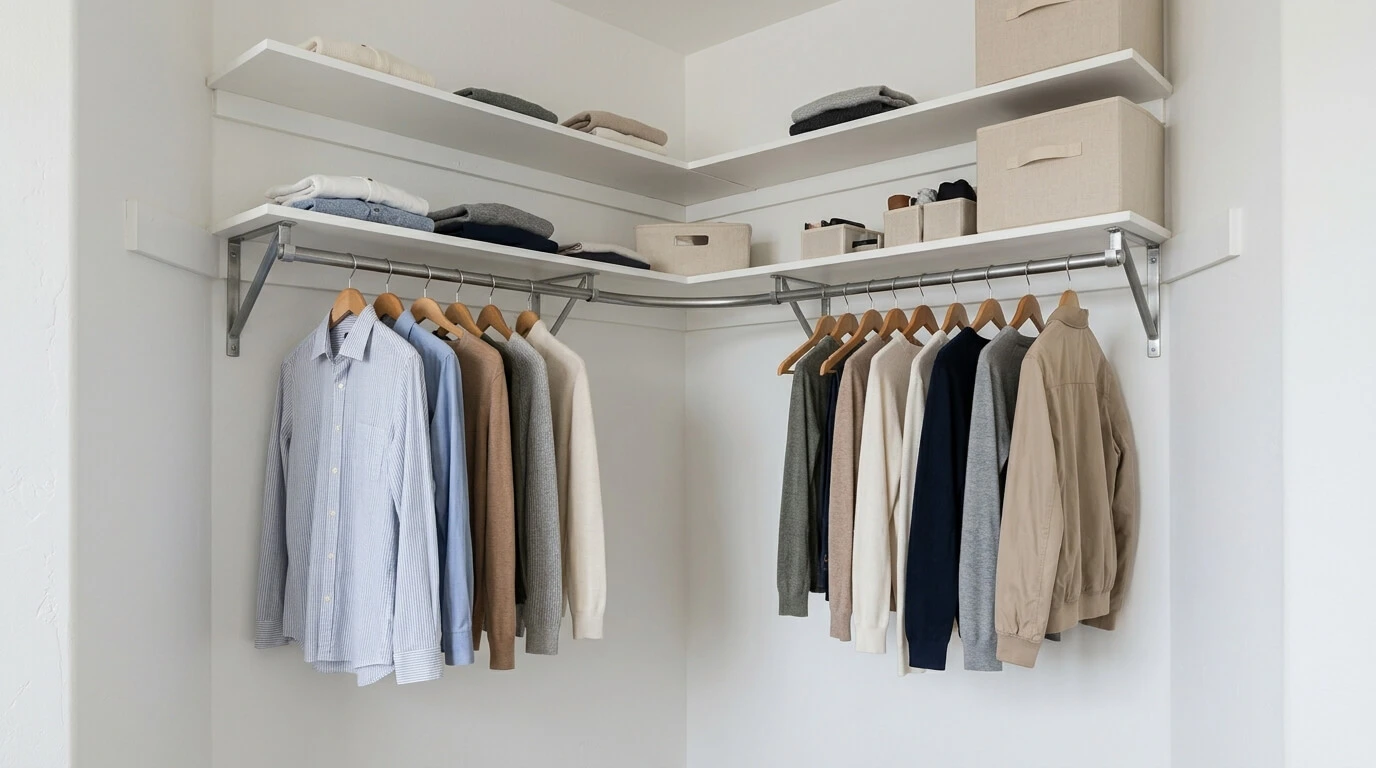
Corners waste more space than any other spot. A corner closet organizer, such as an L-shaped rod or a set of corner shelves, turns that dead zone into storage. Keep in mind that hanging clothes need room to swing, so check that garments on the two rods won’t collide at the corner. A corner closet organizer works best with light items, such as shirts or scarves, rather than heavy coats.
Closet Organizer 2026: Buy After You Measure
Shopping for a closet organizer 2026 lineup is easy to get wrong when you buy before you know your numbers. Use your measurements and your keep pile to decide what you actually need: more hanging space, shelves or drawers. Adjustable pieces are safer than fixed ones, since your wardrobe will change. The same zone-by-use thinking works in other rooms too, as you’ll see in our kitchen storage ideas.
Check the Light Before You Fill the Shelves
Closet light fixtures give off heat, and a closed door can hide a problem for a long time. The International Association of Electrical Inspectors’ 2025 overview of residential lighting says the electrical code limits which fixture types can go in a clothes closet and requires set clearances from the closet storage space. It also says open lamps and pendant fixtures are not allowed in that space. An earlier IAEI article gives one example: a surface-mounted drum fixture with incandescent lamps needs 12 inches of clearance from stored items. Other fixture types have different numbers, so check the label on yours. Keep boxes and clothes clear of the light, and if you have a bare bulb, ask a licensed electrician about a closet-rated fixture. Local rules vary.
Mistakes to Avoid
- Buying organizers first. You can’t pick bins without knowing what goes in them.
- Keeping “maybe” clothes in the best spots. Prime space is for what you wear weekly.
- Packing the rod solid. If you can’t slide hangers, you’ll stop using the back half.
- Storing dirty wool. Wash it first, then close it away.
- Stacking things against the light. Leave clearance.
Sources and Further Reading
- U.S. EPA: Textiles, material-specific data
- U.S. Access Board: Guide to the ADA Standards, operable parts
- Colorado State University Extension: Clothes moths, identification and control in the home
- IAEI Magazine (2025): Residential lighting under the NEC
- IAEI Magazine (2015): NEC Article 410, luminaires, lampholders and lamps
This guide is general information. Electrical work should be handled by a licensed electrician. See our disclaimer.
The Short Version
Knowing how to organize your closet comes down to a sequence: measure, cap, sort, zone, label. Do it in that order and the closet stays organized because it was sized to fit your life, not the other way around. Check the cap once a month and keep the light clear, and the next big cleanout may never be needed.
Frequently Asked Questions
How to organize your closet with little space?
Lower your cap, use matching slim hangers, add a second rod or low bins, and use the back of the door. Move off-season items out of the closet entirely. Everything you wear weekly should stay in easy reach.
How to organize my closet when I own too many clothes?
Measure the rod, work out your cap (about one garment per 2 inches, filled to 80 percent), and sort into keep, donate, repair and store-elsewhere piles. Anything that doesn’t fit the cap needs to leave or be stored outside the closet.
Is a closet organizer 2026 worth buying?
Only after you measure and sort. Adjustable shelves and rods adapt as your wardrobe changes. If the closet already holds everything with room to spare, simple matching hangers and labels may be all you need.
Does a corner closet organizer work in a small closet?
It can, if the corner is truly unused. An L-shaped rod or corner shelves add space, but check that hanging clothes won’t collide. Use it for lighter items rather than bulky coats.
Should I hang or fold sweaters?
Fold heavy knits, since hangers can stretch the shoulders. Clothes moth caterpillars feed on wool, fur and feathers, so wash woolens before storing them and keep them in tight-fitting containers or garment bags.
How far should clothes be from a closet light?
It depends on the fixture type. One IAEI example says a surface-mounted incandescent drum fixture needs 12 inches of clearance from stored items. Check your fixture’s label and local rules, and ask an electrician if unsure.

About the author: Muhammad Hanzala
Founder and managing editor of Make Maintain
Muhammad is passionate about making living spaces functional, stylish and well organized. Instead of claiming trade credentials, he approaches home improvement as a dedicated researcher and practical home enthusiast. Every guide is built by carefully studying official product documentation, interior organization standards and established home care practices, so you get clear, easy-to-follow solutions you can use with confidence.