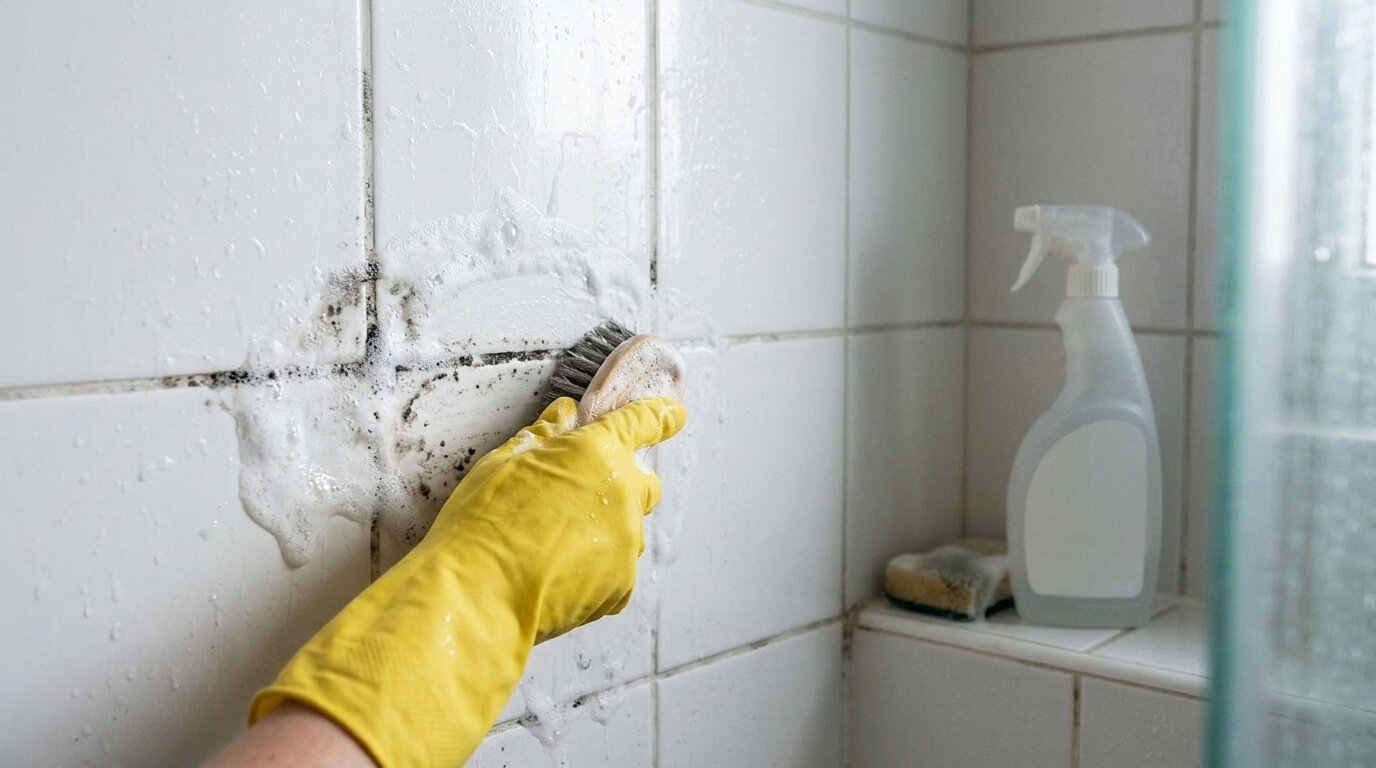

To remove mold from shower surfaces, spray white vinegar or a 3% hydrogen peroxide solution on the affected area, let it sit for 30 to 60 minutes, scrub with a stiff brush, rinse with warm water and dry everything completely. If the mold is inside the caulk or has turned the silicone black all the way through, cleaning will not fix it and the caulk must be replaced.
That is the short version. The longer version matters, because most people clean mold in the shower, see it disappear, and watch it return within two weeks. The reason is almost never the cleaner. It is where the mold started and how wet that spot stays. Let’s go through it properly.
Why Mold in Shower Keeps Coming Back
A shower is the perfect place for mold. It has warmth, moisture, soap residue as food, and often poor airflow. Mold spores are already floating in every home. They only need a damp surface for about 24 to 48 hours to start growing.
Here is the part most guides skip. Mold does not grow evenly across your shower. It starts in a few predictable spots, and if you treat only the visible patches on the wall, the real source keeps feeding it. The usual starting points are:
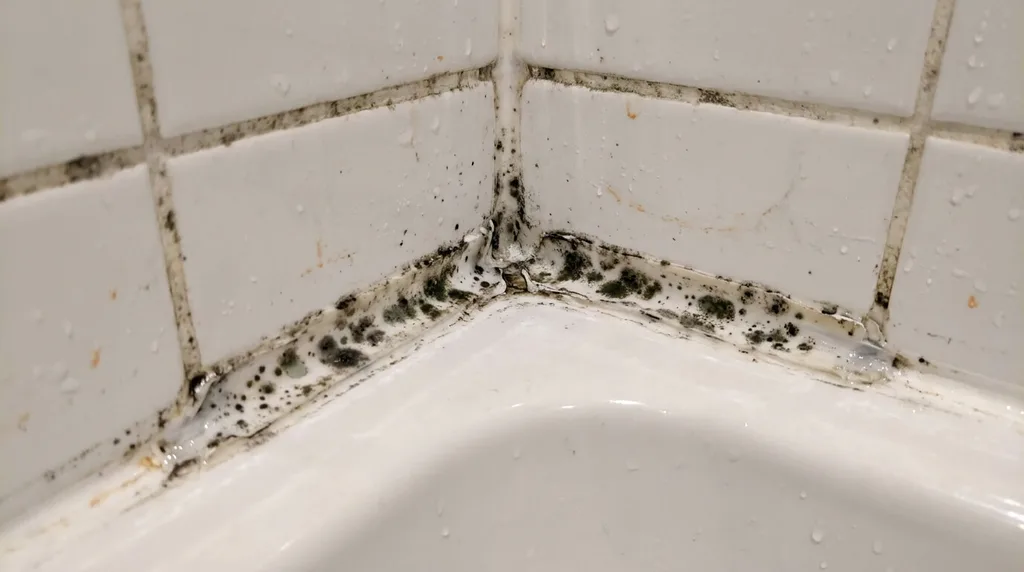
- The silicone line where the shower floor meets the wall
- The rubber gasket around the drain
- The bottom hem of the shower curtain
- The grout lines at the lowest row of tiles
- The ceiling above the shower head, especially near the exhaust fan
- The inside of the soap dish and the bottom of the shampoo bottles
If you check these spots first, you will usually find the root of the problem within five minutes.
Is It Mold or Just Soap Scum? Try the Wipe Test
Not every dark mark is mold. Soap scum and mineral stains can look similar, and using the wrong method wastes your time.
Dampen a white cloth with a little diluted vinegar and rub the spot firmly for 10 seconds. If the stain lifts and the cloth turns pinkish or greyish, it was mostly soap scum or a pink bacteria film. If the stain stays, smells earthy or musty, and keeps spreading in a fuzzy or speckled pattern, you are dealing with real mold. Black and dark green spots in the corners are the most common sign.
Tools and Supplies You Need
You do not need an expensive kit. Most of this is already in a normal home. Here is a simple list with what each item is actually for:
| Tool or Supply | What It Does |
|---|---|
| White vinegar (5% acidity) | Breaks down mold on non porous surfaces like tile and glass |
| 3% hydrogen peroxide | Gentler on colored grout and works as a mild disinfectant |
| Baking soda | Adds light scrubbing power and helps remove the musty smell |
| Isopropyl alcohol (70%) | Quick surface treatment for small patches and hard plastic |
| Stiff nylon brush | Gets into grout lines without scratching tile |
| Old toothbrush | Reaches corners, drain edges and the dish holder |
| Spray bottles (2) | One for vinegar, one for peroxide. Never mix them in one bottle |
| N95 mask and rubber gloves | Protects you from spores and cleaning fumes |
| Microfiber cloths | Dries surfaces fully after cleaning |
| Squeegee | The best prevention tool you can buy for the shower |
| Hygrometer (small humidity meter) | Shows if your bathroom stays above 50 percent humidity |
| Mold resistant silicone caulk | For replacing damaged sealant lines |
Step by Step: How to Remove Mold from Shower
Step 1: Ventilate and Protect Yourself
Open the window or turn on the exhaust fan before you start. Wear gloves and a mask. Mold spores can irritate the nose, eyes and throat, and scrubbing releases more of them into the air.
Step 2: Do Not Wet the Mold First
Many people spray water on mold before cleaning. This can help it spread. Start with the cleaner directly on the dry or slightly damp patch.
Step 3: Choose the Right Cleaner for the Surface
- Tile, glass and fiberglass: White vinegar works well. Spray it generously and wait.
- Colored grout: Use 3% hydrogen peroxide. It is less likely to fade colors than strong chemicals.
- Small patches on plastic or hard fixtures: 70% isopropyl alcohol is useful (more on this below).
- Natural stone like marble: Avoid vinegar completely. It can etch the stone. Use a stone safe cleaner with a soft cloth.
Step 4: Let It Sit Long Enough
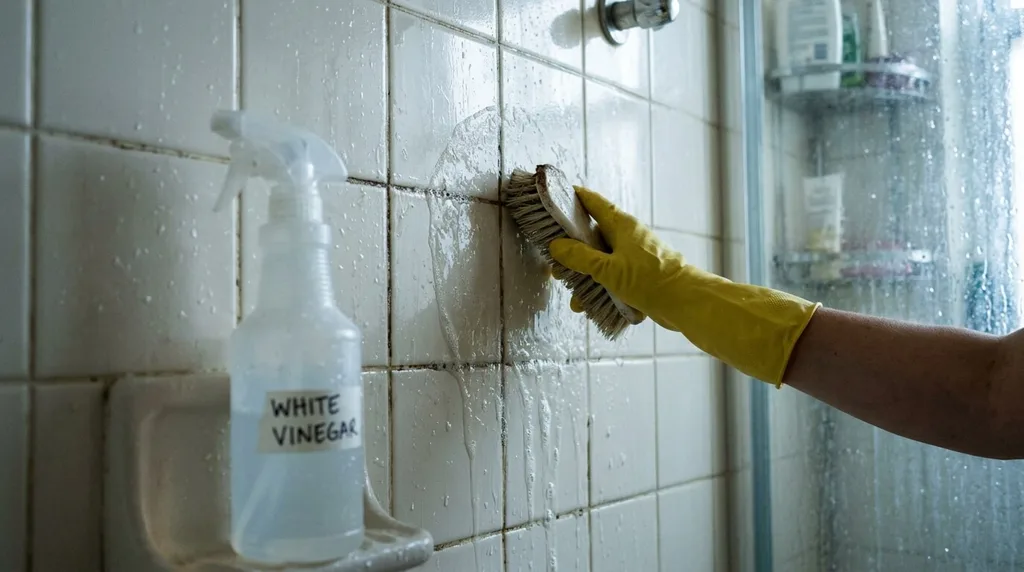
This is where most people fail. A quick spray and wipe only removes the top layer. Let vinegar or peroxide sit for at least 30 minutes, and up to 60 minutes for thick patches. The cleaner needs time to reach the mold roots.
Step 5: Scrub the Right Way
Use the stiff brush on tile and grout and the toothbrush in corners. Work in small circles. Add a little baking soda paste on stubborn spots, then scrub again.
Step 6: Rinse and Dry Completely
Rinse with warm water and then dry every surface with a microfiber cloth. Drying is not optional. A wet shower wall is an invitation for mold to return the same night.
Step 7: Check the Caulk
Look at the silicone lines. If dark stains are on the surface only, they may come off. If the black color goes deep into the caulk, or the caulk is peeling, cut it out with a utility knife, clean the gap, let it dry for 24 hours and apply new mold resistant silicone.
Killing Mold vs Removing Mold: They Are Not the Same
This is something many articles confuse. Killing mold means the living organism is dead. Removing mold means the stain and growth are gone. You can kill mold and still see a dark stain, and you can wipe away a stain and leave live mold behind.
For killing mold on hard surfaces like tile, vinegar and hydrogen peroxide both work well when left to sit. For deeper stains in grout, you often need to kill it first, scrub it, and then dry the area fully. Dead mold can still cause allergy problems, so removal always matters.
Can Alcohol Kill Mold?
Yes, but with limits. Many people ask, can alcohol kill mold, and the honest answer is that 70% isopropyl alcohol can kill mold on the surface of hard, non porous materials like glass, plastic and glazed tile. It evaporates fast, which also means it may not stay on the surface long enough to deal with heavy growth.
It is not a good choice for grout, porous materials or silicone that has mold growing inside it. In those cases the alcohol never reaches the roots. Use it for small patches and quick touch ups, and use vinegar or peroxide for bigger jobs. Also keep alcohol away from heat and open flames, and never use it in a closed bathroom with no airflow.
A Safety Warning About Mixing Cleaners
Never mix bleach with vinegar or ammonia. These mixtures release toxic fumes. Also avoid mixing vinegar and hydrogen peroxide in the same bottle, because this can create peracetic acid, which is irritating to skin and lungs. Use them one after the other, with a rinse in between, if you want to use both.
Mold in Shower on Different Surfaces
Shower curtain: Wash it in the washing machine on a warm cycle with a cup of vinegar and a few towels for scrubbing action. Replace it if black stains remain, because liners are cheap and mold in the fabric is hard to remove.
Glass doors: Spray with vinegar, wait 20 minutes, scrub the track with a toothbrush and wipe dry. Mold collects in the bottom track more than anywhere else.
Tiled walls: For wider bathroom tile care beyond mold, see our detailed guide on how to clean bathroom tiles.
Small shower stalls: If you have a compact setup like a 3/4 bath, ventilation is even more important because there is less air volume to carry away steam. If you are not sure what that layout means, here is a quick explanation of what is a 3/4 bath.
How to Stop Mold in Shower for Good
Cleaning is only half of the job. These simple habits do more than any product:
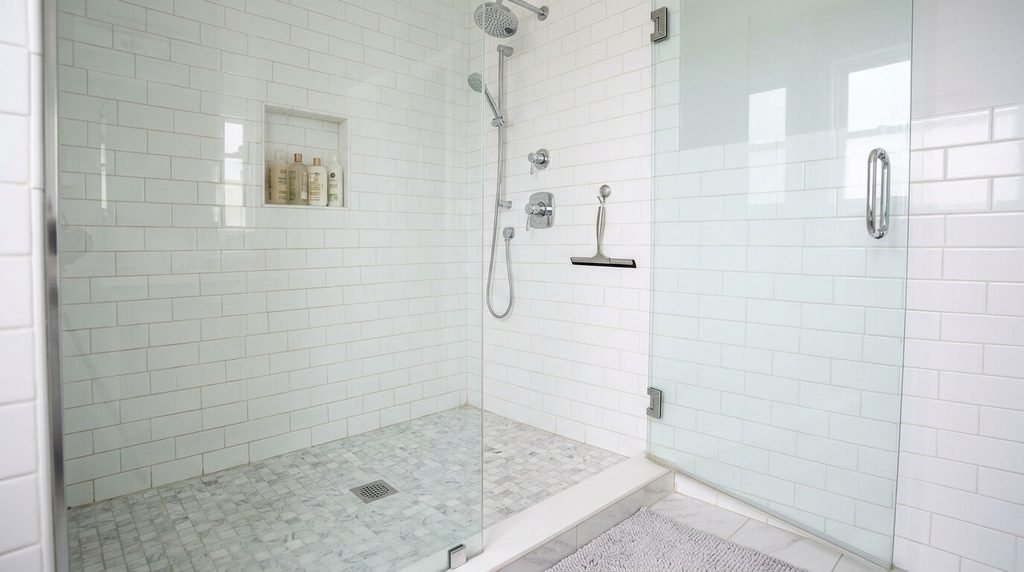
- Squeegee after every shower. It takes 30 seconds and removes most of the water that mold needs.
- Run the exhaust fan for 20 minutes after bathing. Not 5 minutes. Steam lingers longer than you think.
- Leave the shower door or curtain open so air can circulate and dry the surfaces.
- Keep humidity below 50 percent. A cheap hygrometer will tell you the truth.
- Move shampoo bottles off the floor. Moisture traps under bottles and creates hidden black rings.
- Reseal grout once a year with a good quality grout sealer.
- Do a weekly 2 minute spray. A light vinegar spray on corners once a week stops early growth.
If mold shows up anywhere else in the house because of humidity, such as damp soft furniture, our guide on sofa cleaning at home has useful steps for dealing with it safely.
When to Call a Professional
You can usually handle mold patches smaller than about 10 square feet by yourself. Call a professional if:
- The mold covers a large area or keeps coming back after proper cleaning
- You smell a strong musty odor but see no visible mold
- The wall behind the shower feels soft, bubbly or warm to touch
- Someone in your home has asthma, breathing problems or a weak immune system
Soft walls or hidden moisture often mean a leak behind the tiles, and no cleaner will solve that.
Final Thoughts
Learning how to remove mold from shower surfaces is simple once you understand that mold is a moisture problem first and a cleaning problem second. Clean it with the right product, give it enough time, dry the area well, replace damaged caulk and build two or three small habits around airflow and drying. Do that and your shower will stay clean for months instead of days.
Frequently Asked Questions
1. What is the fastest way to remove mold from shower?
Spray white vinegar on the mold, wait 30 to 60 minutes, scrub with a stiff brush and rinse. For fresh, light mold, 15 minutes can be enough, but longer contact time gives better results.
2. Can alcohol kill mold in the shower?
Yes, 70% isopropyl alcohol can kill mold on hard, non porous surfaces like glass and plastic. It is less effective on grout and caulk because it cannot reach deep growth.
3. Is vinegar or bleach better for killing mold?
Vinegar works well on porous and non porous bathroom surfaces and is safer to use. Bleach mostly works on non porous surfaces and gives off strong fumes. Never mix the two.
4. Why does mold keep coming back in my shower?
Usually because moisture stays on the surface, ventilation is weak or the caulk has mold growing inside it. Cleaning the surface without fixing these causes will bring it back.
5. Is black mold in the shower dangerous?
Mold can trigger allergies, coughing and irritation, especially for children, older adults and people with asthma. Small patches are manageable with proper cleaning, but large or recurring growth should be checked by a professional.