
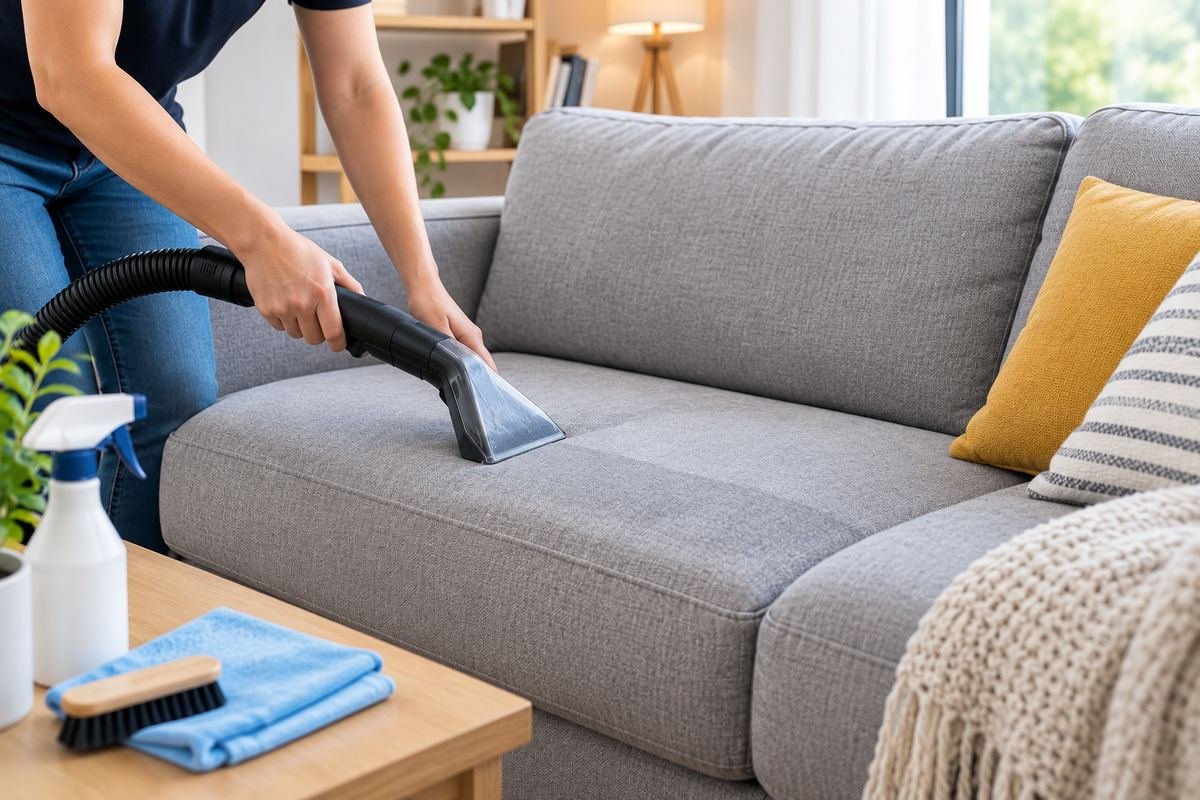

A sofa can look clean from a distance while collecting dust inside its seams, body oils on the armrests, crumbs beneath the cushions, and stains from everyday use. The challenge is removing this dirt without leaving water marks, changing the fabric’s texture, or damaging the cushion filling.
Sofa cleaning at home starts with identifying the upholstery, checking its cleaning instructions, and removing loose dirt before treating stains. The safest method depends on the material, the type of stain, and how much moisture the sofa can tolerate.
Instead of washing the entire sofa every time it looks dirty, focus on the areas that need attention. This approach can help maintain the upholstery while reducing the risk of unnecessary damage.
Before Cleaning, Identify Your Sofa’s Fabric
Different upholstery materials respond differently to water, friction, heat, and cleaning products. A method that works on durable synthetic fabric may be unsuitable for velvet or delicate linen.
Check the manufacturer’s care label before applying any cleaner. It may be underneath a cushion, attached to the frame, or included with the furniture documentation.
| Care code | General meaning | Recommended approach |
| W | Water based cleaning is permitted | Use an approved water based upholstery cleaner according to its instructions. |
| S | Solvent based cleaning is required | Use only a suitable product approved for the fabric. |
| WS or SW | Water based or solvent based cleaning may be permitted | Confirm the manufacturer’s specific instructions. |
| X | Restricted cleaning | Usually limit care to gentle vacuuming or brushing and seek professional advice for stains. |
These codes are general guidance. Always follow the full furniture care instructions rather than relying on the letter alone.
Does the Fabric Change the Cleaning Method?
Yes. The material affects how you should approach sofa cleaning at home.
Microfiber: Vacuum first to remove dust from the tight weave. Check the care label before using liquid cleaners because different microfiber products may have different cleaning requirements.
Velvet: Avoid aggressive brushing, rubbing, or soaking. Some velvet fabrics are sensitive to pressure and moisture, so use only a method approved by the manufacturer.
Linen: This material can be vulnerable to water marks, colour changes, and shrinkage. Avoid wetting a large area unless the care instructions specifically allow it.
Synthetic upholstery: Some polyester and similar fabrics are relatively easy to maintain, but the fibre alone does not determine the safest method. The backing, dye, finish, and construction also matter.
If you cannot identify the fabric or confirm the correct cleaning method, avoid experimenting with household mixtures.
Prepare the Sofa Before Applying Any Cleaner
Cleaning goes more smoothly when loose dirt is removed first. Otherwise, wiping can push dust and crumbs deeper into the fabric.
1. Remove cushions and loose items
Take off throws, removable cushions, and other items. Check each removable cover for its own washing instructions.
A zip does not automatically mean a cover is machine washable. Washing can cause shrinkage or make the cover difficult to fit back onto the cushion.
2. Vacuum the hidden areas
Use an upholstery attachment to clean the seat, backrest, armrests, seams, and spaces beneath removable cushions.
Pay particular attention to the narrow gap between the seat and backrest. Crumbs, hair, and fine dust often collect there.
If you have pets, vacuum slowly and use a suitable fabric safe tool to remove remaining hair. Avoid attachments that may snag delicate fibres.
3. Test the cleaning product
Choose a hidden area made from the same material as the visible upholstery. Apply the product according to its label and allow the test area to dry completely.
Check for colour transfer, fading, rings, stiffness, or changes in texture. If you notice any of these problems, stop using the product.
A successful test reduces uncertainty, although it cannot guarantee that every stain will respond safely.
How to Clean a Couch Without Soaking It
Once the sofa has been vacuumed and the cleaning method confirmed, work on small sections instead of treating the entire surface at once.
- Read the cleaner’s instructions. Confirm that the product is suitable for the upholstery and check whether dilution is required.
- Apply the recommended amount. Do not pour liquid directly onto the sofa unless the product instructions specifically allow it.
- Use a clean, soft cloth. Follow the recommended technique and avoid aggressive scrubbing.
- Remove residue as directed. Some products require wiping with a clean cloth, while others have different removal instructions.
- Inspect each section. Stop if the colour transfers, a ring appears, or the fabric changes texture.
One important detail is that more cleaner does not necessarily mean better results. Excess product can remain in the fibres and attract dirt, making the area look dirty again sooner.
How to Treat Different Sofa Stains
The best treatment depends on what caused the mark. Avoid applying several products one after another without checking their compatibility.
| Stain or problem | First step | What to avoid |
| Fresh water or drink spill | Blot with a clean, absorbent cloth | Rubbing the spill across the fabric |
| Greasy food mark | Remove loose residue carefully and check the care label | Pouring water onto the mark immediately |
| Pet hair | Vacuum with a suitable upholstery attachment | Using sharp tools that can damage fibres |
| Everyday surface dirt | Vacuum and use an approved cleaner if needed | Cleaning the whole sofa with an untested mixture |
| Persistent odour | Check the cushion and fabric care instructions | Masking the smell with fragrance or soaking the cushion |
Fresh Drink Spills
For tea, coffee, or other fresh spills, use a clean absorbent cloth to lift the liquid gently. Work from the outer edge towards the centre to help prevent the mark from spreading.
Do not rub back and forth. Once you have absorbed the excess liquid, use a compatible upholstery treatment if the care instructions permit it.
Avoid applying heat to an unidentified stain because heat can make some stains harder to remove.
Greasy Marks
Food oils and greasy fingerprints may not respond well to plain water alone. First, remove any loose material without pushing it further into the upholstery.
Choose a cleaner approved for the fabric and the type of stain. If the mark remains, avoid repeated scrubbing. Professional treatment may be safer than trying increasingly strong household products.
Pet Hair and Unpleasant Odours
Vacuuming removes loose hair and some debris that contributes to everyday smells. Wash removable throws separately according to their care labels.
If an unpleasant smell continues after surface cleaning, the source may be inside the cushion filling or beneath the upholstery. Spraying fragrance over the surface will not remove the underlying cause.
Do not soak the cushion in an attempt to reach the filling. If the smell persists, consider a professional assessment.
Can You Use Dish Soap or Baking Soda on a Sofa?
These common household products are not suitable for every sofa.
Dish soap: Use it only when the upholstery instructions permit a compatible water based method and the product is suitable for that fabric. Too much soap can leave residue that attracts dirt. A dedicated upholstery cleaner may be a better option.
Baking soda: It may help with some surface odours when used appropriately, but it is not a universal stain remover. Fine powder can become trapped in textured upholstery or cushion seams, especially if it is difficult to vacuum out completely.
Always check the manufacturer’s instructions before trying either method. Never mix cleaning products unless their labels explicitly confirm that doing so is safe.
How to Wash a Couch or Its Removable Covers
People searching for how to wash a couch often want to clean the entire piece of furniture. However, the upholstered frame, cushions, and removable covers may need different treatment.
Only wash removable covers if the manufacturer allows it. Follow the specified water temperature, detergent, and drying instructions. Do not assume that every cover can be machine washed.
Similarly, steam cleaning is not safe for every sofa. Heat and moisture may affect certain fibres, adhesives, finishes, and internal materials.
If the sofa has delicate upholstery, extensive staining, or unclear care instructions, professional cleaning is generally a safer choice than experimenting with a steam cleaner or a strong cleaning solution.
Why Drying Is an Important Part of Sofa Cleaning at Home
A sofa may look clean while wet but develop visible marks as it dries. Moisture can also remain inside the cushion even when the outer fabric feels dry.
After cleaning:
- Remove excess moisture using the method recommended for the fabric.
- Improve ventilation by opening windows when conditions allow.
- Use a fan to improve air circulation if appropriate.
- Keep cushions separated when possible so air can reach more surfaces.
- Wait until the fabric and filling are completely dry before covering or using the sofa normally.
Do not place damp cushions in a tightly closed arrangement. If a cushion remains unusually damp or develops a musty smell, investigate before continuing to use it.
The drying time varies according to the fabric, cushion thickness, room humidity, and amount of moisture used.
Build a Simple Sofa Maintenance Routine
Regular care can reduce the amount of deep cleaning required.
Vacuum frequently enough for your household’s needs, particularly if the sofa is used daily or collects pet hair. Blot fresh spills promptly, clean armrests when they become visibly soiled, and wash throws according to their own care labels.
If the manufacturer permits it, rotate or rearrange cushions to distribute everyday wear more evenly.
Avoid waiting until the whole sofa looks dirty before removing loose dust. Small maintenance tasks are often easier than treating widespread soiling.
For related household cleaning advice, read our guide on how to deep clean carpet at home.
Frequently Asked Questions
How often should I clean my sofa?
Vacuum according to how frequently the sofa is used and how much dust or hair it collects. Treat spills when they occur and follow the manufacturer’s guidance for deeper cleaning. There is no single schedule that suits every household and fabric.
Can I use water to clean every sofa?
No. Some upholstery requires solvent based cleaning or restricted care. Check the manufacturer’s label before applying water or any other liquid.
Can baking soda remove sofa odours?
It may help with certain surface odours, but it is not effective for every material or source of smell. Check the care instructions and avoid leaving powder trapped in the upholstery.
Is steam cleaning safe for every sofa?
No. Some fabrics, finishes, adhesives, and cushion constructions may be damaged by heat or moisture. Confirm that steam cleaning is approved before using a machine.
When should I hire a professional sofa cleaner?
Consider professional help for delicate or expensive upholstery, persistent stains, widespread soiling, odours coming from inside the cushions, or furniture with unclear cleaning instructions.
Final Thoughts
Sofa cleaning at home does not always require washing the entire sofa. Vacuuming thoroughly, identifying the fabric, and treating individual stains with compatible products can help maintain its appearance without unnecessary moisture.
The most important step is to understand what your sofa can safely handle before choosing a cleaning method. When the fabric is delicate, the stain is persistent, or the care instructions are unclear, professional advice can help prevent avoidable damage.