
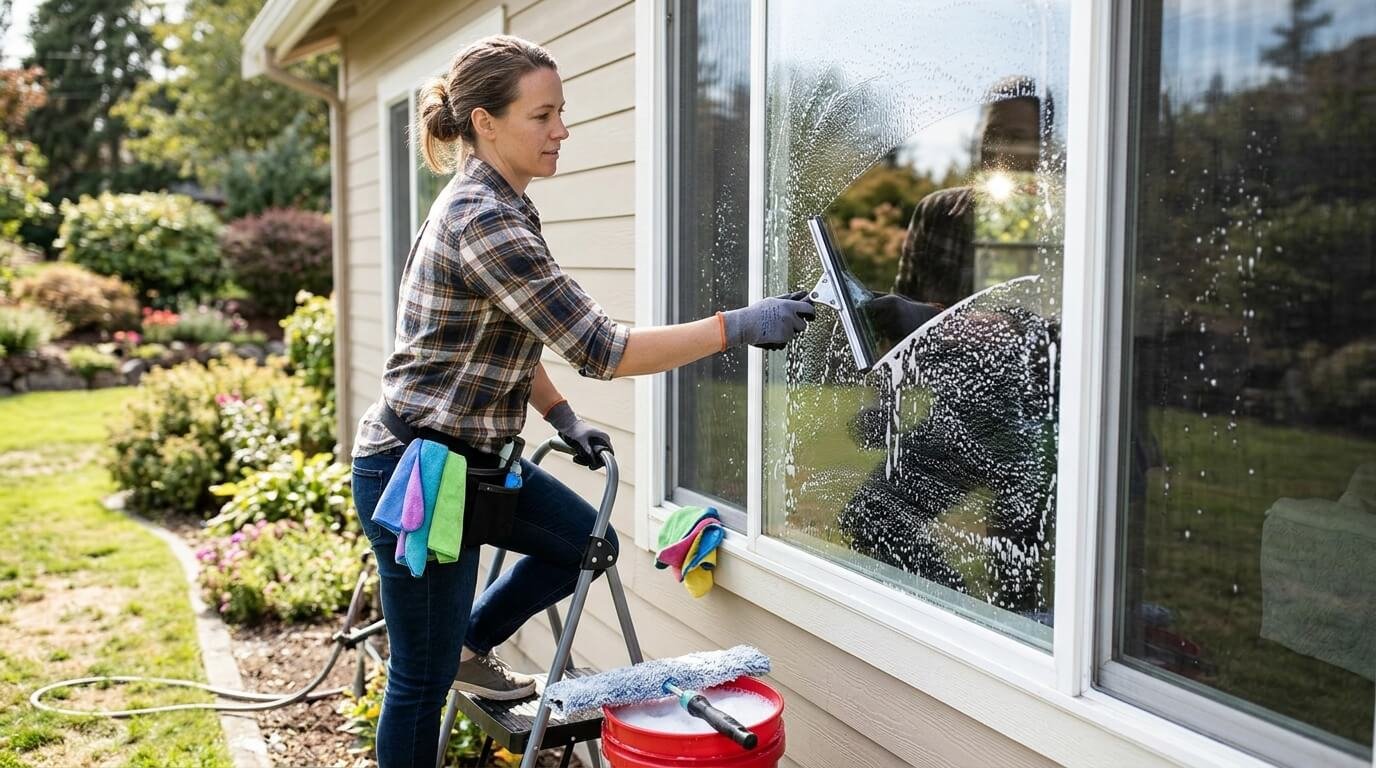

Dirty exterior windows can make an otherwise clean home look dull. Dust, pollen, rain marks, and bird droppings gradually build up on the glass, especially after windy weather. The problem is that cleaning the outside of a window can be more difficult than cleaning the inside, particularly when dirt has dried onto the surface.
Learning how to clean outside windows starts with choosing the right tools, removing loose dirt before scrubbing, and drying the glass before water marks appear. You do not need an expensive cleaning system for every job. A bucket, microfiber cloth, window scrubber, and squeegee can handle many ground level windows.
Rinse or gently wash loose dirt from accessible exterior windows, apply a suitable window cleaning solution, scrub the glass with a soft applicator, and remove the dirty water with a clean rubber squeegee. Finish by wiping the edges with a microfiber cloth. For upper floor windows, use a suitable extension pole from a safe position or hire a professional instead of leaning outside or climbing to reach the glass.
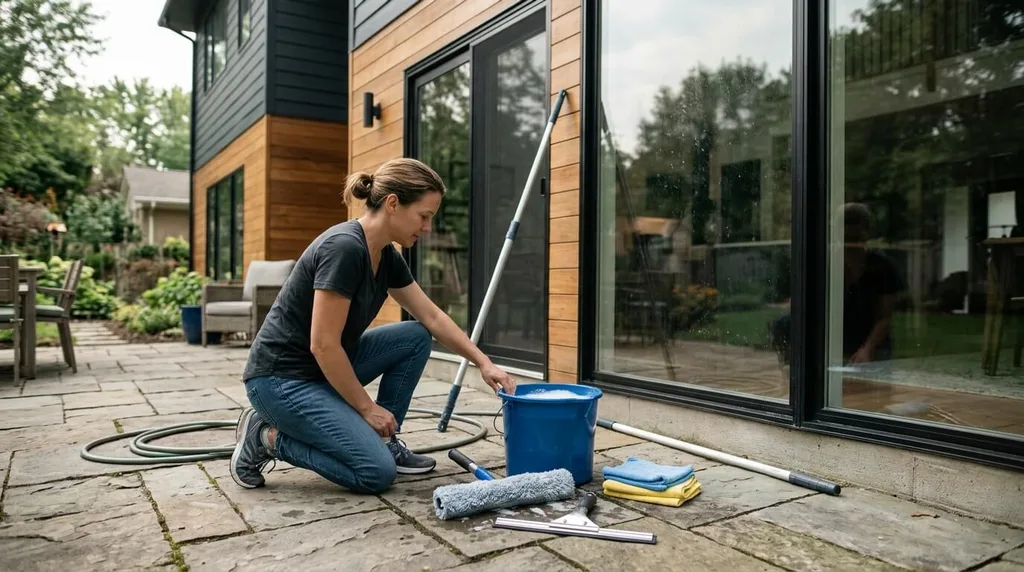
Tools and Materials You Will Need
Gather these basic supplies before starting:
- A bucket of clean water
- A window cleaning solution suitable for your glass
- A soft window scrubber or sponge
- A rubber squeegee
- Two clean microfiber cloths
- A garden hose with gentle water flow, if appropriate
- A telescopic window cleaning pole for suitable high windows
Check the window manufacturer’s instructions if the glass has a special coating, tint, or film. Avoid abrasive pads that may scratch the surface.
How to Clean Outside Windows in 7 Steps
Step 1: Check the Weather and Window Condition
Choose a cool, dry period without strong wind or direct sunlight hitting the glass. Hot glass can cause cleaning solution to dry too quickly, leaving streaks behind.
Before starting, inspect the window from a safe position. Look for cracked glass, loose frames, damaged seals, or peeling paint. Do not clean a window that appears unstable or damaged.
Remove nearby objects that could be affected by dripping water, and keep the walking area clear.
Step 2: Remove Loose Dust and Dirt
Dry dust, cobwebs, pollen, and loose debris should be removed before you start scrubbing.
Use a soft brush or gentle water flow to remove loose dirt from accessible glass and frames. Avoid directing high pressure water at window seals because it can force water into gaps or damage vulnerable components.
This step matters because grit trapped beneath a sponge can scratch the glass. It also prevents loose dirt from spreading across the entire window during washing.
Step 3: Apply the Cleaning Solution
Mix your chosen window cleaner according to its label. If the manufacturer permits it, a small amount of suitable window cleaning solution in water can work well for ordinary dirt.
Apply the solution with a soft scrubber, covering the glass evenly. Work on one manageable window at a time so the solution does not dry before you remove it.
For stubborn bird droppings, let the approved cleaning solution soften the residue before gently wiping it away. Do not scrape the glass with a blade unless the glass manufacturer confirms that the method is safe.
Step 4: Scrub the Glass Gently
Move the scrubber across the surface using overlapping strokes. Pay extra attention to corners and areas near the bottom of the window, where dirt often collects.
Avoid pressing too hard. Persistent marks may be mineral deposits, paint, or damage rather than ordinary dirt. Using more force will not necessarily remove them and may scratch the surface.
Clean the window frame separately with a suitable cloth. Dirt from frames can run onto freshly cleaned glass, so washing the frame first can save time.
Step 5: Remove Water With a Squeegee
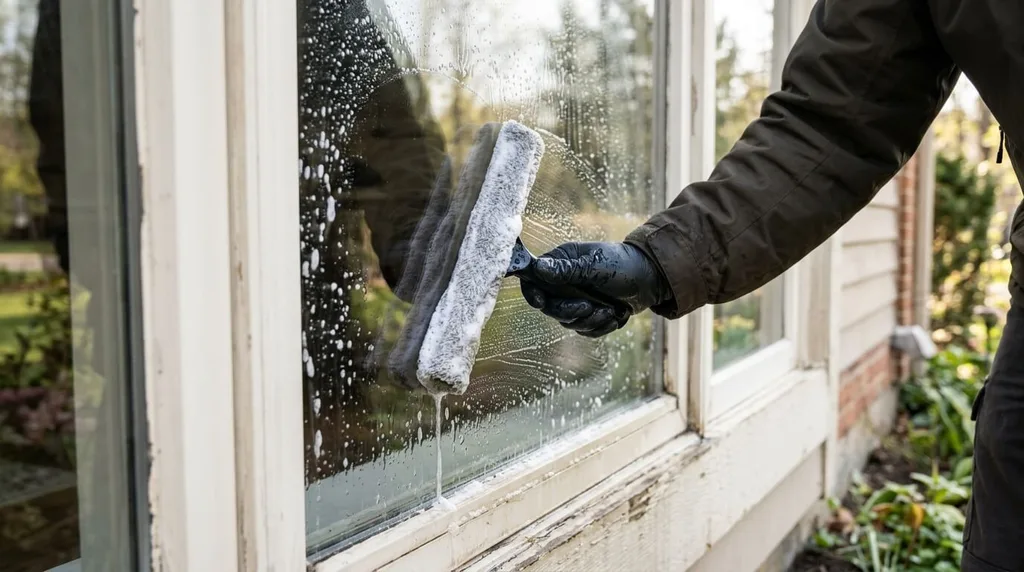
A clean squeegee is one of the most useful tools for window cleaning. Start near the top of the glass and draw the rubber blade across the surface with steady pressure.
Overlap each pass slightly so narrow strips of dirty water are not left behind. Wipe the rubber blade with a clean cloth between passes, especially when it collects grit or residue.
For smaller windows, vertical strokes may be easier to control. Use a consistent technique rather than repeatedly wiping random areas.
If the rubber edge is chipped or worn, replace it. A damaged blade can leave streaks even when the glass has been washed properly.
Step 6: Finish the Edges and Inspect the Glass
Use a dry microfiber cloth to wipe water from the window edges, corners, and sill. Check the glass from different angles to spot streaks that may not be visible when looking directly at it.
If you notice a mark, first check whether it is residue or a scratch. Recleaning may remove residue, but permanent surface damage will require a different solution.
For useful cleaning advice around the rest of your home, see our guide on how to clean bathroom tiles. Different surfaces require different products, so always check material compatibility before cleaning.
Step 7: Clean Hard to Reach Windows Safely
If you are wondering how to clean outside windows you can’t reach, first check whether the window can be opened or tilted inward using its intended mechanism. Only do this if the manufacturer allows it and you can remain safely inside.
For suitable exterior windows, a telescopic cleaning pole may allow you to work from the ground. Test that you can control the pole without losing your balance, and check for overhead electrical wires before extending it.
Never lean out of an upper floor window or improvise a raised platform. If the window cannot be reached safely, arrange a professional cleaning service.
The UK Health and Safety Executive’s guidance on window cleaning at height explains why safer methods that avoid working at height should be considered first.

Common Window Cleaning Mistakes to Avoid
A few small changes can improve your results:
- Cleaning in direct sunlight: The solution may dry before you can squeegee it away.
- Using dirty cloths: A cloth carrying grit or detergent residue can leave new marks.
- Ignoring the frames: Dirt from frames may run back onto clean glass.
- Using excessive water pressure: Strong pressure can damage seals or force water into unwanted areas.
- Mixing cleaning products: Never combine bleach, ammonia, or other cleaners. Follow product labels and provide adequate ventilation.
If you also maintain outdoor drainage, read our guide on how to clean gutters without a ladder. As with windows, choosing a safe ground level method is important whenever working at height presents a risk.
Frequently Asked Questions
What is the best thing to use to clean outside windows?
A suitable window cleaning solution, soft scrubber, clean rubber squeegee, and microfiber cloth are sufficient for many ordinary cleaning jobs. The right product depends on the glass and any special coating.
How often should exterior windows be cleaned?
Many homes benefit from cleaning exterior windows every few months. Houses near busy roads, dusty areas, or trees may need more frequent cleaning.
Can I use dish soap to clean exterior windows?
A small amount may work if it is compatible with the glass and diluted appropriately, but too much soap can leave residue. A suitable window cleaner is often easier to use consistently.
How do I prevent streaks on windows?
Clean the glass in manageable sections, avoid direct sunlight, keep the squeegee blade clean, overlap strokes slightly, and dry the edges with a microfiber cloth.
Can rain make clean windows dirty again?
Rain can leave marks when it carries dust or minerals onto the glass. Clean windows may also become dirty from pollen, windblown debris, and water running off surrounding surfaces.
Final Thoughts
Learning how to clean outside windows effectively comes down to removing loose dirt first, using a suitable cleaning solution, and drying the glass with a clean squeegee. Regular maintenance can reduce stubborn buildup and make each cleaning session easier.
For windows that are difficult to reach, prioritize safe access over convenience. A suitable extension pole or professional service is a better choice than taking unnecessary risks to reach the glass.