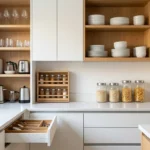
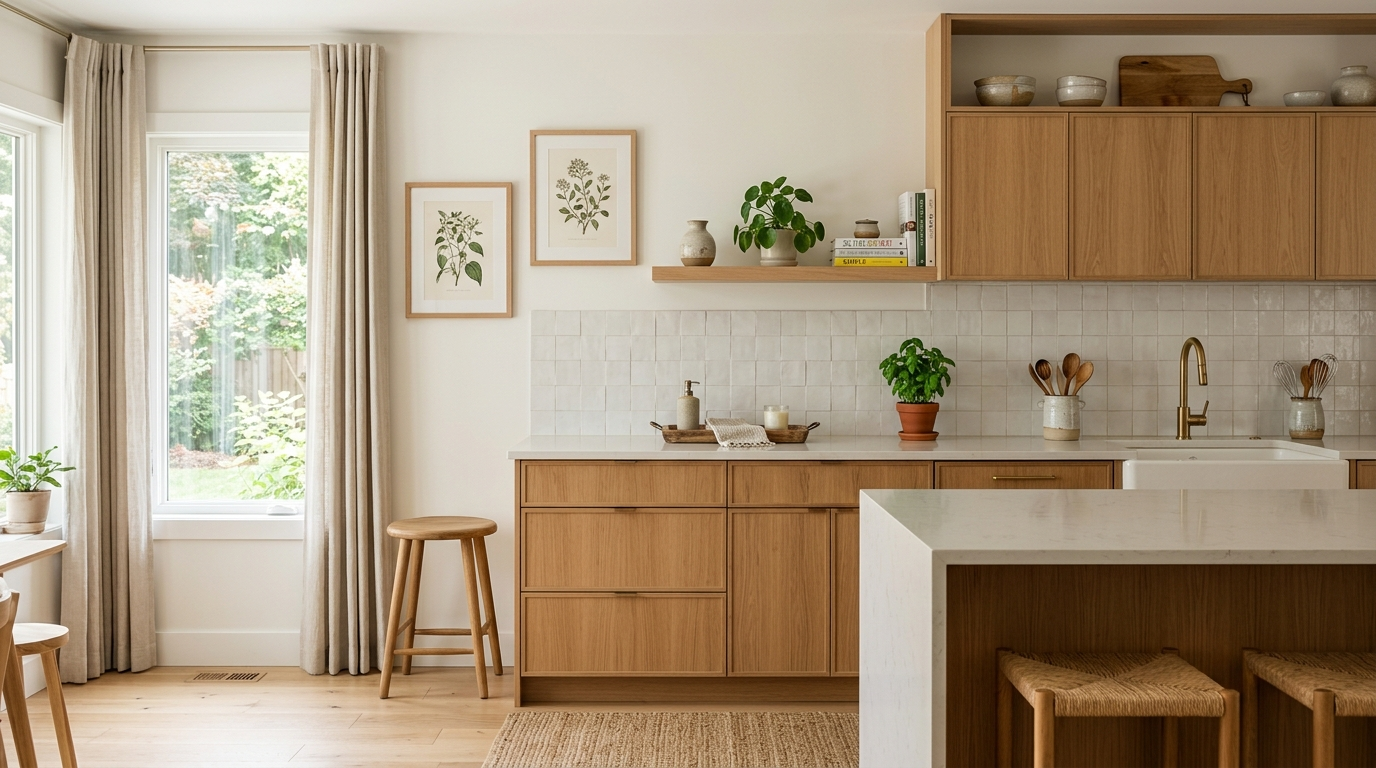

A kitchen can be fully functional and still feel unfinished. Blank walls, crowded counters, or an awkward gap above the cabinets can make the room feel less cohesive than it should.
The solution is not to fill every empty surface. Good kitchen decor balances appearance with the realities of cooking, cleaning, storage, and everyday use.
This guide shares practical kitchen wall decor ideas for styling walls, counters, and the space above cabinets while keeping the room functional and easy to maintain.
Quick Answer
The easiest way to improve kitchen decor is to focus on one or two areas that actually need attention instead of trying to decorate everything at once.
For a blank wall, artwork, framed prints, a shelf, or a mirror can add interest without taking up counter space. On the countertop, keep the decoration limited to a few useful or easy to clean items. Above the cabinets, a small number of appropriately sized pieces can work well if the area is easy to reach and clean.
Before buying anything, look at the kitchen’s existing cabinet color, countertop, backsplash, lighting, and available wall space. The new decorations should work with those elements rather than compete with them.
Keep decorative items away from areas exposed to excessive heat, water splashes, or active cooking if they could become unsafe or difficult to maintain.
Start With the Kitchen Before Choosing Decor
One easy mistake is buying decorations before figuring out what the kitchen actually needs.
Take a step back and look at the room as a whole. You might notice that one wall is completely empty while another area already has plenty going on.
Before buying anything, consider a few simple questions:
-
Which wall feels too bare?
-
Which areas already look busy?
-
Does the counter need decoration, or does it mainly need better organization?
-
Is the space above the cabinets practical to use?
-
Which colors already stand out in the cabinets, backsplash, flooring, or appliances?
-
Which surfaces are likely to get splashed with water or exposed to cooking grease?
-
Will adding decor make the kitchen harder to clean?
This can help prevent a common problem: buying several attractive pieces that look fine individually but do not work well together.
Rather than choosing a decorating style first, start with the strongest feature already in the room. It could be a patterned backsplash, natural wood cabinets, a stone countertop, colorful appliances, or even a large window. Use that feature as a reference when choosing the rest of the decor.
Kitchen Wall Decor Ideas That Actually Work
Walls are usually one of the easiest places to add personality because decorating them does not take away valuable counter space.
1. Create One Main Focal Wall
A large wall does not necessarily need several small decorations. One substantial piece of artwork, a large framed print, or a carefully arranged collection can give the wall a clear purpose. Scale matters here. Tiny decorations can get lost on a large wall, while an oversized piece can overwhelm a narrow kitchen. Measure the available wall before buying anything. Also consider what is underneath the wall. A piece above a dining table, breakfast area, or sideboard should relate visually to the furniture rather than looking like it was placed there at random.
2. Use Framed Kitchen Artwork
Framed artwork is a simple way to introduce color without making a permanent change to the kitchen.
Instead of relying only on obvious food-related signs, consider:
-
Botanical prints
-
Food illustrations
-
Architectural prints
-
Simple abstract artwork
-
Vintage style kitchen illustrations
-
Photography
-
Prints that pick up colors already present in the kitchen
Choose a frame material that works with the rest of the room. Wood can complement natural cabinets, while metal frames can connect with stainless steel appliances or modern hardware.
3. Add a Small Shelf
A wall shelf can combine decoration with useful storage. For example, a shelf might hold a small plant, a framed print, and one or two attractive kitchen objects. Leaving some empty space usually makes the arrangement easier to maintain and less visually crowded.
Do not treat a decorative shelf as an excuse to store everything that has nowhere else to go.
If the shelf will carry significant weight, use a mounting method suitable for the wall type and the load being supported. For heavier installations, appropriate structural support or a suitable anchoring system may be necessary.
4. Consider a Mirror Carefully
A mirror can be useful in a smaller or darker kitchen because it can reflect light and nearby surfaces. However, placement matters more than simply adding a mirror. A mirror facing a cluttered counter may make the room feel even busier.
Before installing one, stand where you expect it to be and look at what the mirror will reflect.
5. Use Vertical Space Around Dining Areas
If the kitchen includes a breakfast table or dining corner, the wall behind it can become a natural decorating zone. A coordinated group of frames or one larger piece can help define the eating area without interfering with food preparation. This can be more practical than decorating a wall immediately beside a cooking appliance.
Kitchen Counter Decor: Make It Useful First
Countertops are different from walls because they are working surfaces. Good kitchen counter decor should leave enough room for preparing food, cleaning, and the other tasks you normally do there. One simple approach is to group a few related items together instead of spreading individual decorations across the entire counter.
For example, one corner might have:
-
A tray
-
A small plant
-
A container for frequently used utensils
Another section could have a coffee or tea setup if those items are used regularly.
The decoration should fit the way the kitchen is actually used rather than getting in the way of it.
Counter Decorations in Areas That Get Wet
Keep materials and decorative objects suited to their location.
Near a sink, items are likely to be exposed to water splashes and frequent cleaning. Delicate paper decorations or objects that are difficult to wipe can quickly become more trouble than they are worth.
Near cooking areas, avoid decorative materials that can burn or should not be exposed to heat.
The U.S. Fire Administration advises keeping items that can catch fire away from the stovetop, including materials such as paper products, towels, wooden utensils, and curtains.
Keep the Main Work Areas Clear
You do not need to decorate every section of the countertop. If a surface is regularly used for chopping, preparing ingredients, unloading groceries, or placing hot cookware, leave it available for those tasks. A counter can look attractive without becoming inconvenient to use every day.
Kitchen Counter Decor Ideas for Different Styles
The same basic approach can work with different kitchen styles. The main idea is to keep the number of decorative pieces under control and choose materials that fit the room.
Modern Kitchen
Use fewer objects and emphasize clean shapes. A simple tray, one sculptural object, a small plant, or a container that matches the room’s existing finishes can be enough.
Farmhouse Kitchen
Natural materials such as wood, woven textures, ceramic, and simple greenery can work well. Avoid turning every surface into a collection of rustic signs and accessories. Repeating a few materials is usually enough to create a consistent look without adding unnecessary clutter.
Traditional Kitchen
Ceramic pieces, framed artwork, decorative trays, and classic containers can complement traditional cabinetry. Choose pieces that repeat colors already found in the kitchen instead of introducing several unrelated shades.
Minimalist Kitchen
Start by removing unnecessary objects rather than adding more. One carefully chosen item can sometimes have more visual impact than a collection of smaller decorations.
How to Decorate Above Kitchen Cabinets
The space above kitchen cabinets can be useful, but it is not automatically a space that needs to be filled.
First, measure the gap between the cabinet tops and the ceiling.
Then consider three questions:
-
Can you reach the area safely for cleaning?
-
Does the area collect noticeable dust or cooking residue?
-
Is there enough height for decoration without making the space look crowded?
If the answer to the first two questions is no, leaving the area empty may be more practical.
Use Fewer, Larger Pieces
A row of many small objects can make an above-cabinet display look more like storage than intentional decoration. Instead, consider a small number of larger pieces with different heights.
Possible choices include:
-
Large ceramic vessels
-
Baskets
-
A few decorative bowls
-
Simple greenery
-
Large framed pieces where the layout permits
-
Decorative kitchenware that is easy to remove and clean
The goal is not to fill every inch.
Remember the Cleaning Problem
The area above cabinets can accumulate dust and cooking residue. An object that looks attractive in a photograph may become an unwanted maintenance task in a real kitchen. Smooth, wipeable surfaces are generally easier to maintain than highly textured decorations.
If an item is difficult to remove, difficult to clean, or located above an area with heavy cooking activity, think carefully before placing it there.
When Leaving the Space Empty Is Better
An empty gap is not necessarily a decorating failure. If the gap is narrow, difficult to access, visually busy, or prone to grease and dust, leaving it alone can produce a cleaner result.
Another option is to change the appearance of the space with appropriately designed cabinetry or trim to create a more finished transition to the ceiling. That is a larger project and should be planned around the existing cabinet construction.
Choose Kitchen Themes From What You Already Own
A kitchen theme does not have to mean buying an entire matching collection. Start with two or three elements that are already present in the room and use them as a starting point.
For example:
-
Wood + white + greenery can give the kitchen a warm, natural feel.
-
Black + white + metal works well for a cleaner, more modern look.
-
Cream + wood + ceramic can create a softer, more traditional feel.
-
Blue + white + natural textures can give the space a lighter, coastal-inspired look.
The exact style matters less than consistency.
If your cabinets are warm wood, adding several cool gray decorations may create unnecessary visual separation. Likewise, if the backsplash already has a strong pattern, simpler decorations may provide better balance.
What to Check Before Hanging Kitchen Wall Decor
Before drilling into a wall, check what is behind it and what you are mounting into.
This matters particularly for shelves, large mirrors, heavy artwork, or wall-mounted storage.
Check the Wall Material
The correct fixing method depends on the wall construction and the weight being supported. A lightweight picture and a loaded shelf should not automatically use the same mounting method. For heavier items, identify suitable structural support or use an appropriate anchoring system designed for the wall material and expected load.
Measure Before Drilling
Measure:
-
The wall width
-
The available height
-
The width of nearby cabinets
-
The position of electrical outlets and switches
-
The location of plumbing or other services where relevant
-
The size and weight of the item being installed
Mark the intended position first. Step back and check the arrangement before making any holes.
Think About Door and Cabinet Movement
A decoration may look correctly positioned when everything is closed but interfere with a cabinet door, refrigerator door, pantry door, or nearby walkway. Open nearby doors and drawers before finalizing the position. This simple check can prevent an unnecessary installation mistake.
Common Kitchen Decorating Mistakes
Filling Every Empty Space
Empty space can help a room feel organized. Decorating every wall, cabinet top, and counter can make the kitchen look crowded and increase cleaning work.
Ignoring Scale
A tiny picture above a large wall can look lost. Several oversized objects on a narrow counter can have the opposite effect.
Measure first.
Using Too Many Themes
A kitchen can contain several materials and colors without needing several unrelated decorating styles. Choose a visual direction and repeat a few elements throughout the room.
Putting Fragile Items in High Traffic Areas
Counter corners near busy walkways are not ideal locations for unstable decorative objects. Consider what could happen if someone bumps the counter or reaches across it.
Decorating Too Close to Heat
Do not use decorative objects as a substitute for proper clearance around cooking appliances. Keep combustible materials away from the stovetop and follow the appliance manufacturer’s installation and clearance instructions where they apply.
Forgetting Maintenance
A decoration that needs constant cleaning may not be worth the visual benefit. The best choice is one that still looks good after considering the actual cleaning routine of the kitchen.
A Simple Way to Plan Your Kitchen Decor
You can avoid unnecessary purchases by working in this order:
Step 1: Remove visual clutter.
Take unnecessary objects off the counters and cabinet tops.
Step 2: Identify the weakest area.
Choose the wall, counter section, or cabinet gap that would benefit most from a change.
Step 3: Measure it.
Record the available width and height before shopping.
Step 4: Choose one visual direction.
Use existing cabinet, countertop, backsplash, and hardware colors as your starting point.
Step 5: Add one main element.
Start with the largest or most noticeable piece.
Step 6: Add only what the space needs.
Do not automatically fill the remaining space.
Step 7: Test everyday use.
Open cabinets, use the counter, walk through the kitchen, and check whether the decoration creates an inconvenience.
Step 8: Check maintenance.
Ask yourself how the item will be cleaned and how often it will need attention.
This process is usually more effective than buying a collection of decorations first and trying to find somewhere to put them.
When to Get Professional Help
Most lightweight decorating is straightforward, but some installations require more care.
Consider professional help when:
-
You are installing heavy wall-mounted cabinets or shelving.
-
The item requires substantial structural support.
-
You are unsure about the wall construction.
-
Drilling could interfere with concealed electrical wiring, plumbing, or other services.
-
You are modifying cabinetry, walls, ceilings, or other permanent structures.
-
The proposed installation is close to cooking equipment and you are uncertain about the required clearances.
-
The installation involves electrical work rather than simply placing a decorative item.
For floating or wall-hung cabinetry, proper support is particularly important because the wall system must carry the cabinet and its contents. The National Kitchen & Bath Association (NKBA) provides cabinetry planning guidance that addresses appropriate wall blocking, brackets, or other support mechanisms for wall-hung cabinets.
Frequently Asked Questions
What is the easiest kitchen wall decor?
Framed artwork, a large print, a small shelf, or a carefully arranged group of frames can provide a noticeable change without taking up counter space.
How do I decorate a kitchen counter without making it look cluttered?
Keep the working areas clear and concentrate decorations in one or two zones. A tray can visually group several related objects so they look intentional rather than scattered.
Should I decorate above my kitchen cabinets?
Only if the space is suitable for it. Measure the gap, consider how easily it can be cleaned, and avoid filling it simply because it is empty.
What should I put above kitchen cabinets?
Wipeable decorative objects, appropriately sized ceramics, baskets, and simple greenery can work when the space is large enough and easy to maintain.
How many decorations should be on a kitchen counter?
There is no useful fixed number. The right amount depends on the counter size and how much of the surface is needed for everyday work. Start with fewer pieces and add only if the area still feels unfinished.
What should I avoid putting near a kitchen stove?
Keep combustible decorative materials and other items that can catch fire away from the stovetop. The U.S. Fire Administration recommends keeping combustible materials such as paper products, towels, and wooden utensils away from cooking equipment.
Can kitchen decor be practical as well as decorative?
Yes. Trays, attractive containers, shelves, utensil holders, and frequently used equipment can contribute to the appearance of a kitchen while serving a practical purpose.
Final Takeaway
Good kitchen wall decor is less about buying more decorations and more about choosing the right places for them.
Start with the walls or surfaces that genuinely need attention. Keep counters functional, treat the space above cabinets as optional rather than mandatory, and use existing colors and materials to create a consistent look.
Most importantly, judge every decoration by two standards: does it improve the room, and can you realistically live with the cleaning, space, and safety requirements that come with it?
A kitchen should look intentional without becoming harder to use.
Related reading on MakeMaintain: If you’re planning updates beyond the kitchen, see our cool room ideas guide.