
A well decorated dining room should feel inviting on an ordinary weekday, not just when guests arrive. The right combination of furniture, lighting, wall decor, colors, and carefully chosen accessories can make even a simple dining area feel thoughtfully designed. In 2026, the most appealing spaces balance rich materials and personal details with practical layouts. These dining room decor ideas will help you create a room that looks beautiful without making it difficult to use every day.
Start With a Dining Room Decor Plan
Before buying new accessories, decide how you want your dining room to feel. A space used for family dinners, homework, and occasional entertaining needs a different setup from a formal dining room reserved for special occasions.
Begin by identifying the room’s main purpose, measuring the available floor space, and choosing one feature you want people to notice first. It could be a wooden dining table, an eye catching pendant light, a large piece of artwork, or a beautifully painted wall.
Build the rest of the room around that feature instead of purchasing several statement pieces at once.
Items to consider for your dining room:
- A dining table suited to the room’s dimensions
- Comfortable dining chairs or a practical bench
- A pendant light or chandelier
- Wall art, a mirror, or decorative wall panels
- A sideboard or buffet cabinet, if space allows
- A rug that accommodates the table and chairs
- Curtains or window shades
- A centerpiece, such as a ceramic bowl or vase
- One or two personal accessories, such as a framed photograph or handmade object
You do not need every item on this list. The goal is to choose pieces that work together and serve a purpose.
1. Choose a Dining Table That Makes the Room Feel Balanced
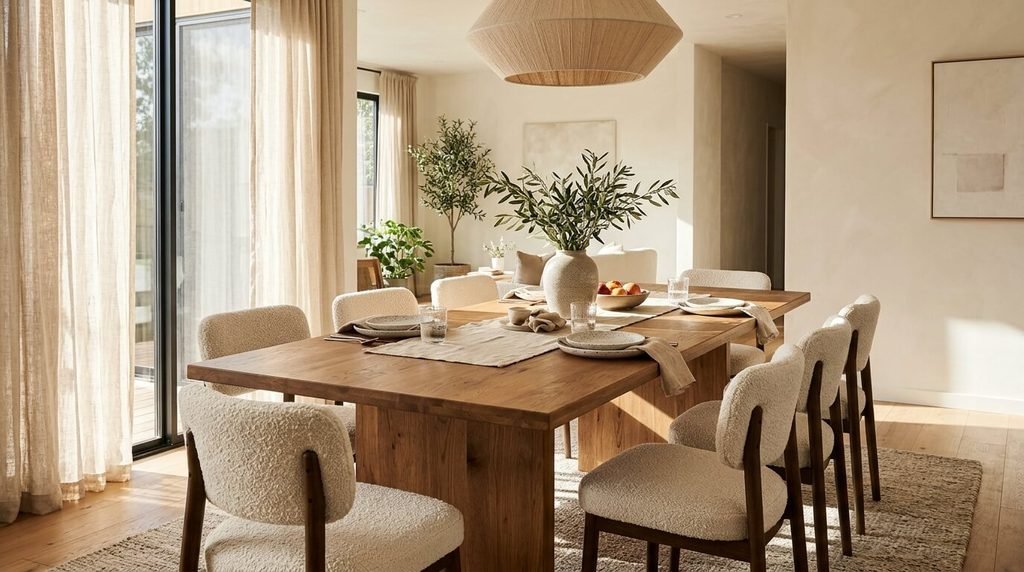
The dining table is usually the largest piece of furniture in the room, so its shape and finish influence almost every other decorating decision.
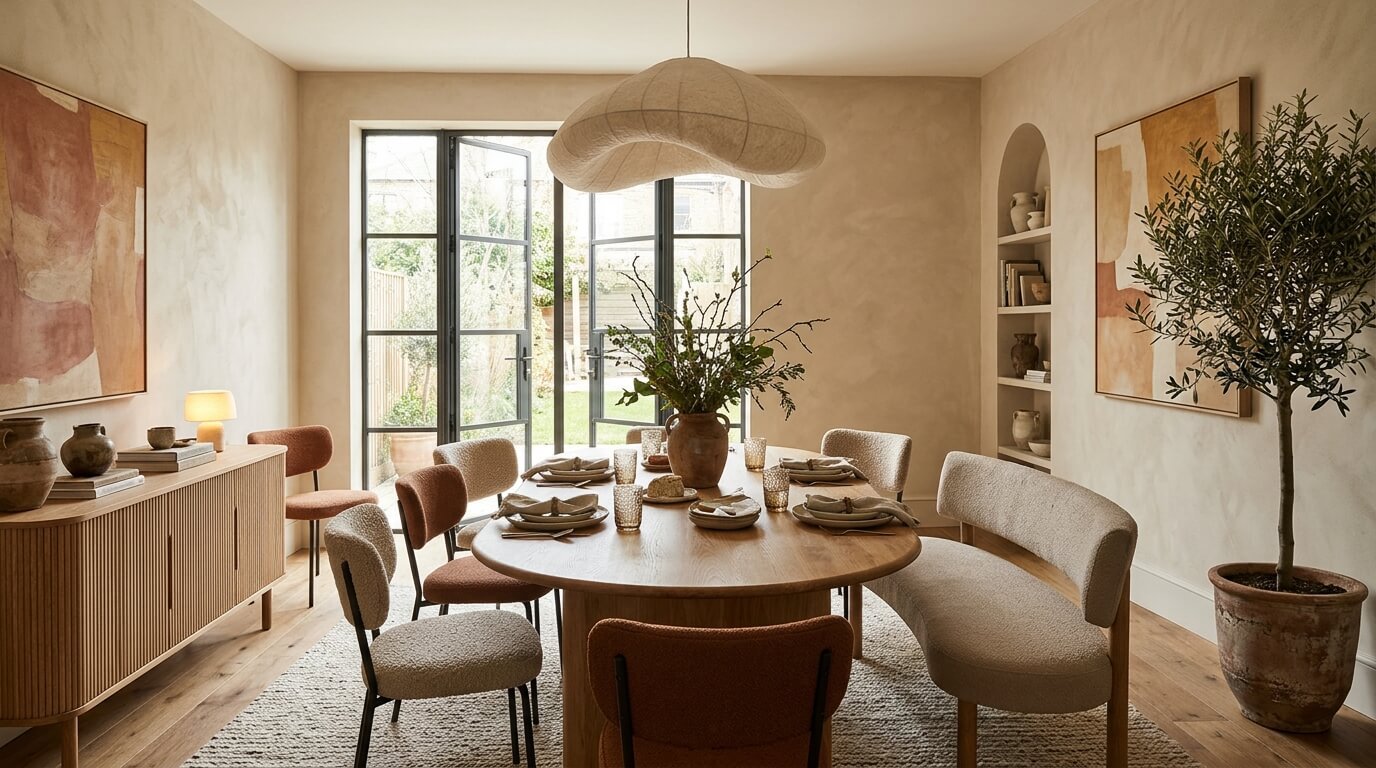
A rectangular table works well in a long room or a space where several people regularly eat together. A round table can make a compact dining area feel less rigid and help people face one another more easily. An oval table offers a softer outline while retaining useful seating space.
For a modern look, consider a table with a natural wood finish, a rounded edge, or an interesting pedestal base. These details add character without requiring elaborate decorations.
Match the table to the available space
Measure the table and the surrounding walking area before purchasing furniture. As a useful starting point, allow approximately 36 inches of clearance around the table where possible, with additional space where people need to walk behind occupied chairs.
In tighter rooms, consider a smaller round table, a drop leaf design, or an extendable table that can be expanded for guests. A table that fits the room comfortably is more valuable than a larger model that leaves everyone squeezing past the chairs.
Also think about the table’s finish. A heavily textured surface can add warmth, while a smooth surface may be easier to wipe clean after everyday meals.
2. Use a Warm Color Palette Instead of Decorating Every Surface
Color can change the atmosphere of a dining room without requiring new furniture. The trick is to choose a small group of colors and repeat them thoughtfully.
Cream, warm white, taupe, and soft beige create a flexible backdrop. You can introduce deeper shades through the dining chairs, curtains, artwork, or a sideboard.
For a richer appearance, try chocolate brown with cream, olive green with natural oak, or muted burgundy with warm neutrals. These combinations feel distinctive without depending on matching furniture sets.
What is the best color for a formal dining room?
There is no single best color for every formal dining room. Deep green, navy blue, charcoal, and chocolate brown can create an intimate, sophisticated atmosphere. Warm white, mushroom, and soft taupe are useful alternatives if the room receives limited natural light or connects directly to other living spaces.
Choose according to the room’s lighting, size, existing furniture, and the mood you want to create.
For example, a dining room with dark wood furniture might benefit from muted green walls and cream curtains. In a room with limited daylight, a warm neutral with a gentle undertone may feel more comfortable than a very dark color.
Before painting, test sample colors on different walls and view them during the day and evening. Artificial lighting can change how a paint color appears, so make your decision after checking it under the lighting you actually use.
3. Make the Lighting a Defining Feature
Lighting deserves attention early in the decorating process because it affects both the appearance of the room and the experience of eating there.
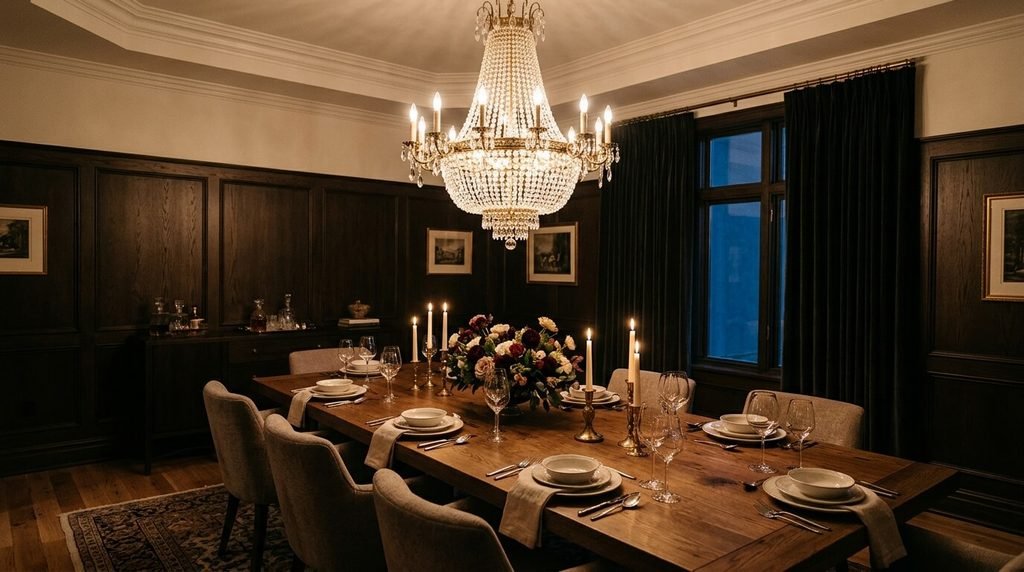
A pendant light or chandelier above the table can establish a focal point. Choose a fixture that relates to the table’s shape and size rather than selecting the largest option available.
For example, a linear fixture can complement a long rectangular table, while a rounded pendant can work beautifully above a circular table. A woven shade introduces texture, and an aged brass finish can add warmth to a traditional or contemporary interior.
Layer the light for different occasions
A single ceiling fixture may provide enough light for everyday meals, but it can make the room feel flat in the evening. Where practical, combine the main fixture with a table lamp on a sideboard or wall lights that provide softer illumination.
Dimmable lighting is especially useful. Brighter light helps when serving food or working at the table, while a lower setting creates a relaxed atmosphere during dinner.
Position the fixture so it illuminates the table without shining directly into diners’ eyes. If you are installing a new electrical fixture, use a qualified electrician where required and follow local electrical codes.
4. Give the Walls a Purpose
Empty walls can make a dining room feel unfinished, but filling every available space with decorations can create visual clutter. Select one main wall treatment and allow the surrounding surfaces to provide balance.
Large artwork is a good choice above a sideboard or on the wall facing the entrance. A pair of framed prints can suit a symmetrical room, while a single oversized artwork can provide a more relaxed, contemporary effect.
A mirror can reflect daylight and help a smaller dining area feel more open. Position it where it reflects an attractive view, a window, or an interesting part of the room rather than an untidy corner.
Try texture instead of more accessories
If framed artwork feels too ordinary, consider painted wall panels, subtle wallpaper, or a textured finish. These treatments add depth without occupying floor space.
For renters, removable wallpaper, lightweight framed prints, and picture ledges may be easier to reverse than permanent wall alterations. Check the lease and test removable products carefully before applying them.
If you are decorating connected kitchen and dining spaces, use a related color or material to create a visual connection. You can find more ideas in our guide to kitchen wall decor ideas.
5. Add a Rug Without Making Dining Difficult
A rug can define the dining area in an open plan home and soften the appearance of hard flooring. It also provides an opportunity to introduce pattern or color without changing the walls.
However, the wrong rug can make everyday dining frustrating. If the rug is too small, chair legs may catch on its edge whenever someone pulls out a seat.
Choose a size that allows the chairs to remain on the rug when they are pulled back for sitting. Measure from the table’s edges and consider how much room the chairs require when occupied.
Low pile rugs are generally easier to use under dining chairs than thick, fluffy styles. Flat woven designs can also work well, especially in busy households.
For maintenance, consider a material and pattern that suit your routine. A washable rug or a design that disguises small marks may be practical for homes with children or frequent meals. Check the manufacturer’s cleaning instructions before purchasing.
If the dining room is already visually busy, choose a rug with a restrained pattern. If the furniture and walls are simple, a patterned rug can become the room’s main decorative feature.
6. Use a Sideboard to Combine Storage and Style
A sideboard or buffet cabinet is useful for storing table linens, serving dishes, candles, and other dining essentials. It also creates a surface for a small, intentional display.
Start with a practical arrangement rather than filling the cabinet top with random objects. Place a lamp or vase at one end, add a framed artwork or mirror above it, and leave some open space for balance.
A shallow bowl can hold small everyday items, while a ceramic vase with seasonal branches adds height. A stack of attractive books may work if the surface remains easy to clean.
Choose the cabinet according to the room’s available width and walking space. A large, dark cabinet may overwhelm a narrow dining room, whereas a lighter wood finish or a design with raised legs can make the furniture feel less bulky.
You can also use a vintage cabinet alongside contemporary chairs. Combining old and new pieces often creates a more individual interior than purchasing an entire matching dining set.
7. What Are the Dining Room Decor Trends for 2026?
Dining room trends in 2026 point toward spaces that feel personal, comfortable, and visually rich rather than overly coordinated. Design coverage from Homes & Gardens highlights warmer materials, expressive lighting, deeper colors, and flexible dining arrangements among the emerging directions.
Here is how to interpret those ideas without redesigning your entire home.
Natural wood and tactile materials
Oak, walnut, linen, woven textures, and handmade ceramics add visual depth. You can introduce this look with one wooden serving cabinet, linen curtains, or a textured centerpiece rather than replacing every piece of furniture.
Richer colors and layered finishes
Chocolate brown, muted greens, and other earthy shades are useful for adding character. If you prefer a neutral room, introduce these colors through removable accessories and upholstered seating.
Sculptural lighting
Dining fixtures are increasingly treated as decorative features rather than purely functional objects. A distinctive pendant can update a simple room without requiring expensive architectural changes.
More personal artwork and collected pieces
Instead of displaying a perfectly coordinated collection, combine artwork, family pieces, or objects gathered over time. Keep a shared color, material, or visual theme so the arrangement feels intentional.
Flexible dining spaces
Dining tables are often used for more than meals. Extendable furniture, comfortable chairs, and accessible storage can help the room accommodate work, family activities, and entertaining.
These trends are options, not rules. The most successful dining room is one that fits your home and routine. For more context, read the 2026 dining room trends report from Homes & Gardens.
8. Bring the Tabletop Together With a Simple Centerpiece
The dining table should remain useful even when it is decorated. A centerpiece that occupies too much room can interfere with serving dishes, conversation, and everyday activities.
A low ceramic bowl, a small vase of flowers, or a simple arrangement of branches can add interest without blocking sightlines. For a longer table, try a narrow runner with two or three small decorative objects spaced along its length.
Natural materials work especially well with wood furniture. Linen, stoneware, glass, and greenery can introduce contrast while keeping the arrangement relaxed.
Avoid using tall decorations that prevent people from seeing one another across the table. If you enjoy seasonal styling, keep a small collection of interchangeable accessories rather than buying a completely new display for every occasion.
For homes with young children or pets, choose stable objects without sharp edges and avoid fragile pieces near the table’s edge.
9. Make a Small or Open Plan Dining Area Feel Intentional
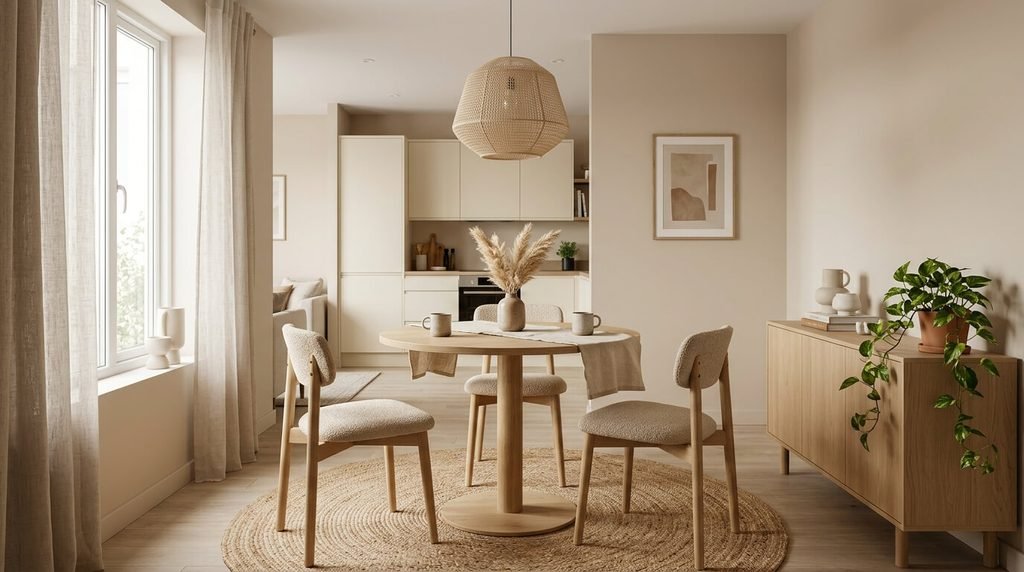
A dining room does not need four separate walls to feel like a finished space. In apartments, smaller houses, and open plan layouts, furniture placement can establish a clear dining zone.
Place the table where chairs can be pulled out without blocking a main walkway. A pendant above the table, a rug underneath it, or a sideboard along the nearest wall can visually separate the dining area from the living room.
Keep the furniture scale consistent with the space. Slim chairs, a compact pedestal table, and wall mounted lighting can free up useful floor area. If you need extra seating occasionally, use stackable chairs or a bench that can be tucked away.
In a combined living and dining room, repeat one or two colors in both areas. For example, olive green cushions in the living room can connect with green artwork or dining chair upholstery. The spaces will feel related without looking identical.
Avoid placing too many small decorative objects around the room. A few larger, carefully chosen pieces usually create a clearer visual impression than many unrelated accessories.
For additional ways to make a room feel distinctive, explore our guide to cool room ideas.
What Is the Best Way to Decorate My Dining Room?
The best approach is to work from the largest decisions to the smallest details. Start with the table and seating, establish a suitable color palette, and choose lighting that creates the atmosphere you want. Then add wall decor, a rug if appropriate, storage, and a restrained centerpiece.
Confirming your room’s measurements before making a purchase ensures comfortable movement and helps you dodge pricey decorating blunders.
If your budget is limited, update the room in stages. New curtains or artwork may make a noticeable difference before you invest in a new table. If you own the property and plan a more substantial update, consider paint, lighting, and long term storage needs together.
Final Thoughts
Successful dining room decor comes from choosing a few elements that work well together, not from filling every corner with accessories. A suitable table, comfortable seating, layered lighting, thoughtful wall decor, and practical storage can transform the room while keeping it useful.
Use 2026 trends as inspiration, then adapt them to your own space, budget, and habits. When the room looks inviting and works comfortably for everyday life, it will be ready for both casual family meals and special occasions.
Frequently Asked Questions
What are the dining room trends for 2026?
Popular directions include warm wood finishes, earthy colors, sculptural lighting, textured materials, personal artwork, and flexible furniture. The emphasis is on creating a welcoming space with character rather than following a perfectly matching design scheme.
What is the best color for a formal dining room?
Deep green, navy, charcoal, and chocolate brown can create a dramatic atmosphere. Warm white, cream, and taupe are versatile alternatives. The best choice depends on natural light, room size, furniture finishes, and your preferred style.
How can I decorate a dining room on a budget?
Keep existing furniture where possible and focus on high impact changes. Try new curtains, a carefully chosen centerpiece, framed artwork, or a fresh wall color. Rearranging furniture and removing unnecessary accessories can also improve the room without major spending.
How do I make a small dining room look bigger?
Choose appropriately sized furniture, maintain clear walking routes, and avoid excessive decoration. Mirrors can reflect light, while a cohesive color palette helps the dining area feel connected. A round table may also improve movement in some compact layouts.
Should dining room furniture match?
No. Furniture can share a common color family, finish, shape, or material without being identical. For example, a wooden table with upholstered chairs and a vintage sideboard can look cohesive when the colors and proportions complement one another.
How do I decorate a formal dining room without making it feel old fashioned?
Combine traditional elements, such as a chandelier or sideboard, with simpler artwork, modern upholstery, and restrained accessories. A contemporary color palette and comfortable seating can make the room feel polished without appearing overly formal.