
How to Fix a Sagging Door
A door that has started to sag can be surprisingly annoying. You may notice that it rubs against the frame, the top corner looks uneven, or the latch no longer lines up with the strike plate. Sometimes the door may close only if you lift or push it slightly.
The good news is that a sagging door does not always mean you need to replace the door. In many cases, the problem is related to loose hinge screws, worn hinges, or the way the door is sitting on its hinges.
In this guide, you will learn how to fix a sagging door, how to identify the likely cause, and what you can check before deciding that the door needs more serious repair.
What Causes a Door to Sag?
Before trying to repair a sagging door, it helps to understand why it happens.
A door is held in position by its hinges. Over time, the weight of the door can put stress on the hinge screws and the surrounding wood.
Common causes include:
- Loose hinge screws
- Screws that no longer grip the wood properly
- Worn or damaged hinges
- A heavy door putting extra pressure on the hinges
- A damaged area around a hinge
- A door frame that has shifted or is no longer properly aligned
The easiest problems to fix are usually loose screws or minor hinge movement.
If the frame itself is damaged or badly out of alignment, the repair may require more work.
How to Tell If Your Door Is Sagging
You do not always need special equipment to identify a sagging door. Close the door slowly and look at the gap between the door and the frame. You may notice one or more of these signs:
- The top corner of the door is closer to the frame than it should be
- The door rubs against the frame when opening or closing
- The latch does not line up with the strike plate
- You need to lift the door slightly to close it
- The door opens or closes unevenly
- One of the hinges appears loose
Another simple check is to look at the screws around the hinges. If you can see that a screw is sticking out or can be tightened easily, that may be the main cause of the problem.
What Do You Need to Fix a Sagging Door?
For a basic hinge adjustment, you usually do not need a large collection of tools.
You may need:
- Screwdriver that matches the hinge screws
- Replacement screws if the existing ones are damaged
- A few longer screws suitable for the door frame if needed
- A small level if you want to check the alignment
- A wooden support or something suitable to help support the door while working on the hinges
The exact tools depend on the condition of the door and the type of hinges installed.
If the door is heavy, do not try to hold its full weight while removing hinge screws. Supporting the door properly can make the repair safer and easier.
How to Fix a Sagging Door
Start with the simplest possible fix rather than immediately replacing the hinges.
1. Check All the Hinge Screws
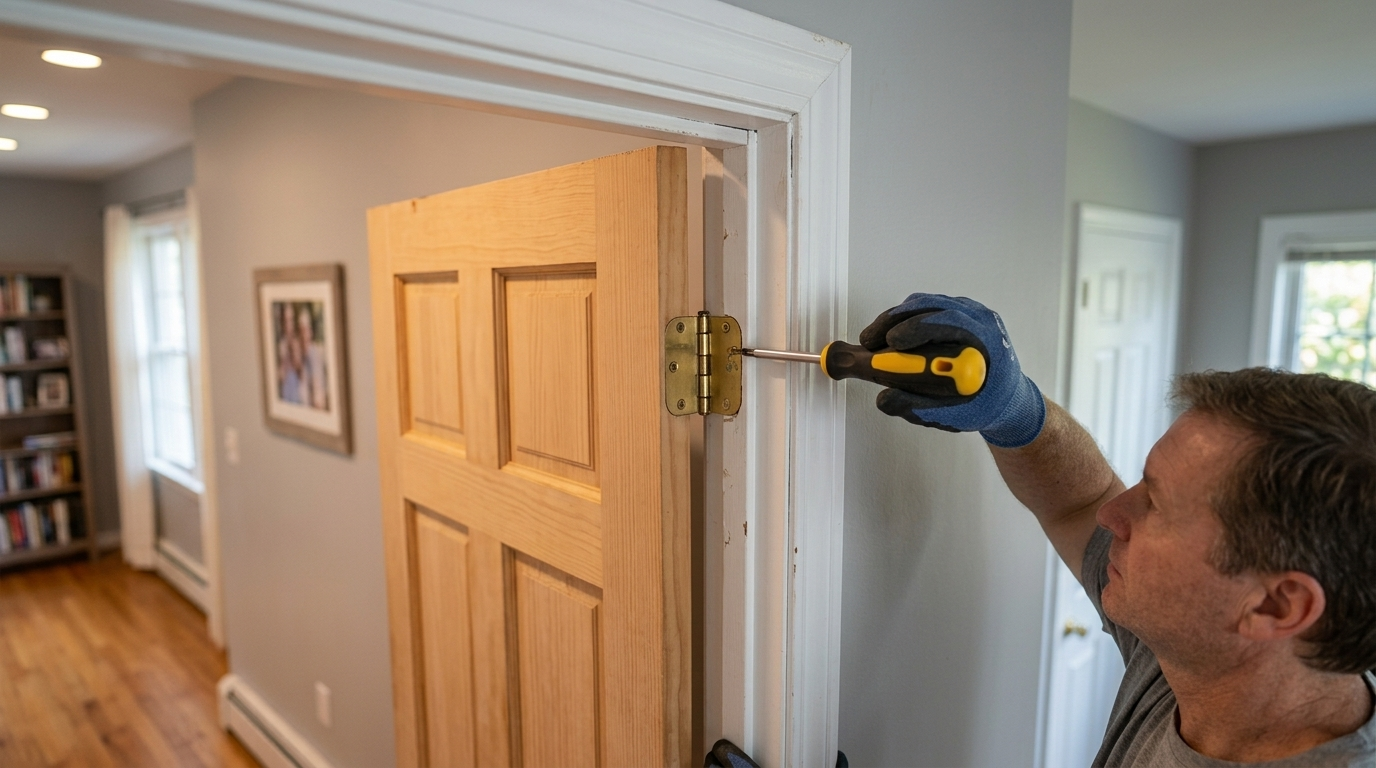
Open the door and inspect each hinge. Look closely at the screws where the hinges are attached to the door and frame. If a screw is loose, tighten it carefully. Do not simply tighten every screw as hard as possible. Overtightening can damage the screw head or the surrounding wood. After tightening the screws, close the door and check whether the gap and latch have improved. If the door is still sagging, continue with the next step.
2. Check the Top Hinge Carefully
The top hinge often deserves particular attention because it helps support the upper part of the door. Check whether the hinge is sitting firmly against the door and frame. If the screws are loose, tighten them one at a time. After making the adjustment, test the door. If the door has moved slightly upward or the rubbing has stopped, you may have already found the problem.
3. Replace a Screw That No Longer Holds Properly
Sometimes a screw keeps turning without becoming tight. That can happen when the wood around the screw has become worn or the screw is no longer getting enough grip. Simply turning the same screw again and again will not solve the underlying problem. In this situation, the damaged screw may need to be replaced with a suitable screw that provides better grip. The replacement needs to be appropriate for the hinge and frame. Avoid using a screw that is so long that it could damage something behind the frame. If you are not sure what type or size of screw is appropriate, take one of the existing screws to a hardware store and ask for a suitable replacement.
4. Check Whether the Hinge Itself Is Worn
If the screws are tight but the door still moves excessively around the hinge, inspect the hinge itself. Open and close the door slowly while watching the hinge. A hinge that is bent, badly worn or visibly damaged may not hold the door in the correct position. In that situation, tightening the screws may not be enough. Replacing a damaged hinge can sometimes solve the problem, but the replacement should match the existing hinge size and placement as closely as possible.
5. Check the Hinge Area for Damage
Take a close look at the wood around the hinges. If the wood is cracked, badly worn or pulled away from the hinge, the problem may be more than a loose screw. The hinge needs a firm surface to hold the door correctly. If that surface has been damaged, simply installing another screw may provide only a temporary solution. For significant damage, repairing the wood or getting help from someone experienced with door repairs may be the better option.
How Do I Fix a Sagging Door That Won’t Close?
If your door has started rubbing against the frame and will not close properly, first check whether the hinges are loose. A useful way to troubleshoot the problem is to close the door slowly and notice exactly where it makes contact with the frame. If the top corner is rubbing, the door may have dropped slightly on the hinge side. If the latch is no longer lining up with the strike plate, the door may have shifted enough to affect the closing position. Start by checking and tightening the hinge screws before making more complicated adjustments. Do not start by moving the strike plate unless you are sure that the door itself is properly aligned. Otherwise, you may end up adjusting the latch to hide an underlying hinge problem.
How to Fix a Door That Won’t Latch
A door that will not latch can sometimes be caused by sagging. When the door moves out of its original position, the latch may no longer meet the opening in the strike plate correctly. First, close the door slowly and watch where the latch meets the strike plate. Then check the hinges. If a loose hinge is causing the door to sit lower than it should, fixing the hinge may bring the latch back into alignment. If the hinges are secure and the door is correctly positioned, the strike plate itself may need adjustment. Make small changes rather than removing large amounts of material. The goal is to achieve a proper fit without unnecessarily changing the door or frame.
How to Align a Door
If you are trying to figure out how to align a door, start by looking at the gaps around the door when it is closed. The space between the door and frame should look reasonably consistent rather than being noticeably wider on one side.
Check these areas:
- Top gap
- Hinge side
- Latch side
- Bottom of the door
If one area is noticeably different, inspect the hinges before making other changes. A small level can also help you check whether the door is sitting reasonably straight.
Remember that older homes may not have perfectly straight frames, so the goal is proper operation rather than making every gap look mathematically identical.
How to Fix a Loose Door Hinge
A loose door hinge is one of the first things to check when repairing a sagging door.
Start by tightening the existing screws.
If one screw turns without becoming tight, the wood may no longer be holding it properly.
Do not keep forcing the same screw into damaged wood.
Instead, the damaged area may need a proper repair before the hinge can hold securely again.
If several screws are loose or the hinge itself is damaged, replacing the hinge may be a better solution.
Can a Sagging Door Be Fixed Without Replacing It?
In many cases, yes.
If the door is structurally sound and the main problem is loose hardware or minor hinge movement, you may be able to correct the problem without replacing the door.
However, a door may need more extensive repair if:
- The door itself is damaged
- The frame is badly damaged
- The wood around the hinges has deteriorated significantly
- The hinges are severely worn
- The door has changed shape
- The frame has shifted substantially
The important thing is to identify the cause before buying replacement parts.
What If the Door Still Sags After Tightening the Screws?
If tightening the hinge screws makes little or no difference, do not keep tightening them indefinitely.
At this point, inspect the hinges and the surrounding wood.
Ask yourself:
- Is the hinge bent?
- Does a screw keep spinning?
- Is the wood around the hinge damaged?
- Does the frame look out of alignment?
- Is the door itself warped or damaged?
The answer can help determine the next step.
A minor hardware problem can often be addressed with a simple repair. A damaged frame or structural problem is different and may require a more experienced repair person.
When Should You Get Professional Help?
Not every door problem is a simple hinge adjustment. Consider getting help if the frame is badly damaged, the door is extremely heavy, the hinge area is significantly damaged, or you cannot identify why the door has moved. You should also avoid forcing the door if it is severely stuck or if attempting to adjust it could cause the door to fall. A proper diagnosis is more useful than repeatedly replacing screws or hardware without knowing what caused the problem.
A Quick Sagging Door Checklist
Before you finish the repair, check the following:
- Inspect all hinge screws
- Tighten loose screws carefully
- Check whether any screw spins without gripping
- Inspect the hinges for visible damage
- Check the wood around the hinges
- Close the door and look at the gaps
- Check whether the latch meets the strike plate
- Open and close the door several times
- Make sure the door is not rubbing against the frame
- Stop and reassess if the problem remains after basic adjustments
Frequently Asked Questions
How do you fix a sagging door?
Start by checking the hinges and tightening any loose screws. If the screws no longer grip the wood, they may need to be replaced with suitable screws or the damaged wood may need repair. If the hinges are damaged or the frame has a larger problem, more extensive repair may be necessary.
How do I fix a sagging door that is rubbing?
First identify where the door is rubbing. Then inspect the hinges, especially the upper hinge, for loose screws or movement. Correcting the hinge problem may bring the door back into alignment.
How do you fix a door that won’t close?
Check whether the door is rubbing against the frame and whether the hinges are loose. A sagging door can prevent the latch from lining up correctly. Fix the alignment problem first before making changes to the strike plate.
How do you fix a door that won’t latch?
Check the hinge screws and make sure the door is sitting correctly in the frame. If the door is aligned but the latch still does not meet the strike plate, the strike plate may need a small adjustment.
Can you fix a sagging door without replacing it?
Often you can, especially when the problem is caused by loose screws or minor hinge issues. However, badly damaged hinges, wood or door frames may require replacement or more extensive repair.
Why does my door keep sagging?
A door can sag because of loose hinge screws, worn hinges, damaged wood around the hinges, the weight of the door, or problems with the frame. Finding the cause is important because tightening screws will not solve every type of sagging problem.
How do you align a door?
Start by checking the gaps between the door and frame and inspecting the hinges. Correct loose or damaged hinge hardware first. A small level can also help you check the door’s position.
Final Thoughts
A sagging door can look like a major home repair problem, but it is often worth checking the simple things first.
Loose hinge screws, worn hinges and damaged screw holes are common places to start looking. By checking the hinges, observing where the door is rubbing and testing the latch, you can usually get a much better idea of what is actually causing the problem.
The main lesson is simple: find the cause before changing the hardware.
A little careful inspection can save you from replacing a perfectly good door when the real problem is only a loose or damaged hinge connection.