
Buying paint for a home project seems simple until you reach the paint store and have to decide how many gallons to bring home. Buy too little and you may need another trip. Buy too much and you could be left with paint you do not need.
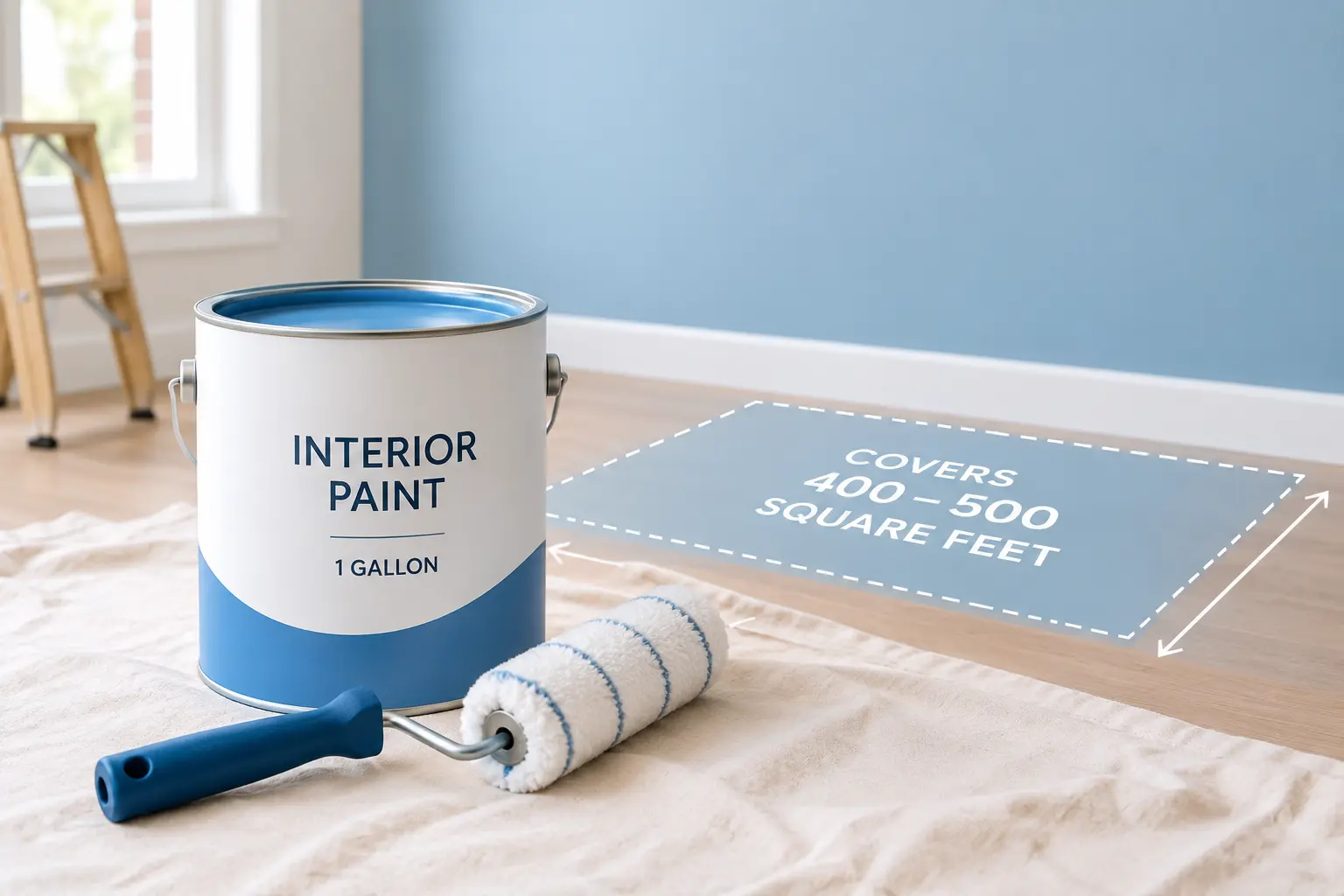
So, how many square feet does a gallon of paint cover? For many standard interior paints, one US gallon covers around 350 to 400 square feet with one coat on a smooth surface. However, that number can change depending on the paint, wall condition, and application method.
The useful part is knowing when you can rely on that estimate and when you should allow for less coverage.
How Many Square Feet Does a Gallon of Paint Cover in Real Conditions?
Paint manufacturers often provide a coverage figure on the container. This is the best starting point because different products are designed for different surfaces and uses.
For a general estimate, these ranges can help:
| Surface or paint type | Approximate coverage per gallon |
| Smooth, previously painted walls | 350 to 400 sq ft |
| Lightly textured walls | 300 to 350 sq ft |
| Rough or porous surfaces | 200 to 300 sq ft |
| Primer on bare surfaces | 200 to 300 sq ft |
These are planning estimates, not guarantees. Always check the specific product label before purchasing.
A gallon may cover less than expected if the wall absorbs paint quickly, has a heavy texture, or needs extra coats to hide the old colour. Exterior surfaces such as rough brick and weathered wood can also require more paint than smooth interior walls.
Why Two Walls of the Same Size May Need Different Amounts of Paint
Wall measurements alone do not tell the whole story. Two rooms with identical dimensions can use different amounts of paint.
Surface texture matters. A smooth wall gives paint a relatively even surface to cover. A rough wall has more tiny dips and raised areas, so it can require more material.
The existing finish matters too. A sound, previously painted wall may need less paint than bare drywall or unfinished wood. New or unsealed surfaces can absorb the first coat unevenly.
Colour changes can affect coverage. Painting a pale wall a similar shade is usually easier than covering a deep colour with a much lighter one. Depending on the product and preparation, an additional coat may be needed.
Finally, application technique makes a difference. Uneven roller pressure, excessive paint left on tools, and overspraying can increase waste.
Calculate Paint Needed Before You Buy
The easiest way to make a useful painting estimate is to calculate the paintable wall area first, then account for the number of coats.
For example, imagine a room measuring 12 feet long and 10 feet wide, with 8 foot high walls.
- Calculate the room perimeter: (12 + 10) × 2 = 44 feet.
- Multiply the perimeter by the wall height: 44 × 8 = 352 square feet.
- Subtract approximately 36 square feet for one door and one window.
- The estimated paintable area is 316 square feet per coat.
For two coats, you need coverage for 632 square feet.
Using a planning rate of 350 square feet per gallon:
632 ÷ 350 = 1.81 gallons.
That means you should plan to buy 2 gallons, assuming the chosen paint provides similar coverage and the wall does not require additional coats.
This example covers the walls only. Ceilings, trim, doors, and other surfaces need separate measurements.
Use a Paint Calculator for a More Complete Estimate
Manual calculations work well for a simple room, but they become less convenient when you have several walls, multiple coats, windows, doors, or a budget to manage.
The Paint Coverage and Cost Calculator on Make Maintain helps estimate paint quantities for interior and exterior projects. Enter your measurements, choose the number of coats, and add the price per gallon if you want an estimated purchase cost.
The calculator also accounts for standard door and window openings. Its results are estimates, so use the coverage rate printed on your chosen paint when it differs from the calculator’s assumptions.
Should You Buy Extra Paint?
Buying extra paint can be useful, but there is no need to add a large amount without a reason.
Allow some room for waste if the surface is rough, the colour change is substantial, or the walls have never been painted. For a straightforward project on smooth, previously painted walls, a calculation based on the actual paint label may be sufficient.
It is also worth keeping a small amount of leftover paint for future touch ups. Store it in a properly sealed container and follow the manufacturer’s storage instructions.
For a more accurate result, consult the Sherwin Williams paint calculator guidance and compare its recommendations with the coverage information for your selected product.
Frequently Asked Questions
Does one gallon of paint cover 400 square feet?
It can, particularly on smooth surfaces under suitable conditions. For planning, 350 square feet per gallon is a more cautious starting point unless the product label supports a higher figure.
How much paint is needed for 1,000 square feet?
At 350 square feet per gallon, one coat over 1,000 square feet requires about 2.86 gallons. You would generally plan for 3 gallons. Two coats would require about 5.72 gallons, so 6 gallons would be the mathematical rounded estimate before allowing for unusual surface conditions.
Does primer cover the same area as paint?
Not always. Primer coverage depends on the product and surface. Bare or porous materials may absorb more primer, so check the manufacturer’s stated coverage rather than assuming it matches the finish paint.
Should I calculate floor area or wall area?
For wall painting, calculate the wall surface area, not simply the floor area. Multiply the room perimeter by wall height, then subtract openings you will not paint. Add ceilings separately if they are part of the project.
Final Thoughts
A gallon of paint commonly covers around 350 to 400 square feet per coat on a smooth surface, but the product label and wall condition should guide your final estimate. Measure the actual area, include every coat, and round your calculated quantity up to a practical purchase amount.
If you are planning a full room or exterior project, use the Make Maintain paint calculator to estimate both the quantity and the cost before you start.