
How to Fix a Door That Won’t Latch
A door that closes but will not latch can be surprisingly annoying. You may have to push it harder, lift the handle, or pull the door toward you before it stays shut. In most cases, the lock itself is not the main problem. The latch and the opening in the door frame are simply no longer lining up correctly.
The good news is that many door latching problems can be diagnosed and fixed with a screwdriver and a few simple tools. The key is to find out exactly where the latch is missing the opening before making any permanent adjustment.
Quick Answer
If your door will not latch, first check whether the hinges are loose and whether the latch lines up with the strike plate. Tightening loose hinge screws or making a small adjustment to the strike plate often fixes the problem without replacing the lock.
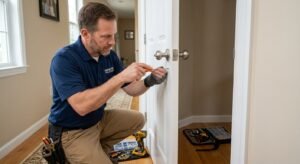
Why Won’t My Door Latch?
The most common reason a door will not latch is misalignment between the latch and the door latch plate, also called the strike plate. Other possible causes include loose hinges, a shifted door frame, seasonal swelling of the wood, a damaged latch, or weather stripping that is preventing the door from closing far enough. A door can look almost perfectly closed while being slightly out of position. Even a small change can make the spring loaded latch hit the edge of the strike plate instead of entering its opening.
Start by Finding Where the Latch Is Hitting
Before removing screws or cutting wood, close the door slowly and watch the latch.
Look at what happens when the angled metal latch reaches the frame.
If it hits above the opening, the door may have shifted upward or the strike plate may be positioned too low.
If it hits below the opening, the door may have sagged or the strike plate may be too high.
If it hits the side of the opening, the horizontal alignment needs attention.
If the latch enters the opening but does not stay engaged, the problem may involve the depth of the opening or the latch mechanism itself.
You can also put a small amount of chalk or lipstick on the end of the latch, close the door gently, and then open it again. The mark can show where the latch is contacting the strike plate. This simple test is useful because it tells you where the problem actually is instead of making you guess.
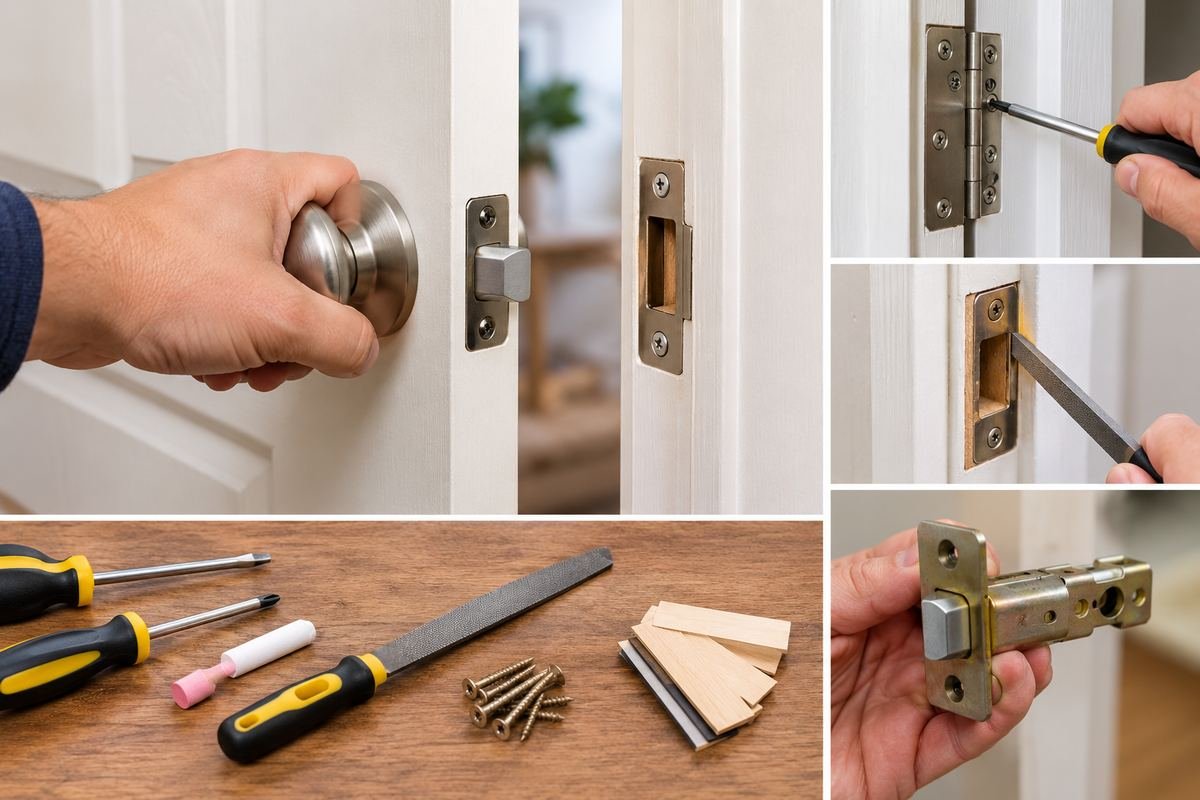
Tools & Materials Needed
You may not need everything on this list. Start with the simplest tools and only use additional materials if the inspection shows that an adjustment is necessary.
- Screwdrivers
- Chalk or lipstick
- Metal file
- 3 inch wood screws
- Hinge shims

Check the Door Hinges First
Loose hinges are one of the easiest things to overlook when a door is not latching.
Open the door and check the screws on each hinge. Tighten any screws that have become loose, but do not overtighten them because excessive force can damage the wood around the screw holes. Pay particular attention to the hinge that appears loose or has movement when you gently lift the door.
A sagging door can change the position of the latch enough to stop it from meeting the strike plate correctly. If tightening the existing screws does not hold the hinge firmly, the wood around the screw holes may need repair. You can also follow our guide on how to fix a sagging door if the door has visibly dropped or is no longer sitting squarely in the frame.
In some situations, longer 3 inch wood screws can provide a more secure connection when a hinge screw is no longer holding properly in the framing behind the jamb. However, the screw must be suitable for the door and frame, and it should be installed carefully to avoid damaging the jamb. Hinge shims can also be useful when the hinge position needs a small correction. Make adjustments gradually and test the door after each change.
After tightening or adjusting the hinges, close the door again. If the latch now lines up correctly, there is no reason to move the strike plate.
Adjust the Door Latch Plate
If the hinges are secure but the latch is still missing the opening, inspect the strike plate. The strike plate is the metal plate attached to the door frame. It has an opening that receives the latch when the door closes. First, make sure the strike plate screws are tight. A loose plate can move enough to affect the alignment. For a small adjustment, loosen the screws slightly and reposition the plate in the direction needed. Tighten the screws again and test the door several times.
If the latch is only slightly rubbing against the edge of the opening, a metal file can sometimes be used to enlarge the opening carefully. Remove only enough material for the latch to enter smoothly. Filing away a large amount of metal is not a substitute for correcting a badly misaligned door.
What If the Latch Hits Above or Below the Plate?
When the latch consistently hits above or below the opening, simply forcing the door is not a good solution. First check the hinges again. A door that has sagged may need its hinge position corrected rather than having the strike plate moved to compensate for the entire door. If the door itself is correctly positioned but the strike plate was installed incorrectly, the plate may need to be repositioned. This can require creating a slightly larger recess in the frame so the plate can sit correctly in its new position.
For a significant adjustment involving drilling or chiseling the frame, take your time and protect your eyes from flying wood or metal particles.
Check for Seasonal Swelling
If your door works normally during some parts of the year but becomes difficult to close during humid or wet weather, moisture related movement may be involved. Wood can expand when moisture levels change. This can alter the small gaps around the door and affect the alignment between the latch and strike plate. Schlage notes that seasonal temperature and moisture changes can temporarily affect door alignment.
In this situation, avoid immediately removing a large amount of material from the door. First determine whether the problem is caused by temporary movement or a more permanent alignment issue.
Check the Weather Stripping
Exterior doors can also fail to latch because the weather stripping is pressing too strongly against the door. Close the door slowly and notice whether you have to push unusually hard before the latch reaches the strike plate.
If the weather stripping is too thick or has been installed incorrectly, it can prevent the door from reaching its normal closed position. Adjusting or replacing the weather stripping may solve the problem without changing the latch or strike plate.
When Should You Replace the Latch?
Not every door won’t latch problem is caused by alignment. With the door open, operate the handle and watch the latch. It should move in and out smoothly and return properly when the handle is released. If the latch is sticking, does not extend fully, feels unusually loose, or has visible damage, the latch mechanism itself may be worn or faulty. Loose or worn door hardware can affect normal operation and may require replacement.
Final Test
After making an adjustment, test the door several times. Close it gently and make sure the latch enters the strike opening without excessive force. Then open and close the door repeatedly to make sure the repair is consistent.
If the door only latches when you lift, pull, or push it in a particular direction, there is probably still an alignment problem.
A properly adjusted door should close naturally and allow the latch to engage without slamming the door.
Frequently Asked Questions
Why is my door closing but not latching?
The latch and strike plate are often out of alignment. Loose hinges, a shifted frame, swelling wood, or a poorly positioned strike plate can cause this problem.
Can I fix a door that won’t latch without replacing the lock?
Yes. If the lock and latch mechanism are working properly, tightening the hinges or adjusting the strike plate may solve the problem.
Should I move the strike plate or fix the hinges first?
Check the hinges first. If the door has sagged, moving the strike plate may only hide the underlying problem.
Why does my door latch in winter but not in summer?
Seasonal changes in temperature and moisture can cause small changes in the shape or position of a wooden door and frame. This can affect latch alignment.
How do I know if the latch itself is damaged?
With the door open, operate the handle and watch the latch. If it sticks, fails to extend properly, or shows visible damage, the latch mechanism may need attention or replacement.
Conclusion
Fixing a door that will not latch is usually a matter of finding the exact point where the door and frame have fallen out of alignment. Start with the hinges, observe where the latch meets the strike plate, and make the smallest adjustment necessary.
Avoid enlarging the opening simply because it is the quickest step. When the underlying cause is a loose hinge, swollen wood, or a shifted frame, correcting that problem can give you a more reliable repair and prevent the same issue from returning.
Author: Muhammad Hanzala