
You walk into your home, and it hits you. That damp, old, slightly sour smell. Maybe it’s strongest in the basement. Maybe it’s your closet. Or maybe it’s a room that looks perfectly clean, which makes it even more confusing.
I’ve dealt with this in my own home, and I’ve helped friends track down the source in theirs. The truth? That musty odor is almost never the real problem. It’s a signal. Something’s holding onto moisture, and until you find it, no amount of air freshener will fix it.
The good news is that you don’t need to douse your house in lavender spray. You need to find the source, dry things out, clean what’s affected, and get the air moving again. That’s it.
Why Does My House Smell Musty?
If you’re asking yourself, why does my house smell musty, start thinking about moisture. Musty odors love places where air doesn’t move and where something has stayed damp for too long.
Basements, bathrooms, closets, crawl spaces, laundry rooms, and any room with poor ventilation are the usual suspects.
Here’s what I’ve seen cause it again and again:
- Hidden plumbing leaks (the worst because you can’t see them)
- Roof or window leaks
- Damp carpets or rugs
- High indoor humidity
- Poor ventilation
- Wet drywall or wood
- Damp furniture or upholstery
- Mold growth
- Water damage that never got completely dried
- A damp crawl space or basement
Mold related compounds also play a role. The U.S. Environmental Protection Agency notes that a moldy odor can suggest mold growth and should be investigated, not just covered up.
Why Does My Room Smell Musty?
If you’re wondering why my room smells musty, check the spots you normally ignore.
Start with closets, corners behind furniture, curtains, rugs, mattresses, and areas around windows. If the room stays closed most of the day, limited airflow makes any existing moisture problem feel worse.
Also pay attention to how humid the room feels. The EPA suggests keeping indoor relative humidity around 30% to 50%, and staying below 60% helps reduce moisture related issues.
A small digital humidity meter costs less than a pizza and takes the guesswork out of it.
How to Pinpoint the Root Cause of the Smell
Before you try to make the room smell better, spend ten minutes looking for the reason behind the odor.
1. Check for Visible Moisture
Look around:
- Windows
- Ceilings
- Walls
- Under sinks
- Around toilets and tubs
- Near washing machines
- Around water heaters
- Basement walls and floors
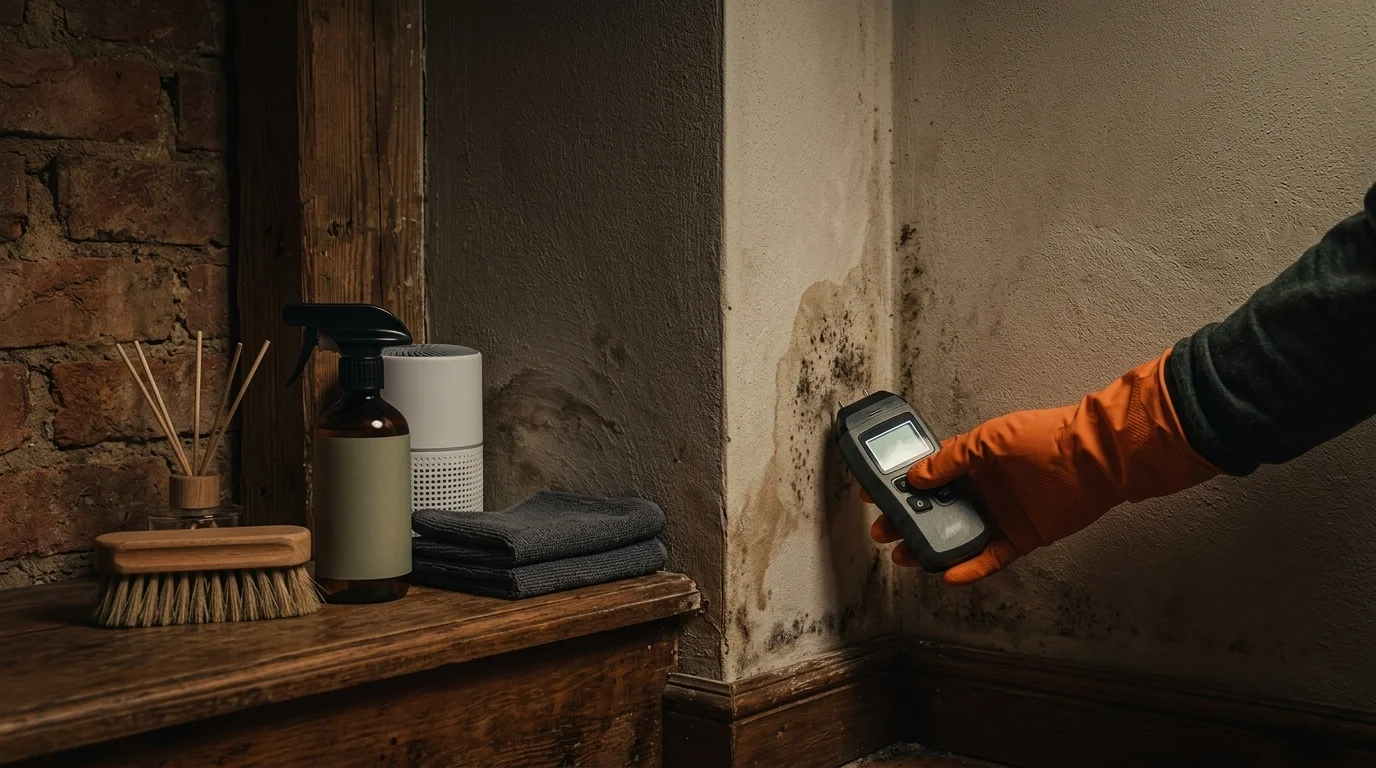
You’re looking for water stains, peeling paint, damp materials, condensation, or discoloration.
2. Inspect Carpets and Rugs
Carpet holds moisture longer than you’d expect. Check underneath rugs and furniture, especially if the smell is strongest near the floor.
If a carpet got soaked and can’t be properly dried, replacement may be necessary. The EPA recommends removing or replacing porous materials that can’t be adequately cleaned and dried after water damage.
3. Check Closets and Storage Areas
Boxes, clothing, shoes, and stored fabrics trap moisture and odors.
Pull items away from the wall and check whether the back of the closet feels damp or smells stronger.
4. Don’t Forget the Basement or Crawl Space
If your crawl space smells musty, don’t ignore it just because you don’t spend time there.
Look for standing water, damp insulation, condensation, plumbing leaks, or poor ventilation. Because damp air travels upward, moisture lingering at the bottom eventually affects the air quality in the rest of your home.
How to Remove a Musty Smell from a House
Once you’ve found the likely source, focus on fixing that problem instead of masking the odor.
1. Remove the Source of Moisture
This is the most important step. Fix leaking pipes, dripping fixtures, roof leaks, or other water sources. If a damp area keeps getting wet, cleaning the odor without fixing the moisture problem will only give you temporary results.
The EPA emphasizes that mold control starts with moisture control. If mold is cleaned but the underlying water problem remains, it can come back.
2. Improve Ventilation
Fresh airflow makes a noticeable difference in rooms that stay closed or humid.
Open windows when outdoor conditions allow. Use bathroom and kitchen exhaust fans and make sure those fans vent properly to the outside. For rooms that regularly stay humid, a dehumidifier helps.
3. Dry Damp Materials Completely
Don’t leave damp towels, rugs, clothing, cardboard boxes, or other absorbent materials sitting around.
After water damage, drying quickly matters. EPA guidance recommends drying wet areas and materials as soon as possible, ideally within 24 to 48 hours, to help prevent mold growth.
4. Wash Washable Fabrics
Curtains, bedding, removable covers, and washable rugs can hold onto musty odors.
Wash them according to their care instructions and make sure they’re completely dry before putting them back.
5. Clean Hard Surfaces
If the smell is coming from a hard, washable surface, clean it with an appropriate household cleaner and let it dry completely.
Safety warning: Never mix cleaning products, especially bleach with ammonia or other cleaners. The CDC specifically warns that mixing bleach and ammonia can create poisonous gas.
6. Use a Dehumidifier When Needed
If humidity is consistently high, a dehumidifier helps remove excess moisture from the air.
Aim for an indoor relative humidity of roughly 30% to 50%. A simple humidity meter helps you monitor it.
How to Get Rid of Musty Smell in House Naturally
If you prefer a simple approach, start with the basics before reaching for heavily scented products.
- Increase fresh airflow. Ventilate the room when weather and outdoor air conditions permit.
- Dry everything thoroughly. Remove damp fabrics, dry wet surfaces, and deal with condensation.
- Clean the actual source. If a rug, closet, piece of furniture, or other washable item is responsible, clean it rather than trying to overpower the smell with fragrance.
- Reduce humidity. If the room remains humid, ventilation or a dehumidifier is more useful than an air freshener.
The goal isn’t just to make the room smell better for a few hours. The goal is to remove the conditions creating the odor.
House Smells Musty but No Mold: What Should You Do?
A house smells musty but no mold situation can be confusing.
Not seeing mold doesn’t necessarily mean there isn’t a moisture problem. Mold can grow in less obvious places, and musty odors can also come from damp materials or hidden moisture. The EPA recommends investigating moldy or musty odors and looking for moisture sources.
Check these spots:
- Under sinks
- Behind furniture
- Around windows
- Inside closets
- Under carpets
- Near HVAC equipment
- In basements
- In crawl spaces
- Around plumbing
- Near exterior walls
If the smell remains strong after cleaning and ventilation, consider having the area inspected by an appropriately qualified professional.
How to Remove Moldy Smell
If you’ve found visible mold, don’t treat the smell as a simple cleaning issue.
First, address the moisture source. Then determine whether the affected material can be safely cleaned or needs to be removed.
For a relatively small moldy area, EPA guidance says homeowners can often handle cleanup when the affected area is less than about 10 square feet, provided the situation is appropriate for DIY cleanup. Larger areas or significant water damage may require professional remediation.
If the water damage involved sewage or contaminated water, professional help is especially important.
People with asthma, allergies, chronic lung disease, or weakened immune systems should take extra care around mold exposure. CDC guidance notes that damp and moldy environments can cause or worsen respiratory and allergy-related symptoms in some people.
How to Make a Room Smell Good Without Masking the Problem
Once the underlying issue is fixed, keeping a room fresh becomes much easier.
Try these simple habits:
- Keep the room reasonably dry.
- Open windows when appropriate.
- Use exhaust fans in kitchens and bathrooms.
- Wash bedding regularly.
- Clean rugs and upholstery according to their care instructions.
- Don’t leave damp towels or clothes lying around.
- Avoid overcrowding closets.
- Keep air moving around large pieces of furniture.
- Clean dust regularly.
- Deal with small leaks before they become bigger problems.
A pleasant smelling home starts with a clean, dry, well-ventilated home. Fragrance should be the finishing touch, not the solution to a moisture problem.
When Should You Get Professional Help?
A musty smell doesn’t always mean you need a professional. But some situations deserve more than a DIY cleanup.
Consider getting professional help if:
- The odor keeps returning after cleaning.
- You find extensive mold growth.
- There has been major water damage.
- The affected area is larger than about 10 square feet.
- You suspect mold behind walls or ceilings.
- Sewage or contaminated water was involved.
- You cannot find the source of the odor.
- Someone in the household is experiencing concerning symptoms around the affected area.
For larger mold problems, EPA guidance recommends consulting appropriate professional remediation resources.
How to Prevent a Musty Smell from Coming Back
Once you’ve solved the problem, prevention is much easier than repeating the cleanup.
- Keep humidity under control. Aim for approximately 30% to 50% indoor relative humidity.
- Fix leaks quickly. A small plumbing or roof leak can become a much bigger moisture problem if ignored.
- Keep bathrooms ventilated. Run exhaust fans while showering and afterward as appropriate.
- Don’t ignore condensation. Water collecting on windows, pipes, walls, or other surfaces can be a sign of excessive moisture.
- Check hidden areas occasionally. Basements, crawl spaces, closets, and areas behind furniture deserve occasional attention.
- Dry water-damaged materials quickly. The faster you address moisture, the less opportunity mold has to grow.
Frequently Asked Questions
Is a musty smell always caused by mold?
No. A musty smell can be associated with mold, but damp fabrics, poor ventilation, high humidity, water damage, and other moisture-related problems can also contribute to unpleasant odors. A persistent moldy odor should be investigated rather than simply covered up.
Why does my house smell musty even though it looks clean?
A clean-looking house can still have hidden moisture. Check closets, carpets, crawl spaces, basements, under sinks, around windows, and behind furniture for dampness or water damage.
How can I remove a musty smell from my house naturally?
Start by finding and removing the moisture source, improving ventilation, drying damp materials, and controlling indoor humidity. These steps address the cause instead of simply masking the smell.
Why does my room smell musty at night?
A room may seem smellier at night because doors and windows are often closed and airflow may be reduced. Check the room’s humidity, ventilation, carpet, bedding, closet, and areas behind furniture.
Can a house smell musty without visible mold?
Yes. You may have hidden moisture, damp materials, or mold in an area that isn’t immediately visible. A persistent odor is a good reason to investigate areas where moisture could collect.
How do I get rid of a musty smell in a basement?
Start by checking for leaks, condensation, damp walls or floors, and high humidity. Improve ventilation where appropriate and use a dehumidifier if needed. Keeping basement humidity around 30% to 50% can help control moisture.
Does air freshener get rid of a musty smell?
Air freshener can mask an odor temporarily, but it doesn’t remove the moisture or other source causing the smell. Finding and fixing the underlying problem is the better long-term approach.
When is musty smell a sign of a serious problem?
A persistent odor combined with visible mold, significant water damage, recurring leaks, or a large affected area deserves closer attention. EPA guidance indicates that mold growth over about 10 square feet or major water damage may warrant professional assistance.
Final Thoughts
A musty smell is worth investigating rather than ignoring. In many homes, the solution starts with something simple: finding a moisture source, improving airflow, drying damp materials, or bringing humidity under control.
If you can identify and fix the underlying cause, the odor is much less likely to return. And if you discover extensive mold or significant water damage, don’t try to cover it with fragrance. Address the moisture problem and get professional help when the situation calls for it.
Your nose is telling you something. Listen to it.